- A critical year for the 2024 receiver class:Xavier Legette, Keon Coleman, Xavier Worthy and Marvin Harrison Jr. all must make legitimate growth in their third pro seasons.
- Jevon Holland must justify his monster contract: The former Dolphins stud hasn't played like the same elite safety over the last two years, and his stakes are amplified in playing under new head coach John Harbaugh.
Estimated Reading Time:10 minutes
As organized team activities begin this week, the return of football is in the air. While over three months remain until games get underway, anticipation is building — and for some players, that means pressure is palpable.
Whether a burgeoning name or a veteran whose tenure as a starter may be shrinking, almost every NFL player has something at stake in 2026. But for these 10 specific talents, this upcoming season projects as a make-or-break one at this stage in their careers.
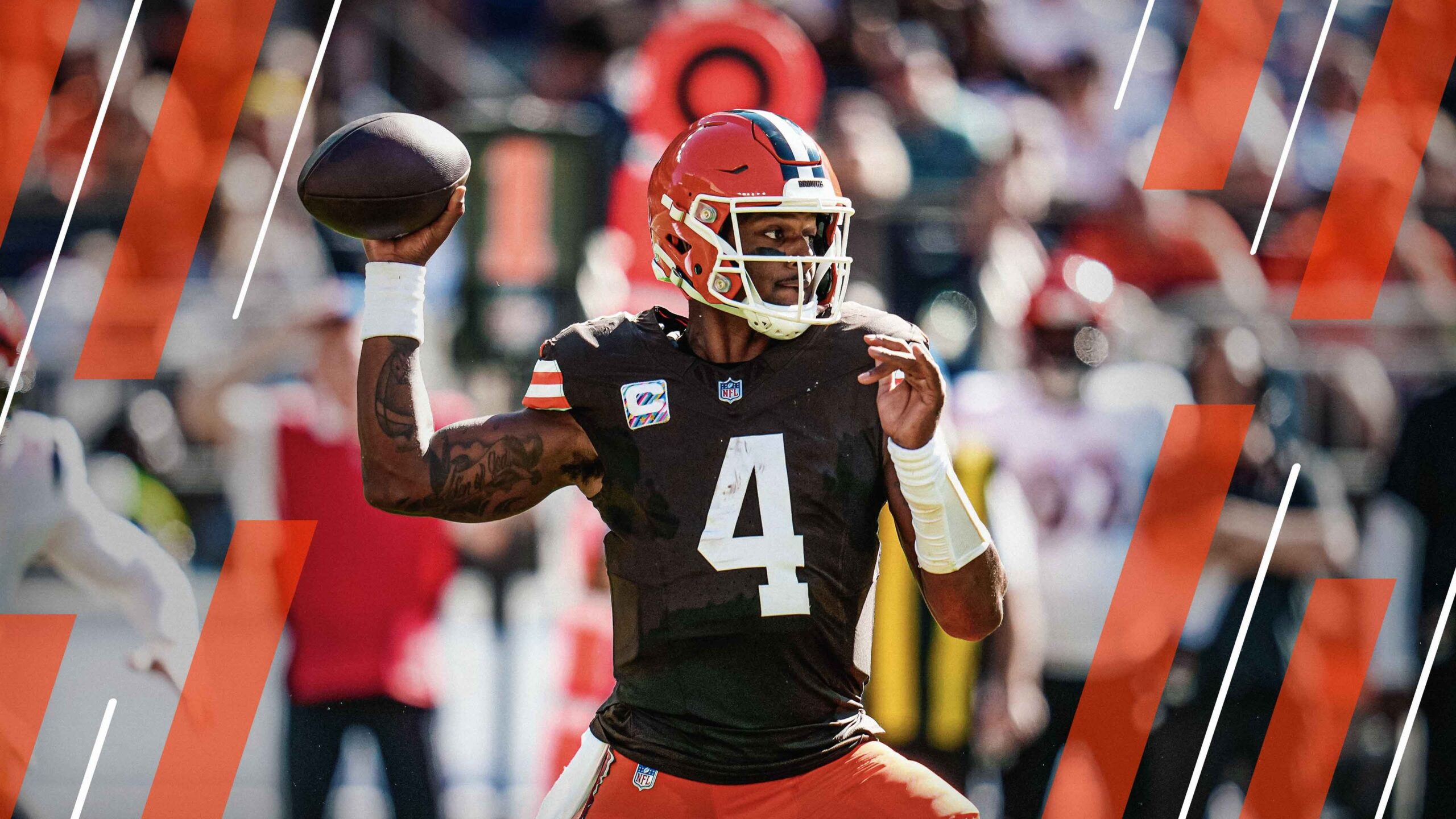
QB Deshaun Watson, Cleveland Browns
After arriving in Cleveland via a blockbuster trade, Watson has effectively only disappointed. Across his three seasons with the Browns (2022-24), Watson’s 60.7 PFF passing grade ranks 41st out of 48 qualified quarterbacks, and his 16 big-time throws are tied for 44th. The latest blow came after the former Texans star missed all of 2025 while recovering from a torn Achilles.
Although the Browns hired offensive-oriented head coach Todd Monken this offseason, the team didn’t make any drastic overhauls to its quarterback room. That means that Watson will compete against incumbent sophomore Shedeur Sanders to earn the right as Cleveland’s top option under center, looking to improve a unit that ranked last in passing grade a year ago.
With Watson’s infamous five-year, $230 million contract set to expire at the end of 2026, his results this year are critical. If Watson doesn’t prevail and/or retain the job over Sanders, or if he’s woeful again, it will bode poorly for the rest of his pro career. After all, the soon-to-be 31-year-old hasn’t played like a consistently plus starter in nearly six years.
QB J.J. McCarthy, MinnesotaVikings
When the Vikings selected McCarthy with the eighth overall pick in 2024, it seemed as though the franchise had landed its long-term signal-caller. Instead, the opposite has happened.
After missing all of his rookie season due to a meniscus tear, McCarthy produced just a 60.1 PFF passing grade with 19 big-time throws compared to 15 turnover-worthy plays in 2025. Also discouraging is that McCarthy ranked last in accurate throw rate (51.4%) and recorded the fifth-highest uncatchable inaccurate clip (22.5%) among qualifiers.
Attempting to avoid another disastrous season under center, the Vikings signed former No. 1 overall pick Kyler Murray to foster a training camp competition with McCarthy. If the Michigan product loses the starting job — and is inaccurate if he even sees the field — then he very well may be on the trade block in the coming months, with 2026 potentially being his last campaign in Minnesota.
WR Xavier Legette, Carolina Panthers
Considered a riser throughout the 2024 pre-draft process, Legette snuck into the first round after landing with the upstart Panthers. While Carolina has progressed since that point, Legette has not.
Among the 54 receivers to secure at least 150 targets since 2024, Legette is 54th in PFF receiving grade (55.9), tied for 53rd in first downs gained (45) and 54th in yards after the catch per reception (2.2). Further, Legette ranks in the 25th percentile or lower in both yards per route run (1.03) and drop rate (8.7%).
Considered an uber athletic receiver who could play above the rim, Legette has looked languid so far at the next level. With the Panthers selecting Tennessee’s Chris Brazzell II in the third round as well as seeing youngsters Tetairoa McMillan and Jalen Coker establishing themselves, Legette’s time as an entrenched starter is running out. In fact, it wouldn’t be a total shock to see him dealt sooner than later if he doesn’t start picking up the pace.
WR Keon Coleman, BuffaloBills
When the Bills nabbed Coleman one slot after Legette, both the franchise and pundits believed Buffalo had secured a long-term playmaker for Josh Allen. But so far, Coleman has not caught on in the NFL.
Through two seasons, Coleman has sported a 67.7 PFF receiving grade, which ranks 50th out of the aforementioned 54 receivers to garner a minimum of 150 targets. Looking under the hood, Coleman slots in the 0th percentile in separation rate, and his 11.9% drop rate is in the 7th percentile.
Because of Coleman’s poor development, the Bills traded for receiver D.J. Moore this offseason and drafted Skyler Bell in the fourth round. Simply put, if Coleman doesn’t at least present glimpses of the physical presence we saw at Florida State, he may swiftly run out of opportunities in Joe Brady’s rotation.
Click here to access Coleman's full PFF profile!QB Michael Penix Jr., Atlanta Falcons
The Falcons’ decision to draft Penix eighth overall only weeks removed from signing Kirk Cousins was a puzzling one. Atlanta believed it had secured a double-fastened security blanket, but the remaining component is now also coming undone.
Penix looked like an up-and-coming star during limited runway in 2024, compiling an 87.6 PFF passing grade with 10 big-time throws to only two turnover-worthy plays across five matchups. However, he regressed in 2025 with a 58.0 passing mark, and his turnover-worthy play rate doubled from 1.7% to 3.4%. Also discouraging was diminished accuracy from Penix, who finished 32nd among 33 qualifiers in accurate throw rate (53.1%) and tallied the third-highest uncatchable inaccurate clip (23.1%).
In light of Penix’s performance as well as a season-ending ACL tear, the team took a flier on Tua Tagovailoa in free agency. Much like his draft classmate McCarthy, Penix must not only reclaim QB1 status, but also needs to demonstrate better precision to avoid difficult conversations about his future in Atlanta. It’s important to consider that the Falcons’ new regime was not present when Penix was drafted, which means the threshold for moving on may be shorter.
CB Marlon Humphrey, Baltimore Ravens
Humphrey has played like a strong all-around corner for a myriad of seasons, including notching a 79.0 overall PFF grade in 2024. However, he nosedived to a 50.1 mark in 2025 during a disastrous year for the Ravens.
Although Humphrey was still an asset against the run with a 78.9 grade, he plummeted in coverage. Indeed, Humphrey’s 43.8 PFF coverage grade was the lowest among 46 corners to play 500 or more coverage snaps, and his 37 first downs permitted were the fourth-most.
The 2026 season is already a monumental one for Humphrey with his contract set to expire afterward, plus the arrival of a new coaching staff under defensive wizard Jesse Minter. Fundamentally, Humphrey’s performance will dictate if the coming 30-year-old still has All-Pro-caliber traits — or if an age-related decline has begun.
WR Marvin Harrison Jr., ArizonaCardinals
Many were somewhat surprised when Harrison, considered a can’t-miss prospect, slid to the fourth overall pick in 2024. However, his unique physical gifts haven’t yet manifested in the pros.
While Harrison has earned a solid 75.5 career PFF receiving grade, he took a step back in 2025. Indeed, his receiving mark fell to 67.6; his yards per route run dipped to 1.48; and he dropped 10.4% of his targets.
With new head coach Mike LaFleur in the fold, the Cardinals are hoping to boost a beleaguered offense that placed 22nd in EPA per play last season. While Arizona’s quarterback room looks like one of the sport’s dreariest, Harrison must independently hone his craft in his third season to look more like the unstoppable force he was at Ohio State. If not, it’s possible that the Cardinals could already look to trade the talented 23-year-old.
CB Terrion Arnold, Detroit Lions
Arnold was the latest installment of high-pedigree youngsters added to the Lions’ nucleus over recent years, being taken in the first round by the franchise two years ago. Yet Arnold has failed to play to pre-draft expectations.
Since Arnold’s pro debut in 2024, his 49.5 overall PFF grade slots 70th out of 72 cornerbacks to play a minimum of 1,200 snaps. It’s worrisome that Arnold — who was effective in nearly every dimension at Alabama — has registered sub-51.0 grades in both run defense and coverage, too. On top of that, Arnold played just 333 snaps in 2025 while enduring a shoulder injury.
The Lions are giving Arnold another season of runway to being a perimeter starter next to the returning D.J. Reed. However, Arnold runs the risk of Detroit finding either a competitor or replacement in the coming months if he’s unable to display glimpses of his Crimson Tide form.
Arnold's Stable Career PFF Grades
WR Xavier Worthy, Kansas City Chiefs
Another member of the 2024 receiver crop who was billed as a game-changing prospect but has yet to live up to the hype, Worthy must finally make progress in his third season.
The former 28th overall selection turned in a solid rookie year with a 71.6 PFF receiving grade, but he couldn’t match that production as a sophomore. Worthy’s receiving mark dropped to a 66.3, and his yards per route run went from 1.51 to 1.25. Also alarming was worse production after the catch (6.7 to 4.9) and inferior success on deep balls (87.9 to 76.2 receiving grade).
The Chiefs have yet to make a splash reinforcement in their receiving room despite the lingering inconsistencies of both Worthy and Rashee Rice. Unlike Rice, Worthy has rarely looked like a dynamic weapon, earning a 75.0-plus receiving grade in only four career games. The speedster will have to turn things up a notch before his fifth-year option is weighed next spring.
S Jevon Holland, New York Giants
Once a premier safety in the NFL, Holland must look to steer a ship that’s started to tilt in recent memory.
After securing at least 0.15 PFF Wins Above Replacement in every year from 2021-23, Holland’s play has slid in the two years since. In his last season in Miami, Holland netted just a 63.0 overall PFF grade, although that didn’t stop the Giants from making him the ninth-highest-paid safety by average annual value. Yet Holland was poor again in 2025, as his 53.0 PFF coverage grade placed 39th out of 49 qualifiers at the position.
Holland will be afforded a second season to man the middle of New York’s defense in 2026, but he’ll need to make a strong first impression on John Harbaugh. If Holland produces another substandard year, then questions will linger about his true identity as a player given his drastic splits. Those could quickly snowball into trade chatter considering his $18.89 million cap hit in 2027, plus that he’ll be a free agent in 2028.