- The Falcons‘ start has been bad, but arguably expected: Atlanta's uncertain quarterback room has come to life in what looks like an uninspiring first year for Kevin Stefanski.
- Introducing the NEW PFF Pro subscription: PFF Pro includes everything in PFF+, plus an upgraded Premium Stats Pro experience, higher base access to Guru AI, revamped player and team pages, enhanced data and visualizations, an improved interface and programmatic data access for modeling. Click here to subscribe.
The dawn of a new NFL season always brings concepts at which to marvel. While it’s easier to admire a unit playing with more cohesion or a player taking a leap, what also naturally draws attention are the teams struggling out of the gate.
A two-game sample size hardly amounts to anything in a 17-game season, but a year can quickly get away from a team faster than realized. Teams starting 0-2 inherently dig themselves a hole that, frankly, isn’t easy to escape. Consider that only eight 0-2 teams have reached the postseason since the league expanded to seven playoff seeds per conference in 2020.
Through two slates of the year, eight franchises have yet to record a win. How many of them can turn things around like the Texans, Bears and Panthers last season, and how many are already doomed? Weighing advanced stats and signature PFF metrics, let’s try to take a look into the crystal ball.
Houston Texans
Panic Meter Level: Mild
After a dominant 2025 season that saw the Texans reach the divisional round for the third straight year, Houston has come out flat by falling to the Bills and Bengals. While there have been some woes, it doesn’t feel like a nightmare situation.
For one, this is the third time in four seasons that the Texans have begun at least 0-2. Consider that the prior two instances resulted in 10-7 and 12-5 marks, respectively. A loss in Week 3 to the Colts wouldn’t even necessarily be catastrophic considering that Houston began 0-3 last year and then went torrid.
The Texans’ defense has been uncharacteristically poor so far, placing 24th in EPA per play while allowing an explosive pass on 23.3% of attempts, the highest figure in the NFL. Individual errors have been to blame for DeMeco Ryans’ typically stout unit, but it’s also fair to consider that Houston played two elite offenses. Plus, Houston places second in success rate and 11th in rushing EPA per play, meaning the sky isn’t falling.
The bigger worry, as usual, lies with the Texans’ offense, which slots 20th in EPA per play and 30th in average yards per play. C.J. Stroud has played to a mediocre 63.9 PFF passing grade, ranking 22nd out of 33 quarterbacks while enduring more pressured dropbacks than any other passer. A positive has been a more explosive group that owns the fourth-best explosive play rate of any offense, but the Texans’ run game has yet to truly be established on a consistent basis — ranking 23rd in EPA per play.
Given the Texans are accustomed to poor beginnings, their defense is still chock full of All-Pro talent, an easier schedule remains and their offense has generated more chunk plays than before, it seems more likely than not that Ryans’ bunch will remain a serious AFC contender.
Los Angeles Chargers
Panic Meter Level: Very High
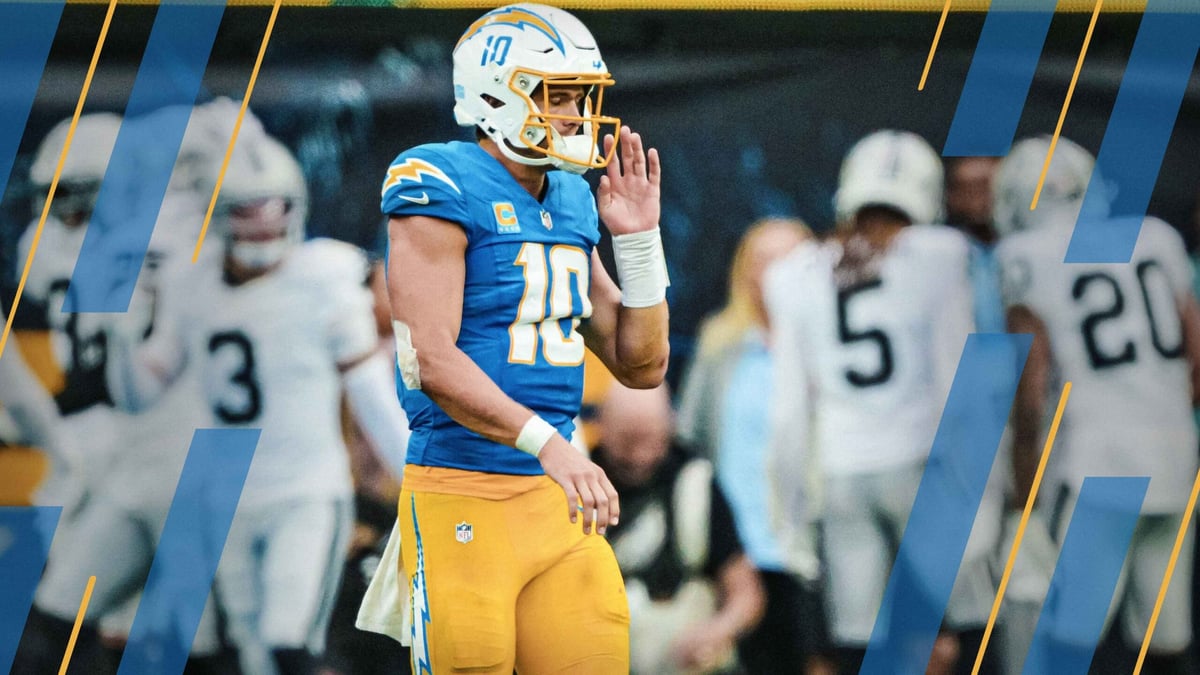
The Chargers were an understandably popular pick to reach new heights in the 2026 season. But after only two games, that prediction already looks scarily steep.
Los Angeles’ touted offense has not produced nearly as expected under new guide Mike McDaniel, placing 30th in EPA per play as well as scoring drive rate. Almost every facet has been at fault, from an offensive line sitting 25th in overall PFF grade to the 26th-ranked team PFF rushing grade to receiver miscues. Even Justin Herbert hasn’t been without blame, posting a 53.3 PFF passing grade while committing four turnover-worthy plays compared to just two-big time throws so far. Losing new tight ends David Njoku and Charlie Kolar to injured reserve also doesn’t help.
The Chargers’ defense has also taken a bit of a step back under new defensive coordinator Chris O’Leary. The team slots 18th in EPA per play despite facing two offenses with very real question marks, with Los Angeles’ 52.3 PFF coverage grade placing 24th. The team’s run defense has been stout, but aerial attacks have taken advantage to the tune of a 104.5 passer rating — the eighth-highest against any defense.
The schedule factor is arguably the most damning part for the Chargers, who own the hardest remaining slate according to PFF’s Power Rankings model. Having to play the Bills, Seahawks, Broncos, Chiefs, Rams, Texans andRavens consecutively means Jim Harbaugh’s group may very well be buried before it can really breathe. Even if the Chargers’ languid offense can rapidly find rhythm, it might be too late.
Tampa Bay Buccaneers
Panic Meter Level: High
The Buccaneers’ decline during the 2025 season has very much extended into the start of 2026. Foundational doubt is creeping in, but a weaker division could still grant time.
Hiring Zac Robinson as offensive coordinator has yet to materialize for Tampa Bay, which places 27th in EPA per play and 23rd in explosive play rate. At the root of the problem has been quarterback Baker Mayfield, whose five turnover-worthy plays tie for the most of any passer thus far. His weapons have also failed to produce, securing the third-worst team PFF receiving grade with nobody producing over a 71.0 mark and dropping five passes as a unit.
Todd Bowles’ once-feared defense hasn’t been extremely stout, either. The Buccaneers are 17th in EPA per play and have missed 22 tackles, tied for the sixth-most by any group. While Tampa Bay has been fairly sound against the run, its pass rush has not gotten off the ground with a 26.4% pressure rate and the second-worst collective PFF pass-rush grade.
A fairly average schedule, coupled with growth from young contributors like Emeka Egbuka, Josiah Trotter and Rueben Bain Jr., could vault the Buccaneers back into the NFC South mix in a division that yet again looks largely uninspiring. On the other hand, concern about Mayfield and Bowles’ abilities as a head coach has left a lingerily bitter taste, especially after losing to a paltry Browns team in Week 2.
WashingtonCommanders
Panic Meter Level: Very high
The 2026 season already looked like a curious one for the Commanders as they ushered in two new coordinators and plenty of different faces. Early results, coupled with injury, have created legitimate alarm bells.
Washington’s defense has continued to be ravaged despite spending tremendous cap and draft resources on that side of the ball. The Commanders are 26th in EPA per play and 28th in points per drive allowed, with the second-worst coverage unit the main culprit. Only one Commanders defender (Amik Robertson) owns even a 65.0-plus overall PFF grade so far.
The Commanders’ revamped offense has fared better, sitting 11th in EPA per play with a 23.8% touchdown drive rate, tied for 15th. However, a left elbow dislocation suffered by Jayden Daniels in Week 2 means more Marcus Mariota for the foreseeable future — hindering both the team’s pass and run game, the latter of which has been carried by the quarterback. Declining production from Terry McLaurin (48.1 PFF receiving grade) is also eye-catching given his age.
Unless Jones’ defense can dramatically turn things around or Mariota puts on a cape, this season is looking like another lost one for Washington. That leaves Dan Quinn’s immediate future up in the air, with the team’s 2024 NFC championship appearance a rapidly fading memory.
NFL team defensive pass/run EPA per play, Weeks 1-2
See this scatterplot and build your own using PFF Premium Pro!IndianapolisColts
Panic Meter Level: High
A pivotal year for Colts brass hasn’t gotten off to an auspicious start, extending the team’s second-half freefall from 2025. While Indianapolis has shown some fight, things aren’t exactly rosy.
The Colts’ defense was ineffective throughout last season, and little has changed in that regard. So far, Indianapolis ranks 30th in EPA per play, 29th in success rate and 32nd in scoring drive rate (58.3%). It can be easy to chalk that up to playing Lamar Jackson’s Ravens and Patrick Mahomes’ Chiefs, but the issues are pervasive — from run defense to pass rush to tackling.
Shane Steichen’s offense looks more capable, but even that side of the ball confronts genuine questions. While Indianapolis ranks first in rushing EPA per play behind Jonathan Taylor, the team is 27th in passing EPA per play as Daniel Jones (64.6 overall PFF grade) and Tyler Warren (0.61 yards per route run) have generally not produced. Factor in Alec Pierce missing time with a heel injury, and the floor feels constrained.
On the Colts’ side is the fourth-easiest schedule remaining, plus multiple other winless teams residing in their own division. But the clock is ticking on Steichen to right a sinking ship — because if he doesn’t, the franchise will probably go in another direction quite soon.
TennesseeTitans
Panic Meter Level: High
Hope sprang eternal for the Titans as they welcomed in Robert Saleh to a talented young nucleus. So far, minimal progress has been made in a season that clamored for it.
The Titans’ offense was one of the worst in the league last season, and while things may not be quite as dire, the unit has yet to meaningfully develop under Brian Daboll. Tennessee ranks 22nd in EPA per play as well as scoring drive rate, producing only a 10.5% explosive play clip. While the Titans’ run game has found unexpected life to rank sixth in EPA per play, Cameron Ward (59.3 PFF passing grade) still has major strides to make to look like his playmaking collegiate self.
Moreover, Saleh’s defense doesn’t look as improved as the organization’s spending intended. The Titans are 24th in EPA per play as well as points per drive in the early going. Star Jeffery Simmons III is the only starting pass-rusher with a 60.0-plus PFF pass-rush grade, and the Titans are 18th in rushing success rate.
Some around the league believed that the Titans could make a playoff push in Ward’s second season, but the 2026 campaign looks like another fairly bleak one in Nashville. Barring real growth from under center as well as the team’s updated defense, a fifth straight losing season looks on the horizon for Tennessee.
Atlanta Falcons
Panic Meter Level: Expectedly high
The energy surrounding the Falcons continued to devolve going into the 2026 season, from injuries to suspensions to a quarterback debacle clouding the team’s outlook. Not much has gone right, but it’s hard to have envisioned drastically different results.
Atlanta’s offense is off to a staggeringly bad start under Kevin Stefanski. The Falcons are the league’s worst team in EPA per play, scoring drive rate and touchdown drive clip while sitting no better than 27th in yards per play, success rate and explosive play rate. The performance of Cooper Rush (28.5 overall PFF grade) has doomed the team, while its offensive line has also declined by tying for 26th in overall grade.
The Falcons’ defense has been a certified bright spot. Jeff Ulbrich has built off of last season to lead the team to a top-eight ranking in both EPA per play and success rate. Despite losing both Jalon Walker and James Pearce Jr., the Falcons own the third-highest pressure rate (43.9%) thanks to promising play from newcomers Gervon Dexter Sr. and Za’Darius Smith. Atlanta has also surrendered just four explosive rushes.
With Michael Penix Jr. set to make his season debut in Week 3 against the Packers, perhaps the Falcons could finally obtain some stability under center. But given Penix’s problems last season (on top of shaky health) and how this quarterback battle played out in training camp, the more probable season outcome for Atlanta is dreary passing dooming both a talented skill-position room and an upstart defense.
Miami Dolphins
Panic Meter Level: Strangely low?
It’s not often that going 0-2 is more or less acceptable for an NFL team, but the 2026 Dolphins might be an exception. Given the transient state of the team’s roster and a new front office, anything but a winless start would’ve been a surprise.
Miami ranks no better than 24th in EPA per play on both sides of the ball, a development that makes sense given its depleted personnel. New quarterback Malik Willis (59.1 overall PFF grade) hasn’t looked like his star self from Green Bay, while stud running back De’Von Achane (64.8 PFF rushing grade) has averaged only 1.87 yards after contact per carry thus far.
However, the Dolphins have already experienced positive signs from young cornerstones. Patrick Paul (81.0 PFF pass-blocking grade) and rookie Kadyn Proctor (79.2 PFF run-blocking grade) could form a strong left side of the team’s offensive line for years to come. Third-round wideout Caleb Douglas has fared solidly with a 70.0 PFF receiving grade while averaging 2.05 yards per route run. While second-round linebacker Jacob Rodriguez owns just a 59.6 overall PFF grade, he’s already accrued 10 total stops.
The reality is that the Dolphins aren’t expecting to be in a position to compete in 2026 given the state of their receiving corps and secondary, not to mention several other units with doubts. While the performance of names like Achane, Chop Robinson, Zach Sieler and Austin Jackson hasn’t been optimal for Miami, this is about as tame as things can be at 0-2 given the long-term focus.