Estimated reading time: 8 minutes
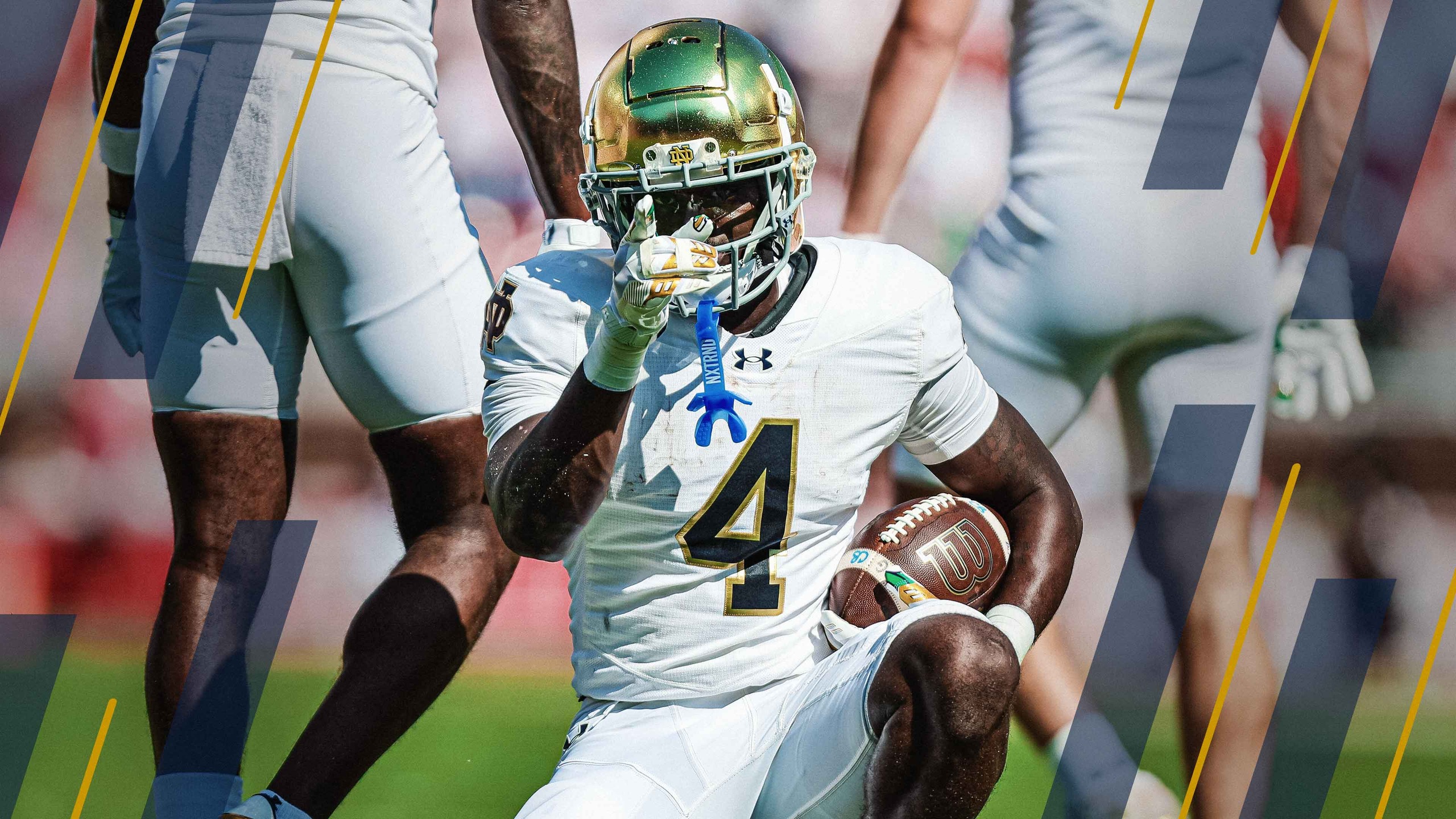
Jeremiyah Love is receiving lots of hype as a potential top ten pick in next month’s NFL draft. He has the potential to become just the eighth running back drafted inside the top 10 in the last 14 years.
For a running back to be deemed worthy of such a lofty selection, they have to be truly exceptional. Love is. Just like other blue-chip running backs before him, it’s difficult to pick a single hole in Jeremiyah’s game.
Today, we’ll be comparing Love’s college production to the past seven running backs drafted inside the top 10: Ashton Jeanty, Bijan Robinson, Saquon Barkley, Leonard Fournette, Christian McCaffrey, Ezekiel Elliott and Todd Gurley II.
Together, these players have combined for six first-team All-Pro nods, 12 Pro Bowls, a pair of Rookie of the Year awards and a pair of Offensive Player of the Year awards. Love's ceiling is undoubtedly very high.
Workload/mileage
One area that is very notable in this comparison is the overall workload (or lack thereof) Love has had to bear during his three years at Notre Dame.
Love’s 433 career carries are comfortably the fewest among the eight elite running back prospects, thanks to splitting snaps with fellow draft prospect Jadarian Price. The next lowest is Bijan Robinson, who had 100 more carries.
While quarterback evaluators often believe the more college dropbacks, the merrier, running back scouts closely monitor career mileage as they examine the long-term potential of running backs, particularly for those worthy of early first-round picks.
Mileage didn’t deter the Raiders from selecting Ashton Jeanty sixth overall last season, despite his remarkable 748 collegiate rushing attempts. Love, in comparison, appears fresh as a daisy with just 433 career carries.
Like Jeanty, Saquon Barkley saw a massive workload during his prolific college career at Penn State, and 11,000 NFL yards from scrimmage later, the 29-year-old doesn’t appear to be showing any major signs of slowing down.
Yards after contact
Average rushing yards after contact is referred to as a stable metric by PFF because it’s largely independent of the overall scheme surrounding each player.
Ashton Jeanty achieved a staggering 4.8 yards after contact during his career at Boise State; however, one must consider that he was facing “Group of Five” opposition for the majority of his career there.
Love posted a very respectable 4.3 yards after contact on average, third among our focus group behind the aforementioned Jeanty and just slightly behind Bijan Robinson.
Love remained well clear of Barkley, McCaffrey and Fournette in this category. Love has unsurprisingly gotten better at fighting through contact over the course of his career, while his missed tackles forced per attempt has also improved with each season, also third behind Jeanty and Robinson.
Explosive play rate
The ability to break off explosive runs can truly separate the top tier of running back prospects from the remainder of the pack. With a 4.36-second 40-yard dash, Love’s long speed is undeniable, and his tendency to break off game-changing carries is among the best we’ve seen from a college prospect.
Love has 248 career handoffs where a 40-yard carry was feasibly possible (i.e. the ball is further than 40 yards from the end zone). From these plays, Love has broken off 12 carries of 40-plus yards, equivalent to one in every 21 handoffs.
The next best is Ashton Jeanty at one in every 26, followed by Barkley and Elliott. Among these top running back prospects, Love has not only proven he is the fastest, but he’s also more likely than anyone to break off a huge gain.
Stuff rate and POA change
What’s perhaps most impressive about the above fact is that Love hasn’t been big-play-hunting throughout his college career.
One of the few knocks on Saquon Barkley back in 2018 was his tendency to bounce runs outside in search of big plays instead of taking the straightforward yardage up the middle.
As a consequence, Saquon had the highest stuff rate (carries for a loss or no gain) of any top running back prospect, 22.5%. This stat isn’t entirely independent of offensive line play, but the fact that Love was only stuffed on 14.3% of his college carries while also breaking off more big chunk plays than anybody else is a really promising sign.
Receiving ability
To justify a top-10 draft pick, running backs shouldn’t need to leave the field under any circumstance, which means being proficient in the passing game. With the possible exception of Fournette, most of these prospects were talented receiving backs in college.
Jeremiyah Love’s 81.5 PFF receiving grade is more than good enough. It’s not quite at the levels of McCaffrey’s 94.6 receiving grade at Stanford, but very few are.
Behind McCaffrey, Love had the second-most slot receiving snaps of this group. He’s comfortable being split out as a receiver on passing downs. Love’s 6.1% drop rate was the third-highest of this group, but his hands aren’t particularly worrying.
Ball security
One of Jeremiyah Love’s most impressive traits is his innate ball security. On 495 career touches, Love never put the ball on the ground a single time.
The only time the ball left Love’s possession, on a standard inside handoff against Boise State last October, Love caught his own fumble before the ball could even touch the grass.
Love consistently keeps the ball tight through contact and finishes runs with strong two-hand control. His combination of grip strength, awareness, and disciplined technique minimizes risk on every carry, giving coaches a high level of trust in high-leverage situations.
Overall, Jeremiyah Love’s 95.2 overall PFF grade was the second-highest of our group of elite backs. Only Ashton Jeanty graded out higher. Love’s profile ultimately reflects the modern blueprint for an elite NFL running back prospect.
He combines the explosive athletic traits teams covet with efficiency metrics that translate well to the professional level. Love’s ability to generate yards after contact, limit negative plays, contribute in the passing game and protect the football creates a remarkably complete prospect.
When those traits are paired with comparatively low career mileage, it becomes easier to understand why evaluators see so much long-term potential for his NFL career.
History has shown that drafting a running back inside the top ten is a gamble. Yet organizations are still willing to invest. If Jeremiyah Love’s college profile is any indication, he has every chance to justify his lofty draft stock and become one of the few difference-makers at the position very soon.