This is PFF’s predictive draft rankings — a forward-looking exercise that blends production, grading and market sentiment to forecast how teams and analysts are likely to value each prospect on draft night, and it’s just one way to explore the class. Users can build their own version of the board with the customizable draft board or run full simulations using the mock draft simulator, toggling between personal rankings and PFF’s predictive outlook to see how the 2026 NFL Draft could unfold.
1. Carnell Tate, Ohio State Buckeyes
Big board rank: 10
Tate offers one of the highest floors among true juniors, thanks to strong hands and a consistently reliable track record as a blocker. His understanding of route running and releases is already NFL-caliber, and if he continues to add functional strength, he has the potential to become an impact receiver at the next level.
2. Makai Lemon, USC Trojans
Big board rank: 15
Lemon lacks ideal size and top-tier NFL athleticism, but his football IQ, elite body control and competitive toughness make him a top-50-caliber prospect. He projects as a starting inside-the-numbers receiver, primarily in the slot, with added return value.
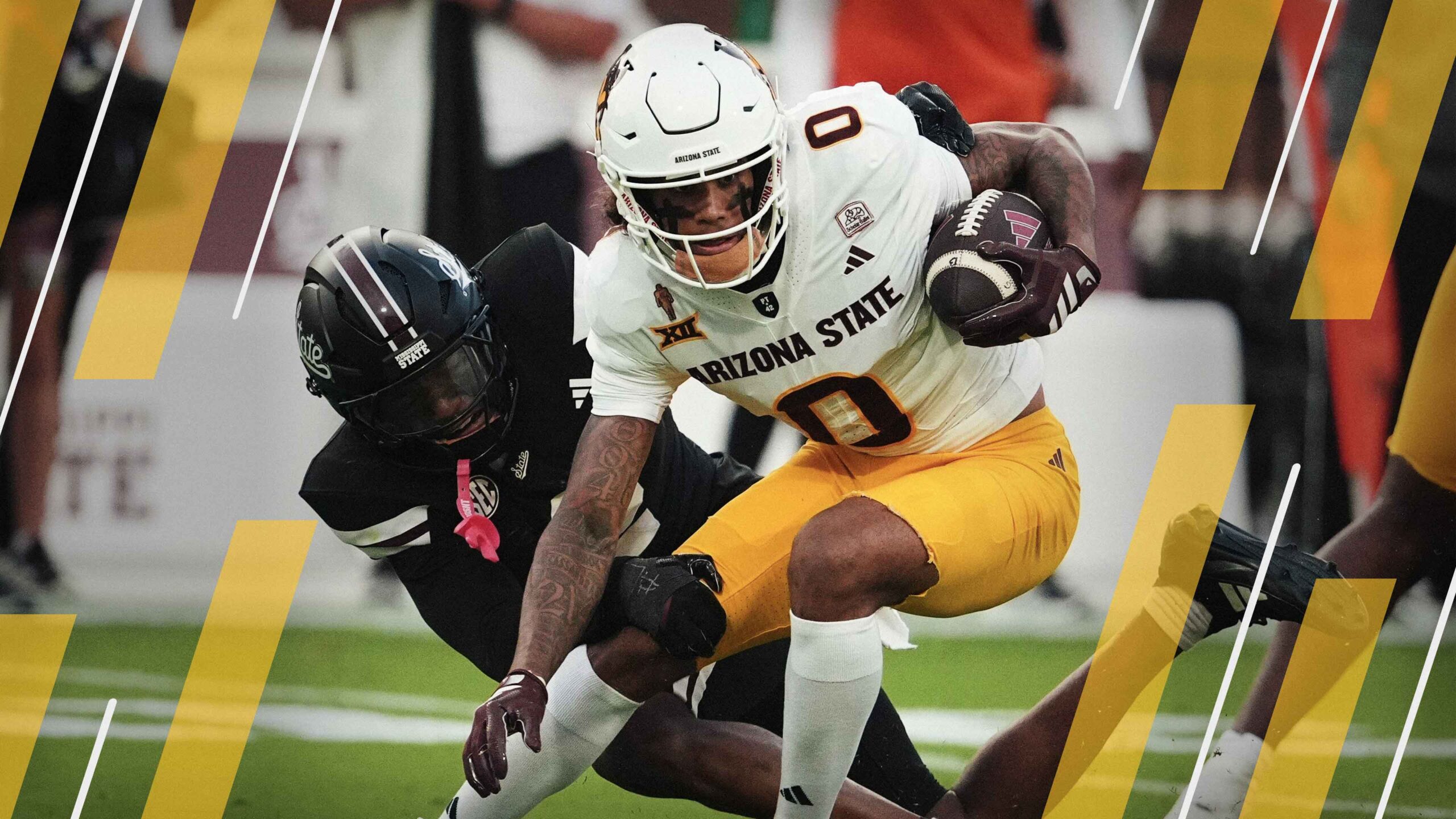
3. Jordyn Tyson, Arizona State Sun Devils
Big board rank: 19
Tyson has WR1 ability and versatility. His explosiveness is not just NFL-caliber but has the potential to be top-tier at the next level. If he continues to refine his technique — particularly his releases and route running — and can stay healthy despite a consistent injury history, he has the upside to develop into a Pro Bowl- and even All-Pro-caliber player.
4. Omar Cooper Jr., Indiana Hoosiers
Big board rank: 24
Cooper is a well-rounded, NFL-caliber athlete with a dense frame and strong hands, projecting as a WR2-type at the next level.
5. Denzel Boston, Washington Huskies
Big board rank: 31
Boston is a smooth-moving X receiver with the size and skill set to develop into a starting outside receiver at the next level. He is less comfortable and productive against zone coverage, but in single-coverage situations, he is often the player to bet on thanks to his elite hand strength.
6. KC Concepcion, Texas A&M Aggies
Big board rank: 35
Concepcion is a versatile athlete who has found success in the slot, out wide and even in the backfield, though his best fit at the next level is likely as a hybrid Z or slot receiver. He excels in the quick game, where his yards-after-the-catch ability can be a primary strength.
7. Chris Bell, Louisville Cardinals
Big board rank: 44
Bell offers an impressive blend of size — particularly weight — and explosiveness as a WR2 in a vertical offense. Some tightness in his lateral movements limits his ability to win with nuanced route-running, but when kept on vertical or horizontal routes, he can generate separation on deep routes and create yards after the catch on shorter touches.
8. Germie Bernard, Alabama Crimson Tide
Big board rank: 49
Bernard has developed into a solid, high-floor receiver with good nuance and football IQ, though his limited physical and athletic ceiling projects him more as a depth option than a consistent contributor.
9. Chris Brazzell II, Tennessee Volunteers
Big board rank: 58
Brazzell is a boom-or-bust vertical receiver capable of posting 100 yards one week and 20 the next. His route tree is limited, but what he does — winning downfield — he does very well. In a vertical offense, he projects as a high-upside outside receiver who will likely begin his career as a WR3. If a team bets on his skill set and he hits, he has the potential to become an impact player.
10. Skyler Bell, Connecticut Huskies
Big board rank: 60
Bell looked uncoverable at times against his level of competition in his final season and, despite below-average size and athleticism, produced like a top-100 prospect as a productive slot receiver.