- The Vikings‘ interior defensive line is much better: With Javon Hargrave and Jonathan Allen gone, Minnesota landed Caleb Banks and Domonique Orange as foundational talents.
- 2026 NFL Draft season is here: Try the best-in-class PFF Mock Draft Simulator and learn about 2026's top prospects while trading and drafting for your favorite NFL team.
Estimated Reading Time:9 minutes
After months of rumors and mock drafts, the 2026 NFL Draft has come and gone. From first-round fireworks to the slide of Jermod McCoy, all three days of the draft provided a blend of high-end talent and genuine entertainment value.
Every team improved in some form or fashion over the last three days, but some — and their specific units — more than others. These 10 position groups are now considerably better thanks to the work their front offices have done in the draft.
Cleveland Browns wide receivers
The Browns assembled what could be the best overall 2026 draft class, selecting four potential first-round talents with their initial four picks. In particular, their two receivers will galvanize one of the league’s worst corps last year.
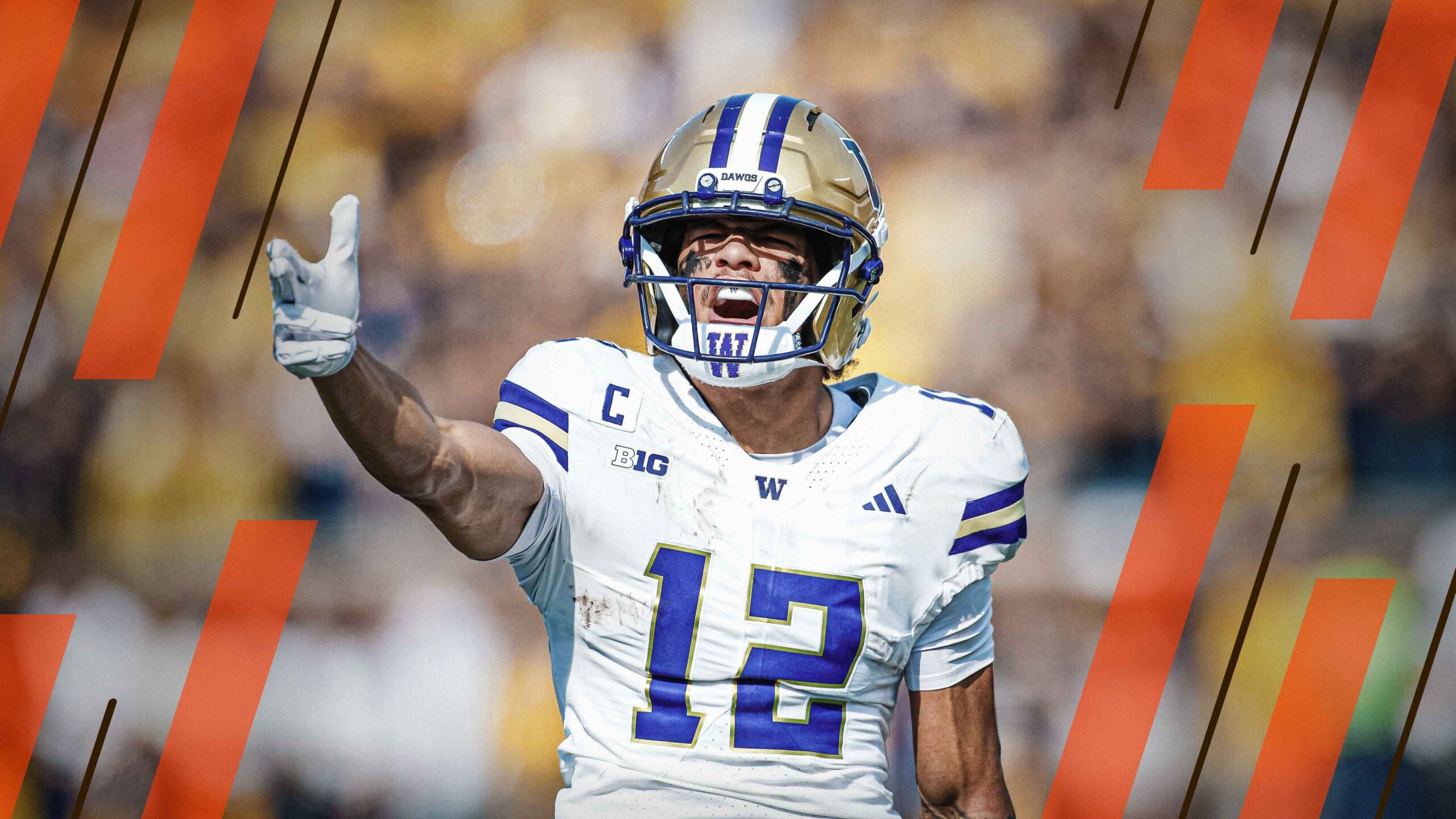
In 2025, Cleveland wideouts finished last in PFF receiving grade and only tied for 19th in yards after the catch per reception. That prompted general manager Andrew Berry to select KC Concepcion with the 24th overall pick and then snag Washington standout Denzel Boston at Pick 39. Not only do both players boast strong separation abilities, but Concepcion’s talent after the catch (career 6.6 yards after the catch per reception) and Boston’s big frame (76.9% contested catch rate in 2025) make the unit well-rounded.
With just two picks, the Browns went from arguably the league’s worst receiver room to an impressive young tandem that can complement each other’s skill sets for years to come.
Las Vegas Raiders secondary
The Raiders generated natural headlines when they selected quarterback Fernando Mendoza with the first overall pick. However, general manager John Spytek’s best work may arguably have been bolstering his secondary.
Despite impressive play from Eric Stokes, Las Vegas’ secondary earned the 29th-ranked overall PFF grade with the 30th PFF coverage mark in 2025. That number should be remedied after grabbing versatile chess piece Treydan Stukes (90.4 PFF coverage grade) as well as Jermod McCoy (89.6 in 2024), stopping the decorated corner’s slide in the fourth round. On top of that, the Raiders also added fellow Wildcat Dalton Johnson, who brings a 37.8 passer rating when targeted.
With Stokes returning to Sin City and second-year corner Darien Porter getting another year to develop, the Raiders now have a talented and versatile secondary with a blend of speed, physicality, patience and ball skills.
Indianapolis Colts linebackers
The Colts’ linebacker room was one of the more dire in football going into April 23. But by the end of the event, general manager Chris Ballard ensured that he found two possible starting options.
Colts linebackers posted the third-worst overall PFF grade in 2025, and that was with former All-Pro Zaire Franklin still on the roster. Indianapolis located juice via second-rounder CJ Allen, whose range and closing speed manifests in his downhill excellence — earning a 91.6 PFF run-defense grade while missing only 6.8% of his tackle attempts over the last two years. Likewise, fourth-round pick Bryce Boettcher flashes good instincts in the run game with a 9.7% run stop rate since 2024 while also placing in the 92nd percentile in PFF coverage grade.
How effective Allen and Boettcher are as rookie linebackers remains to be seen, but it’s undeniable that Indianapolis’ unit is in a much better place after the draft.
PittsburghSteelers offensive line
Armed with 12 picks going into the draft, the Steelers were in pursuit of upgrades along their offensive infrastructure. In particular, the team’s offensive line lacked quality options — but may have found them in the early rounds.
After seeing Isaac Seumalo depart in free agency and with Broderick Jones still recovering from a season-ending neck injury, Pittsburgh had major question marks at both tackle and guard. Consequently, general manager Omar Khan nabbed Max Iheanachor with the 21st overall pick, who brings patience in pass protection (78.3 PFF pass-blocking grade) with high upside. Then, the Steelers selected Iowa guard Gennings Dunker with Pick 96, whose movement and drive in the run game (80.0-plus PFF run-blocking grade in 2024 and 2025) makes him appealing.
In recent years, the Steelers have repeatedly gone back to the offensive line well in the preliminary part of the draft — and have located solid starters in the process. Khan may have done so again in 2026 as he rounded out what looked to be a shorthanded unit.
Gennings Dunker's Stable PFF Grades, 2024-25
MinnesotaVikings interior defenders
Despite having multiple position groups to address in the draft, the Vikings made their priority clear: Rebuild the interior of their defensive line.
Although Minnesota defensive linemen produced fairly average results last campaign by slotting 15th in overall PFF grade, releasing both Javon Hargrave and Jonathan Allen after just one season left the team with a gaping hole up the middle. Interim general manager Rob Brzezinski wasted little time prioritizing defensive line, selecting Caleb Banks (73.2 PFF pass-rush grade in 2024) with the 18th overall pick and then doubling down with Domonique Orange (82.6 overall PFF grade in 2024) in the third round.
While Banks and Orange are imperfect prospects who didn’t meet expectations in 2025, they possess big upside, and marked improvement, for defensive coordinator Brian Flores.
Kansas City Chiefs defensive line
Before the draft, it was somewhat unknown what areas the Chiefs would focus on given their premium draft capital. In addition to upgrading its secondary, Kansas City made a concerted effort to retool its defensive line.
Even with Chris Jones and George Karlaftis, the Chiefs recorded the 23rd overall PFF grade for defensive lines in 2025, partly due to finishing with the 19th-ranked pass-rush win rate. Those numbers should augment after selecting Clemson’s Peter Woods (career 75.3 PFF pass-rush grade) and Oklahoma’s R Mason Thomas (90.4 pass-rush grade in 2025).
With Jones, Karlaftis and former second-rounder Omarr Norman-Lott returning, free-agent addition Khyiris Tonga arriving and Woods as well as Thomas coming in, defensive coordinator Steve Spagnuolo now has a deeper and higher-ceiling front four to help his new-look secondary.
New Orleans Saints wide receivers
The Saints signed long-term pieces in free agency to elevate Tyler Shough’s surroundings as he enters his second season. New Orleans followed suit in the draft by nabbing two intriguing pass-catchers.
Even with Chris Olave starring, Saints receivers sat 15th in PFF receiving grade a year ago. That number should be considerably higher after selecting Jordyn Tyson (85.3 receiving grade in 2025) with the eighth overall pick, adding a twitchy route-runner with a wide catch radius. Further, fourth-round choice Bryce Lance brings size, explosiveness and efficiency with a career 3.05 yards-per-route-run average. Even sixth-rounder Barion Brown flashed with a 53.3% contested catch rate and 92.4 intermediate receiving grade at nearby LSU.
Not only should Olave and Tyson swiftly become a formidable duo, but the Saints also now own much better depth at receiver with Lance and Brown next to Devaughn Vele.
Philadelphia Eagles pass-catchers
Reports before the draft indicated that the Eagles would pivot to the offensive side of the ball after years of defensive selections. Philadelphia followed through on that, specifically adding more weaponry for Jalen Hurts.
Despite boasting household names, the Eagles finished 2025 with the 18th-ranked PFF receiving grade; a looming trade of A.J. Brown and uncertainty for Dallas Goedert after 2026 doesn’t help, either. That prompted general manager Howie Roseman to trade up in the first round to select Biletkinoff Award winner Makai Lemon, who dazzled with a 91.4 receiving mark and 2.5% drop rate. Further, Roseman grabbed Vanderbilt tight end Eli Stowers in the second round, who ranked in the 96th percentile in yards per route run since 2024.
Whether or not Brown gets dealt, Roseman has provided more big-play ability and down-to-down consistency for the Eagles’ receiving corps — both now and in the future.
Makai Lemon's 2025 Receiving Chart
Miami Dolphins secondary
With a depleted roster almost everywhere, the Dolphins were inherent candidates to improve the most after the draft. Several of their units are now fortified, including in the secondary.
Even with Rasul Douglas performing like a stingy cover corner, Miami’s secondary ranked 20th in overall PFF grade and 19th in PFF coverage mark last season. With Douglas gone, the team’s need at cornerback became heightened — and the Dolphins addressed it by nabbing Chris Johnson (92.4 coverage grade) in the first round. Beyond that, Miami selected potential hybrid option Kyle Louis in the fourth round, who brings explosiveness and 875 career slot snaps. Additionally, the team drafted longtime Texas standout Michael Taaffe in the fifth round, who ranks as the third-highest-graded safety in the Power Four since 2024.
Miami’s secondary will probably still endure growing pains this coming year. But the likes of Johnson, Louis and Taaffe will help fill the losses of Douglas and Minkah Fitzpatrick.
New York Jets pass-catchers
The Jets made splashes on both sides of the ball with their high draft picks, including grabbing two dynamic assets for Geno Smith in the first round.
Last season, New York sat 31st in PFF offensive grade and 32nd in PFF receiving mark, with Garrett Wilson the only consistent Jet to earn at least a 62.0 receiving grade. That group is now revolutionized after selecting Oregon’s Kenyon Sadiq (84th-percentile receiving grade since 2024) and Indiana’s Omar Cooper Jr. (career 2.47 yards per route run) with the 16th and 30th overall picks.
Even though general manager Darren Mougey didn’t add any additional pass-game options following Day 1, Sadiq and Cooper considerably raise the floor for what this bunch can accomplish in 2026 and later.