Zoom
Ancient olive trees in Periana E. Cabezas History A journey through the roots, history and future of some of Malaga's oldest olive treesThe town of Periana in the Axarquía hopes to open a musum and a website to allow residents and visitors to learn more about these living monuments to the area's 'liquid gold'
Monday, 30 March 2026, 16:57
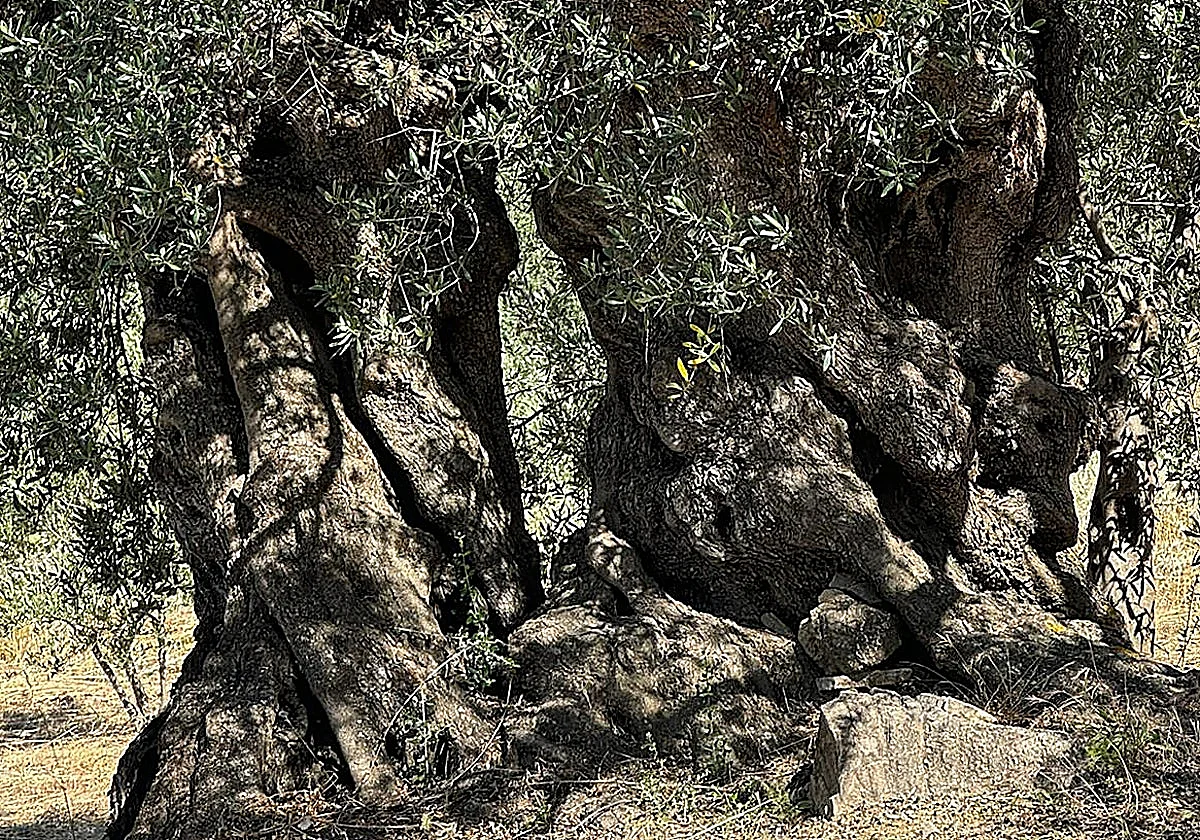
In the fields of Periana in Malaga province's Axarquia, some olive trees have been witness to several centuries, entire generations of families and the slow pulse of an agriculture that does not understand haste.
The thousand-year-old olive trees, authentic living monuments that today once again occupy their rightful place: the centre of the memory and the future of the village in the upper Axarquía where more than 300 specimens are conserved, each one georeferenced and geolocated.
The Centro de Interpretación del Olivo Milenario opened at the end of last November and it not only explains, but also invites you to feel. To understand how the landscape, culture and economy of this part of La Axarquía have been woven for centuries around a twisted trunk, a deep root, a harvest that is much more than fruit.
Now Periana has also launched a digital window into this universe with the creation of a website that allows you to explore the intimate geography of these trees, even before you set foot on the ground. An interactive map, signposted routes and photographic galleries turn the screen into a prelude to a walk that smells of countryside and history.
"It is an open door to the future without forgetting our roots," explained mayor of Periana, Meritxell Vizuete, adding that the website is designed to project heritage without stripping it of its essence.
Three circular routes
Visitors can choose their own pace along three circular routes that wind through the municipality and the village of Mondrón. Paths that not only lead to the olive trees, but also invite you to stop, to observe the texture of the bark, to imagine how many stories have been trapped in their invisible rings. Among them all, some stand out for their uniqueness, such as the well-known «snail olive tree», whose twisted silhouette seems to defy the laws of time.
At the heart of it all is the verdial extra virgin olive oil, the 'liquid gold' that defines the character of the Axarquía. A product that, as the town hall reminds us, is not only born from the olive tree, but from the accumulated knowledge of generations who have learned to read the land, to respect its times and to turn tradition into sustenance.
The initiative is part of a broader strategy of sustainable rural development, supported by the Ministry of Social Rights and Agenda 2030 and Turismo Costa del Sol, which seeks to diversify the tourist offer of the Axarquia beyond the coast and ito inland towns and villages and its natural resources. The project not only has a tourism component, but also a conservation and awareness-raising component, promoting respect for and protection of these centenary trees, some of which have been recognised nationally, such as the well-known snail olive tree.