Zoom
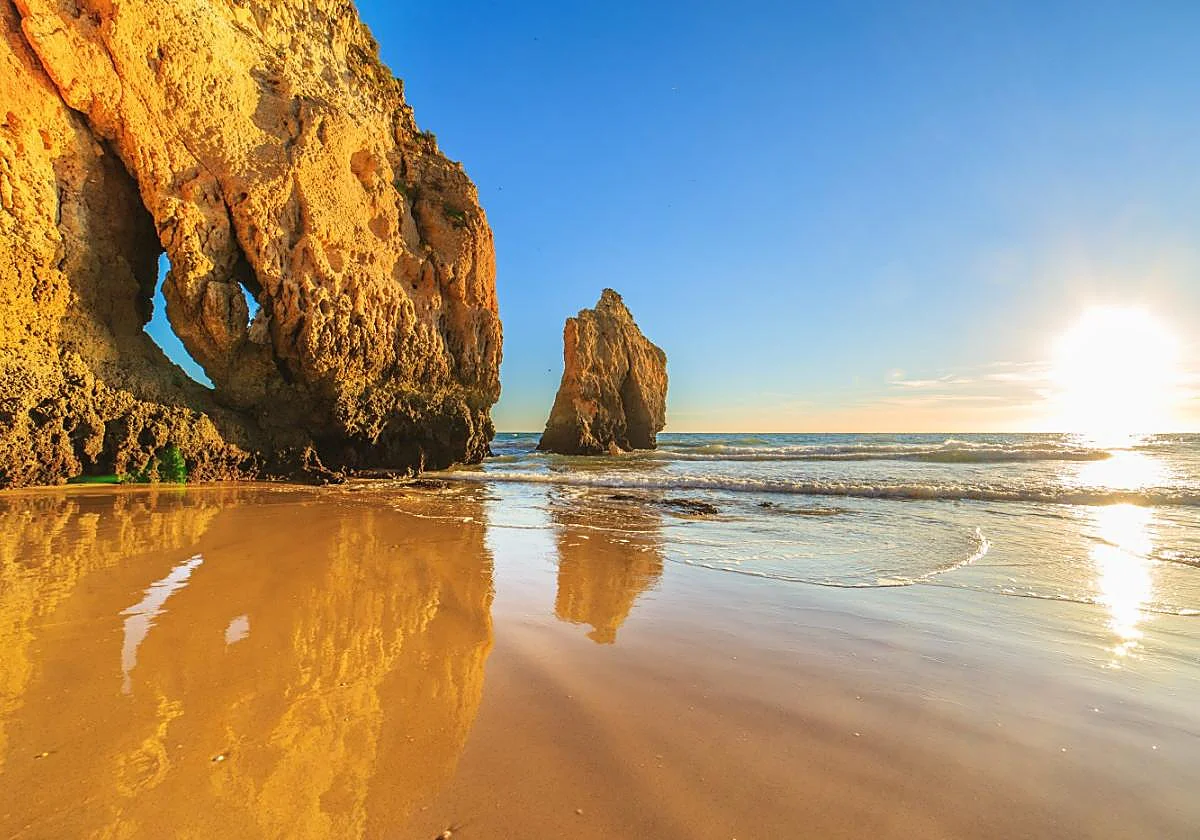
A view of Praia da Rocha in Portimao. Marcin Krzyzak Travel Algarve escapade: the best spots in the south of PortugalHere are three cities that make the Portuguese region worth visiting, offering both golden beaches and a complex history
Anya Soares
Malaga
Friday, 26 December 2025, 12:04
The Algarve lends itself to being a haven for those who want to escape weary routines and days spoiled by grey skies. While cities in the north like Lisbon, Porto and Guimaraes are more metropolitan - rich in cathedrals and art museums - the south of Portugal is the ideal holiday destination to unwind.
Here are three cities you must visit when taking a trip down south:
Portimao
Only a 50-minute drive from Faro airport, Portimao is a port city with a rich maritime and industrial heritage. Here, visitors become sardine enthusiasts, given that the Western Algarve region is home to the fish-canning industry, therefore trying sardines here is a must.
The vibrant promenade in Portimao's city centre is what gives the city its character, referred to by the locals as 'Casa Inglesa' (English house). It is named after the 103 year-old coffee house along the waterfront where in the 1950s and 60s, businessmen, teachers, and office workers would gather to play chess, smoke cigars and discuss politics.
Today, Casa Inglesa offers a scenic walk along the Arade river, with authentic restaurants serving traditional seafood dishes - sardinhas assadas (grilled sardines on bread), bacalhau (salted cod) and lulas grelhadas (grilled squid). However, the promenade comes alive during the summer season, where on weekends jazz bands and guitarists play in the main square; there are activities for children, such as riding go-karts and funfair rides; restaurants and bars buzz with people, and shop vendors set up their stalls, selling churros and ice cream.
Along Portimao's famous coastline, the most impressive beach is arguably Praia da Rocha, boasting limestone cliffs and golden sand, although during peak season in July and August, it gets very busy. To avoid the crowds, you can walk or drive further west to the quieter, and just as gorgeous, Praia dos Tres Castelos, named the three castles because of the beach's rocky outcrops, or Praia do Vau.
Silves
ZoomUntouched by mass tourism, Silves is an ideal place to visit if you're looking to learn more about Portugal's cultural identity, which many assume is rooted in Catholicism. In reality, the Algarve region was part of Al-Andalus, meaning it was ruled by the Moors from the 8th to the 13th century (711AD - 1249AD). Although currently, Portugal's muslim community accounts for less than 1% of the population, and, unlike the Alhambra in Granada or the Great Mosque of Cordoba, there are not as many architectural jewels left over from that significant period.
Although notably, the Arabic influence on Portugal is evident in other ways, such as how the Moors revolutionised the country's agricultural industry - introducing new crops such as rice, pomegranates and citrus fruits - to how they shaped the language itself, where between 300-1,000 words have an Arabic origin.
Silves stands out for its monuments that showcase Islamic military architecture that enriches this quaint riverside town. Silves castle, which sits atop the highest point of the city, was Algarve's political centre. Made from red sandstone, this castle features 11 square towers and a heavily fortified gateway that protected them from attacks led by the Normans in the 9th and 10th centuries, and later was surrendered in 1249, during the Christian reconquest of Al-Andalus.
Lagos
ZoomA trip to the Algarve cannot be planned without stopping in Lagos, which is 30 minutes away from Portimao and 45 minutes away from Albufeira (famous for its nightclub strip), by car. The city has both the golden beaches that Algarve prides itself on, as well as traditional cobblestone streets and a historical old town.
The Church of Saint Anthony is one of the main monuments in the city, unique because of its contrasting features. On the outside, it appears to be a normal church with a modest, whitewashed façade, and yet inside, the vaulted ceiling and gilded woodwork is a prime example of baroque architecture. The lower parts of the wall are decorated with 'azulejo' tiles (originally invented by the Moors), whereas the upper parts are covered with baroque-style paintings depicting the life of Saint Anthony, to which this church is dedicated.
However, the reason Lagos' population doubles during the summer season, is due to its beaches and dramatic coastal landscapes. For instance, Ponta da Piedade is a stunning sight. The name translates to 'Point of Mercy', from where wives and mothers would, from the limestone cliffs, scan the horizons and pray for their loved ones to return back home safely from their perilous sea journeys.
Nowadays, Ponta da Piedade is associated with turquoise waters, gorgeous coastal views and hidden coves, which can be easily accessed if you book a guided kayak tour.