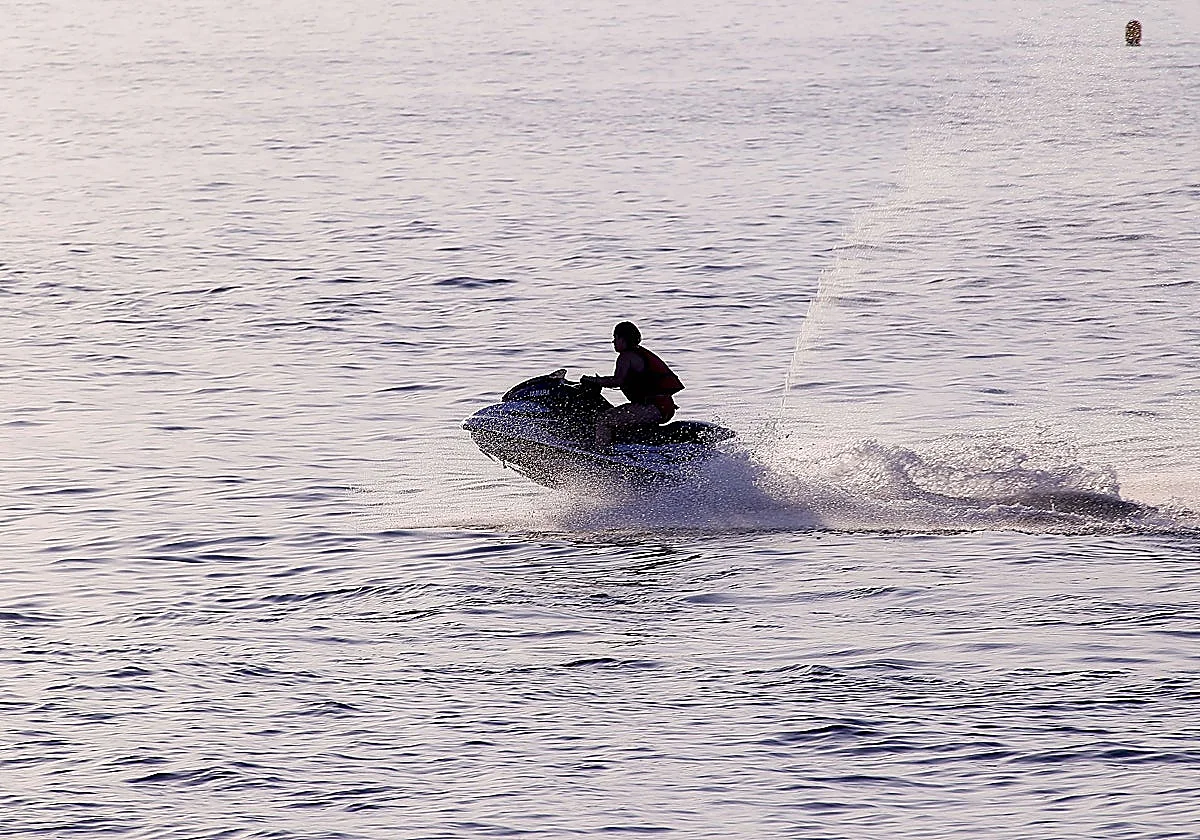
Jet skis
Almuñécar deploys drones along beaches to monitor jet skisThe town hall on Granada province's Costa Tropical has launched an aerial surveillance system that will film, photograph and identify offenders who will be fined
Añádenos en Google A jet ski. (IDEAL)MJ Arrebola
Granada
06/07/2026 a las 14:44h.Almuñécar town hall on Granada province's Costa Tropical has announced it is stepping up its surveillance of jet skis following the ongoing illegal use ... of the vehicles in the Mediterranean off its shores. Last weekend (4 and 5 July) the town hall launched a drone surveillance operation.
The drones fly over swimming areas and when they detect a jet ski, they are programmed to take photographs and videos of the offending vessel, recording its exact location using GPS coordinates. This footage is reviewed by municipal inspectors, who submit the evidence to the harbour master’s office so that proceedings can be initiated and the offender can be fined.
As the councillor for beaches, Lucía González, told IDEAL, the service will run continuously from 1pm to 7pm until 15 July, on Fridays, Saturdays and Sundays and every day from 15 July to 31 August. The drones record anti-social behaviour, such as unauthorised mooring, travelling through the nautical channel at speeds exceeding the limit, performing dangerous manoeuvres and crossing the swimming line.
“This surveillance service will help make our beaches safer and above all, ensure that the designated swimming areas are respected,” explained the mayor of Almuñécar-La Herradura, Juan José Ruiz Joya.
As well as its surveillance and reporting functions, the device is also capable of assisting swimmers in distress and alerting lifeguard stations in real time. The drones are concentrated along the entire Almuñécar-La Herradura coastline, operating mainly on the beaches of Velilla, in Almuñécar and in La Herradura. These areas will be the priority for aerial surveillance, although the drone’s coverage radius is around one kilometre, which allows for wider monitoring, according to the mayor.
More buoys have been installed to mark out a separation between the area designated for swimming and that for boating, with the line of buoys situated 200 metres from the shore and specific access points reserved for boats via clearly signposted channels. This system helps to prevent accidents and improve safety on the beaches during the busiest tourist months.
The Andalusian regional government’s representative in Granada province, Antonio Granados, said that "this coordination network is particularly important in areas such as Maro-Cerro Gordo, a special protection zone where there is a nautical mile set aside for anchorage and which sees a high level of recreational boating activity during the summer months."
Jet skis have been causing tension on the beaches of the Costa Tropical for many years and the authorities acknowledge that a large part of the problem stems from the inexperience of those who use them for leisure and the regulations governing their use are not always observed.
Among the requirements are to stay at least 300 metres from the coast and to remain at least one mile away from the nature reserve. Users operating the jet skis must enter and exit the water exclusively via the designated waterways, maintain a minimum distance of 50 metres between vessels, not exceed a speed of three knots – equivalent to just 5.6 kilometres per hour – in the signposted areas, and not cross the swimming line.
The use of an approved life jacket is compulsory and while users must be at least 18 years, 16-year-olds may use them if they have the written consent of their parents or guardians. Each jet ski may carry a maximum of two people, minors must always be accompanied by an adult and it is recommended that riders remain seated at all times.