Tourism
Andalucía, a leader in religious tourism, attracting 300 million visitors, but can it do more?Divine benefits: a new study has been presented indicating that these tourists generate a global economic impact of 15 billion euros
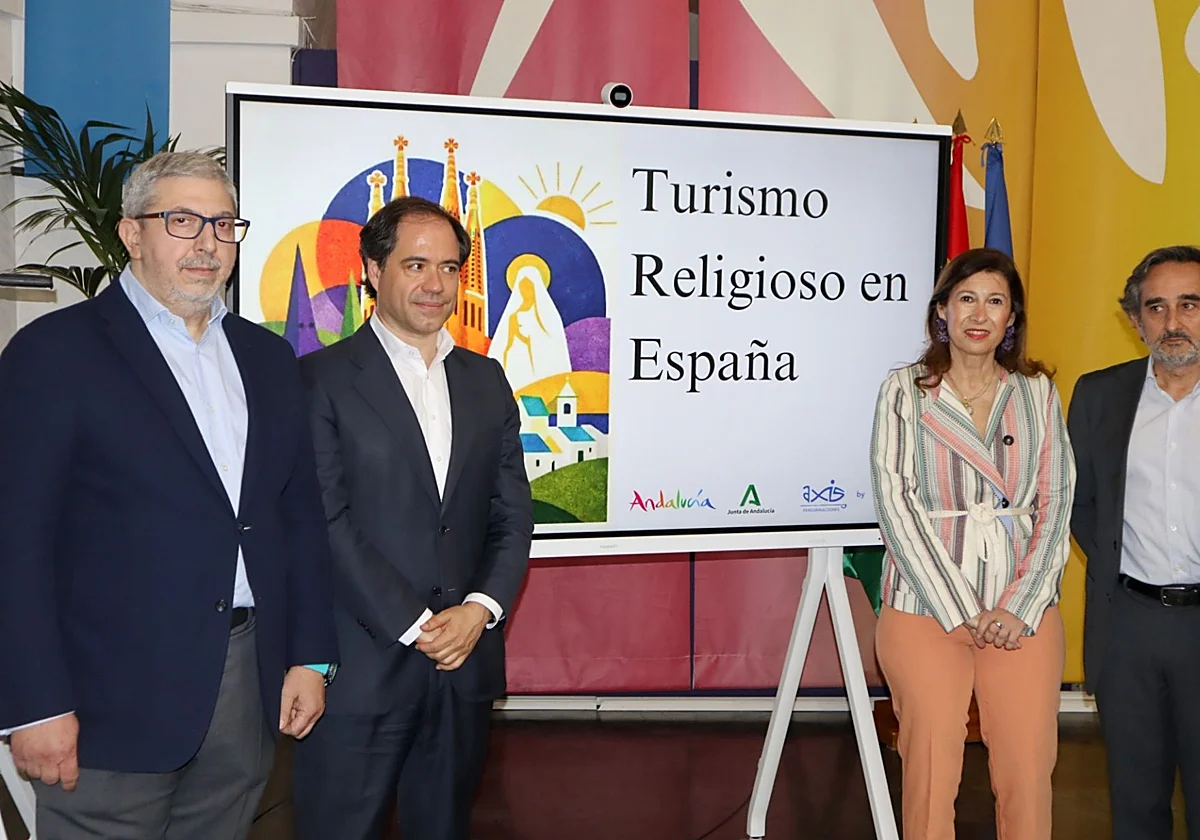
Añádenos en Google Gemma del Corral, together with the promoters of this global study on religious tourism. (SUR)Malaga
29/05/2026 a las 13:29h.Religious tourism now attracts 300 million travellers worldwide, generating more than 15 billion euros globally. These figures are compiled in the report 'Religious tourism in ... Spain. A journey into a transforming market segment', prepared by Observatur (a major tourism analytics group in Spain) and presented at Turismo Andaluz's latest event.
The report highlights Andalucía as "one of the leading destinations in this segment, with a specific internationalisation strategy and over 100 initiatives linked to religious tourism".
The director-general for the promotion and development of tourism and hospitality in Andalucía, Gemma del Corral, participated in the presentation, pointing out that religious tourism "maintains deep roots linked to faith, tradition and heritage, but is opening up to new ways of travelling, interpreting and experiencing the region".
After presenting the key findings from this study (conducted in collaboration with Tourism and Sport of Andalucía and IAG7 Travel), she explained that it is a broad phenomenon, in which "some travellers approach these destinations from a spiritual perspective, while others do so from a cultural or historical, artistic, anthropological or heritage interest".
Del Corral pointed out that heritage "is not an isolated element, but rather part of the daily life of municipalities and their local identity".
She called for "working with sensitivity to open up these resources to visitors without distorting the meaning and organising what's on offer without damaging what makes them unique and valuable".
In this regard, she stressed that Spain "possesses an extraordinary wealth linked to religious tourism that is only partially organised as a tourist product. We have heritage, tradition and there is demand, but we need to know how to connect, explain and make these resources accessible in an organised way".
The report's presentation included remarks from the director of Task ONE (José María Paredes), the CEO of the IAG7 group (Ángel Muñoz) and the study's technical coordinator (Marcos Franco). The latter noted that this is no longer a niche segment, but rather "an opportunity with its own distinct character and future potential".
Furthermore, they mentioned in detail that the study indicates that Spain "ranks among the world's leading destinations for religious tourism, alongside Rome and the Holy Land, and notes that the Spanish take between 17 and 20 million trips annually with some religious motivation". It is estimated to generate around nine per cent of the country's tourism GDP (gross domestic product).
As for the traveller profile, they noted a shift towards a more diverse visitor in terms of age and motivations. Consequently, the average age is decreasing and interests are becoming more varied, complementing faith with culture, heritage and wellness.
"However, in Spain there is a need to improve coordination between the various stakeholders in the sector - the church, destination administrations and businesses," they stated, advocating for the development of a common strategy, professionalisation and improved heritage management.
Among the proposed lines of action, they highlighted "designing a coordinated strategy under the 'Spain' brand, identifying a structured and marketable offering, enhancing the narrative for the tourist experience and designing specific products for new profiles".
Furthermore, they proposed further internationalisation efforts, implementing technology without losing the essence of heritage, expanding public-private partnerships, strengthening the sustainability of existing heritage and incorporating emerging destinations to distribute activity across the country.