APOD
Astronomy Picture of the Day
Discover the cosmos! Each day a different image or photograph of our fascinating universe is featured, along with a brief explanation written by a professional astronomer.
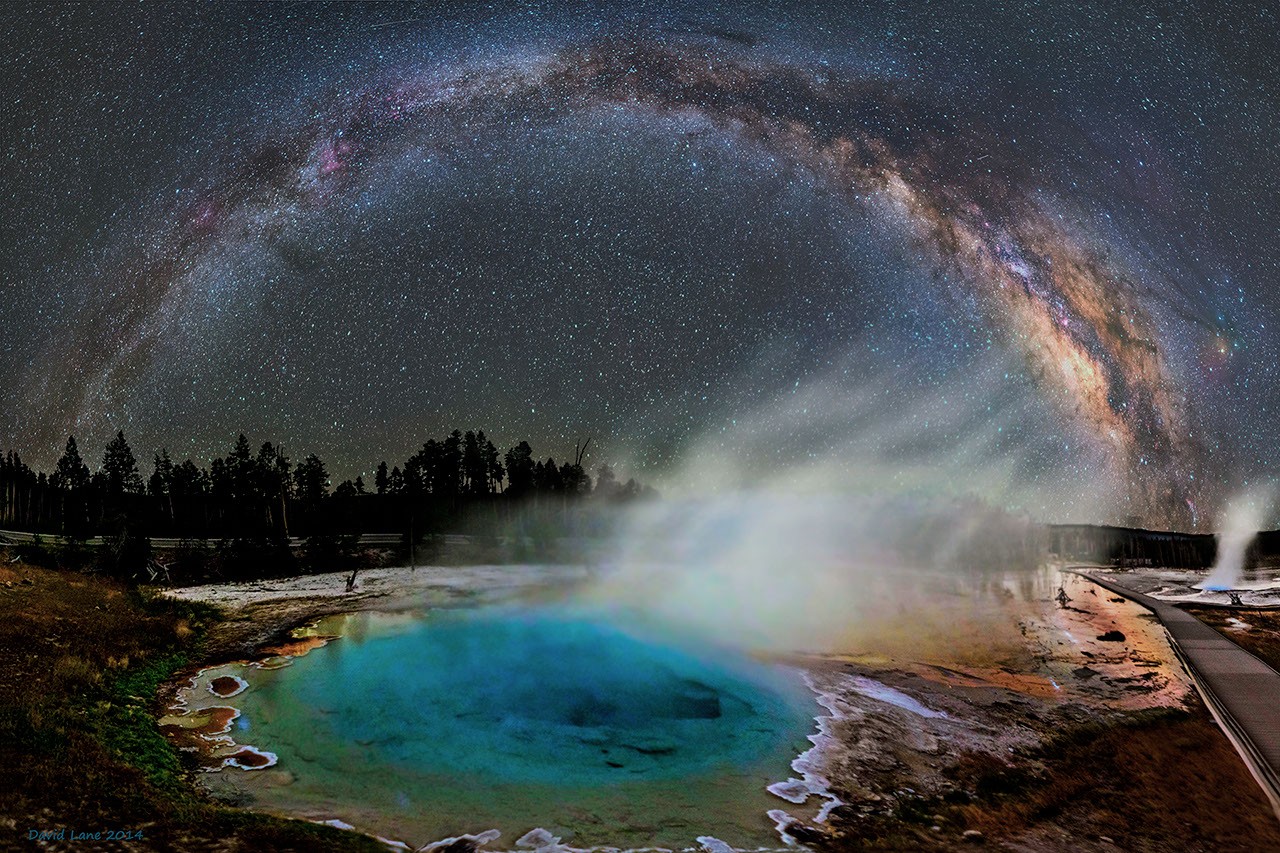
Milky Way over YellowstoneExplanation: The Milky Way was not created by an evaporating lake. The colorful pool of water, about 10 meters across, is known as Silex Spring and is located in Yellowstone National Park in Wyoming, USA. Illuminated artificially, the colors are caused by layers of bacteria that grow in the hot spring. Steam rises off the spring, heated by underground magma associated with the Yellowstone Hotspot. Unrelated and far in the distance, the central band of our Milky Way Galaxy arches high overhead, a band lit by billions of stars. The picture features a 16-image panorama taken in 2014. If the Yellowstone Hotspot causes another supervolcanic eruption as it did about 640,000 years ago, a large part of North America would be affected.
Growing Gallery: Solar Eclipse of 2026 August 12
Tomorrow's picture: a golden crown
NASA Science Activation & Michigan Tech. U. Random APOD Generator Yesterday's Image APOD: 2026 August 15 – Bright Perseids from Sweden Tomorrow's Image APOD: 2026 August 17 – A Golden Corona Eclipse