Zoom
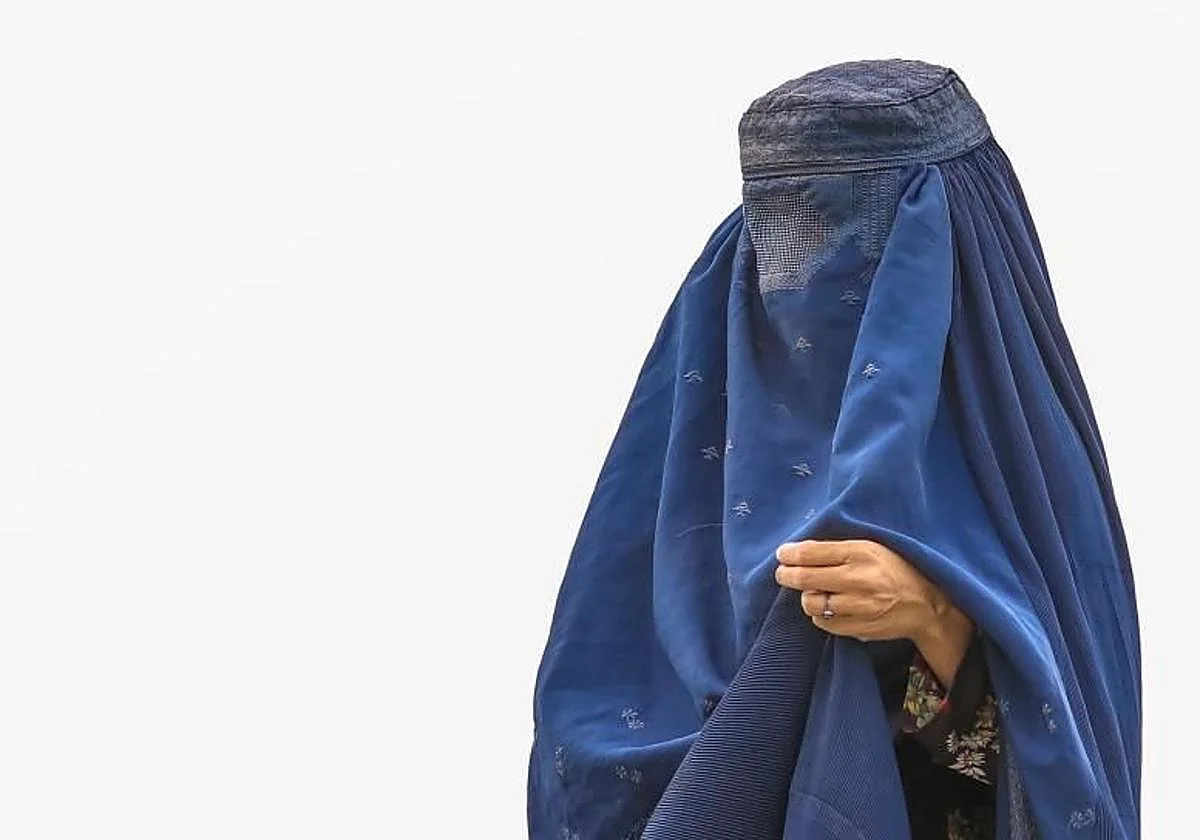
A woman wearing a burqa in Afghanistan. Reuters International Women's Day Banning the burka in Spain: is it fuelling the far-right?Most of the time it is better not to enter into the debates that some political parties seek to open up, but on this occasion, with so many people falling into the trap, it is necessary to do so
Wednesday, 4 March 2026, 15:36
There is no consensus on the best strategy to combat the far right. Neither is there any agreement as to whether the best thing to do is to enter into the debates (which implies considering that the rights of minorities, the existence of gender violence or equality between men and women are open to debate in the first place) or to ignore them completely and hope they'll go away.
The latest issue that the far-right in Spain has entered into is the banning of the burka and the niqab in public spaces, an issue which has been discussed in the Spanish parliament and in many city councils, including Malaga and Burgos. This week Rincón de la Victoria town hall on the eastern Costa del Sol has also been in the news because of a vote that took place over the issue during a council meeting.
A couple of acceptable arguments can be used to defend the measure: women's freedom and equality on the one hand and security in public spaces on the other. Although the security argument for banning the burka is a bit lazy, like most of those that try to awaken society's fears, especially of those who have been constructed as 'other' or different'. For a start, here in Malaga do we really see so many burkas and niqabs on the street?
Fraudulent argument
But Vox's appeal to women's freedom and equality is a bit of a joke coming from a party whose leader, Santiago Abascal, denies gender violence calling it an "ideological concept" and systematically dissociates himself from any institutional and public display in condemnation of gender-based murders.
This proposal to ban clothing, which is, of course, deplorable because it erases and annuls women, is not really about feminism, it is not about the emancipation of women. It is about something else: xenophobia, racism, wanting a homogeneous, uniform, white and Christian society; instilling in the population the fear that immigration implies "the importation of habits and behaviours alien to those of western societies" or "the imposition of Islamic customs in the Spanish public space".
The extreme right were counting on using these arguments to inflate the xenophobic balloon. It is clear that without prior analysis of what lies behind it, of the hatred of the foreigner that it oozes, it is logical to say 'of course, the burka, the simple hijab, is a symbol of submission of women, of annulment so that man does not fall into temptation and take the apple (oh, no, sorry, this is from another book).
Research warns that banning burkas and niqabs withdraws women from education and the labour market: women do not stop covering their faces, they stop leaving their homes.
What does the scientific evidence say?
But does banning the burka really help liberate women or does it do the complete opposite? Scientific literature has, to say the least, serious doubts. Research by Aala Abdelgadir and Vasiliki Fouka published by Cambridge University Press revealed that banning the burka in France from 2004 onwards did a disservice to young Muslim women living in the country, which reduced their presence in the educational world and in the labour market.
The ban, says the research, increases the perception of being part of a discriminated social group and reinforces the national and religious identities of those concerned. In other words, it is counterproductive if women's freedom is what is really wanted. If the niqab and the burka are banned, girls do not stop wearing them, they stop going out.
Women's liberation is not about that, but about coexistence and diversity. The only liberalism that works, the one that allows the free circulation of ideas, means that in the end the right one triumphs, and there is nothing better than freedom and equality, the principles of feminism.
Intelligent, evidence-based feminism is not relativist. It does not think that women are free to wear veils. It does not say that if something is specific to a culture it must be respected. Feminism considers women's rights as universal over and above cultures and religious confessions, emancipated from both. But it does not prohibit, it liberates, persuades, empathises and accompanies.
Feminism is science and analyses evidence, public policies and their results. Emancipation takes longer than it takes to write a law and pass it in Congress. The abolition of gender, of gender roles, of its mandates and servitudes is not something that can happen overnight. Nor is another more perfidious construction, racism, the demonisation of the other. But every day there are those who lay one more brick. Let us not make their task even easier.