- Kansas State brings in Collin Klein: The Wildcats legend will now call the shots on an offense that returns Avery Johnson.
- Pittsburgh looms in the ACC: Pat Narduzzi's group still has talent in the trenches as well as gunslinger Mason Heintschel.
Conference championship races don’t always play out exactly as preseason polls suggest. Ohio State, Georgia and the rest of the usual suspects headline expectations across the Power Four this year, but each conference has a handful of programs sitting just outside that conversation with enough talent, scheme fit and favorable scheduling to make a run to conference championship weekend.
Here’s a look at less common picks with the best shot in each Power four conference.
SEC: Ole Miss, Tennessee, Missouri
The SEC’s depth makes this the hardest conference for an outsider to crash. Georgia, Texas, Texas A&M, Alabama, LSU and Oklahoma are all realistically in the national title conversation, nevermind just the conference. Any team labeled a non-contender has to dodge and weave through six credible powerhouses just to reach Atlanta.
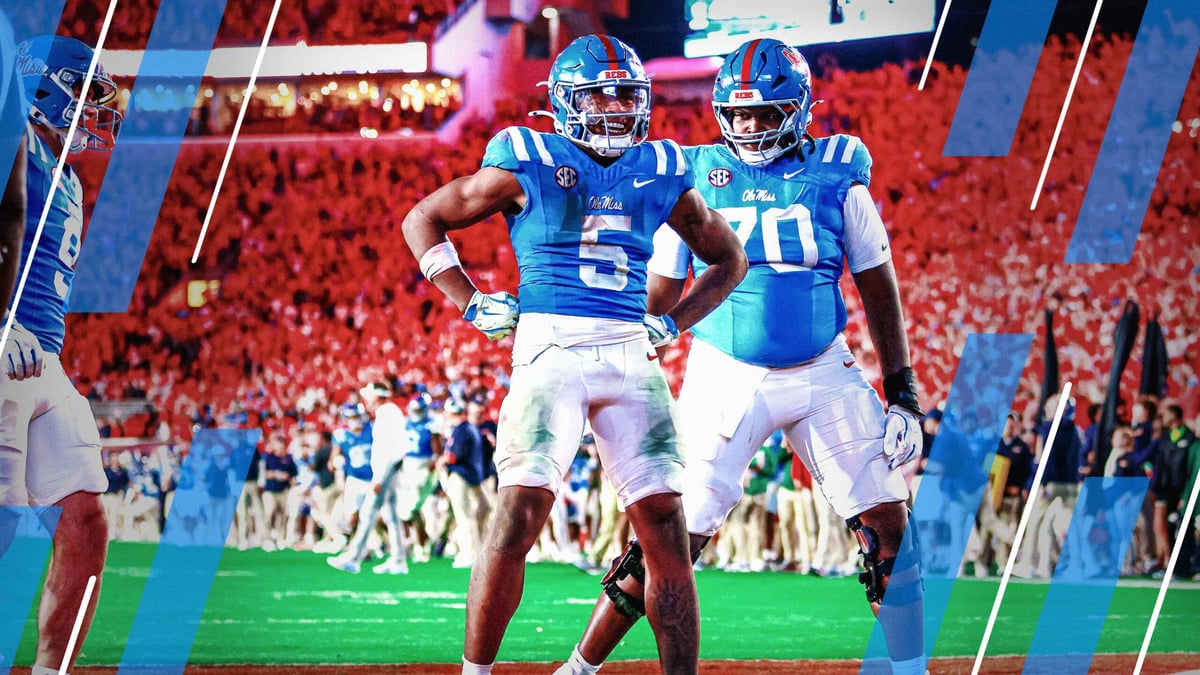
Ole Miss enters as arguably the least unknown of these SEC dark horses, with Trinidad Chambliss and Kewan Lacy giving Pete Golding a squad worthy of a top-10 preseason ranking. Chambliss’ 20 big-time throws against SEC opposition last season were the most of any quarterback. Meanwhile, Lacy became the first running back to accumulate 1,000 yards and 14 rushing touchdowns against SEC opponents in a single season since Kerryon Johnson nine years ago.
The Rebels haven’t won a conference championship since 1963. While that drought says little about this specific roster, it’s a reminder of how rarely programs outside the traditional powers actually finish the job in the south.
Tennessee’s hopes hinge on Jim Knowles rediscovering the form that made him one of the sport’s most sought-after defensive minds. He won a national title as Ohio State’s coordinator in 2024 before a rough 2025 at Penn State, where he inherited a defense that had lost stability around him rather than one he built himself. Knowles has brought several of his prior Penn State pieces to Knoxville and has talked openly about how much faster his scheme installs when players already know his terminology.
The biggest question sits at quarterback, where Josh Heupel is choosing between true freshman Faizon Brandon and redshirt freshman George MacIntyre, two complete unknowns. Heupel wants his offense to reclaim its identity as the attacking, tempo-driven unit it was only a few years ago with Hendon Hooker. At their best back in 2022, almost a quarter of Volunteers passing attempts travelled further than 20 yards downfield, the most in college football.
Returning to that level of aggression with an unproven passer is a tall order. Realistically, this program may be entering Year 1 of a two-or-three-year-plan.
Missouri returns a strong offensive core, but its ceiling hinges on the health of Ahmad Hardy. The All-SEC running back led the conference in rushing yards and averaged an absurd 4.6 yards after contact per attempt. However, he suffered a gunshot wound to his leg in May, and coach Eli Drinkwitz has been careful not to promise anything close to a normal workload early in the season.
Defensively, Missouri is replacing All SEC linebacker Josiah Trotter, now with the Buccaneers, with Auburn transfer Robert Woodyard Jr., a like-for-like swap of veteran defensive leaders. Woodyard’s 78.6 overall PFF grade in SEC play last year ranked second among starting linebackers.
Big Ten: USC, Michigan, Iowa
Beyond the obvious contending trio of Ohio State, Indiana and Oregon, it’s probably one of USC, Michigan or Iowa that represents the best shot at an outsider run.
The path to Indianapolis likely runs through scheduling luck as much as talent. USC and Michigan both draw all three of the favorites, while Iowa avoids both Oregon and Indiana, plus its Ohio State matchup comes at home relatively early in the season. That at least offers a puncher’s chance at reaching the title game.
Iowa retains only around 40% of its defensive snaps from a season ago, which would worry most programs but carries less weight under Kirk Ferentz, whose units have a long track record of reloading regardless of personnel churn. The offense is banking on the ground game as per usual, and intriguing FCS transfer L.J. Phillips Jr. could help in that regard. Phillips posted a 93.3 PFF rushing grade last season at South Dakota, the highest mark in the FBS. His 1,922 yards was the most of any Division I player, and 1,300 of those came after contact.
Michigan’s biggest variable is Bryce Underwood, the highly touted quarterback entering Year 2 after a freshman season that flashed both the ceiling and the growing pains you’d expect. Underwood brings a nice blend of collegiate athleticism with pro-style operation. His 42 scrambles are the fifth-most of any returning Power Four quarterback, and he averaged the fastest time to throw of anyone in the top 15 scramblers.
The Wolverines also added edge defender John Henry Daley from Utah as a huge boost to the defense. Daley’s 93.4 PFF pass-rushing grade last year was the highest of any edge defender not named David Bailey. He produced 54 pressures and 10 sacks.
USC’s offense is not really in question under Lincoln Riley. The bigger swing factor is whether the defense, now overseen by veteran coordinator Gary Patterson, can hold up against a schedule stacked with the conference’s best. Jayden Maiava returns to run the Trojan offense with more experience than he had a year ago.
Maiava ranks among the top 10 returning Power Four starters in PFF passing grade, passing yards and passer rating. He already has over 2,000 collegiate snaps to his name, but he’s yet to show any signs of limiting turnover-worthy plays, which have remained a constant throughout his career. For context, Maiava recorded 21 last season.
Read more
Read moreBig Ten All-Decade Team: Eleven teams feature, Ohio State leads the way
By Daire Carragher
(opens in new tab) →Big 12: Kansas State, Arizona, Houston
Texas Tech’s dominance and its ability to reload after losing a wave of talent to the NFL Draft makes every other program a mild outsider by default here, though Utah and BYU are both considered true contenders in my eyes.
Houston, Arizona and Kansas State stand out as the next tier down, while TCU deserves an honorable mention as well. Kansas State brought in edge rusher Wendell Gregory, a rare bright spot on an otherwise poor Oklahoma State defense last year whose 18.9% pressure rate ranked third in the Big 12 behind Bailey and Daley.
Kansas State also hired Collin Klein, one of the youngest head coaches in the Power Four and a program legend who quarterbacked the Wildcats to a Big 12 title as a player. Klein inherits a roster with quarterback Avery Johnson back for another season, and Kansas State crucially avoids all three of the conference’s top contenders on the schedule.
Arizona’s Brent Brennan went 4-8 in Year 1 and 9-4 in Year 2, and the arrow appears to be pointing up with legitimate conference title aspirations in Tucson. This roster returns a solid amount of defensive production after leading the Big 12 with 14 interceptions in conference play last season (and dropping an additional eight opportunities). Fourth-year starter Noah Fifita also returns as a reliable presence at quarterback, though the Wildcats’ conference slate is considerably tougher than Kansas State’s.
Houston is a program we have already floated as one with a remote shot of making its first College Football Playoff appearance in 2026, and getting there would likely require winning this conference outright. The Cougars won 10 games last year and return their head coach, offensive coordinator and defensive coordinator intact, a rare level of continuity for a program outside the sport’s traditional upper class.
Houston went searching for reinforcements this offseason and landed running back Makhi Hughes, the former Tulane standout who reunites with his old coach after a one-year detour at Oregon that never worked out. Hughes posted back-to-back elite seasons in 2023 and 2024.
ACC: SMU, Virginia Tech, Pittsburgh
A conference that hasn’t produced a repeat champion since 2020 doesn’t look likely to change that trend in 2026. Reigning champion Duke sits around +6000 to defend the title, and outside of obvious contenders Miami (FL), Clemson and an emerging Louisville side, a “dark-horse” case can be made for almost anyone in this league.
SMU is perhaps too good to be called a true outsider, and plenty of preseason predictions already have the Mustangs firmly in the mix. Rhett Lashlee enters Year 5 having mastered the transfer portal, where SMU’s financial resources in a major metropolitan market don’t hurt. Kevin Jennings provides a solid floor at quarterback, but Mustangs fans would’ve liked to see slightly more year-to-year progression from their starter. Jennings’ PFF passing grade dipped from 85.0 in 2024 to 77.9 in 2025 as he continued to average one interception per game.
James Franklin will want to set a high standard immediately in his first full year at Virginia Tech. This is a fundamentally new look for the program, built around Penn State transfers and a strong late recruiting push triggered by Franklin’s arrival. Among the transfers following him to Blacksburg are quarterback Ethan Grunkemeyer, who really found his footing over his final three games of last season. His 83.9 PFF passing grade from Week 13 onward ranked sixth among Power Four quarterbacks.
Franklin also brought back former Hokies coach Brent Pry as his defensive coordinator, a somewhat unusual reunion given Pry was let go by Virginia Tech just months earlier. Franklin’s track record of quick turnarounds gives the Hokies a legitimate case in 2026.
Finally, Pittsburgh has no real questions in the trenches, returning the bulk of its production on both lines from a team that won eight games a season ago. The bigger uncertainty comes out wide and in the secondary. Mason Heintschel will start at quarterback after taking over halfway through last season. The Panthers were the third-most pass-heavy offense in the Power Four last season.
Road trips to both Miami (FL) and Louisville will test this group, but in a conference that has consistently produced surprise championship game appearances in recent years, there’s no obvious reason Pitt can’t join that list.