Zoom
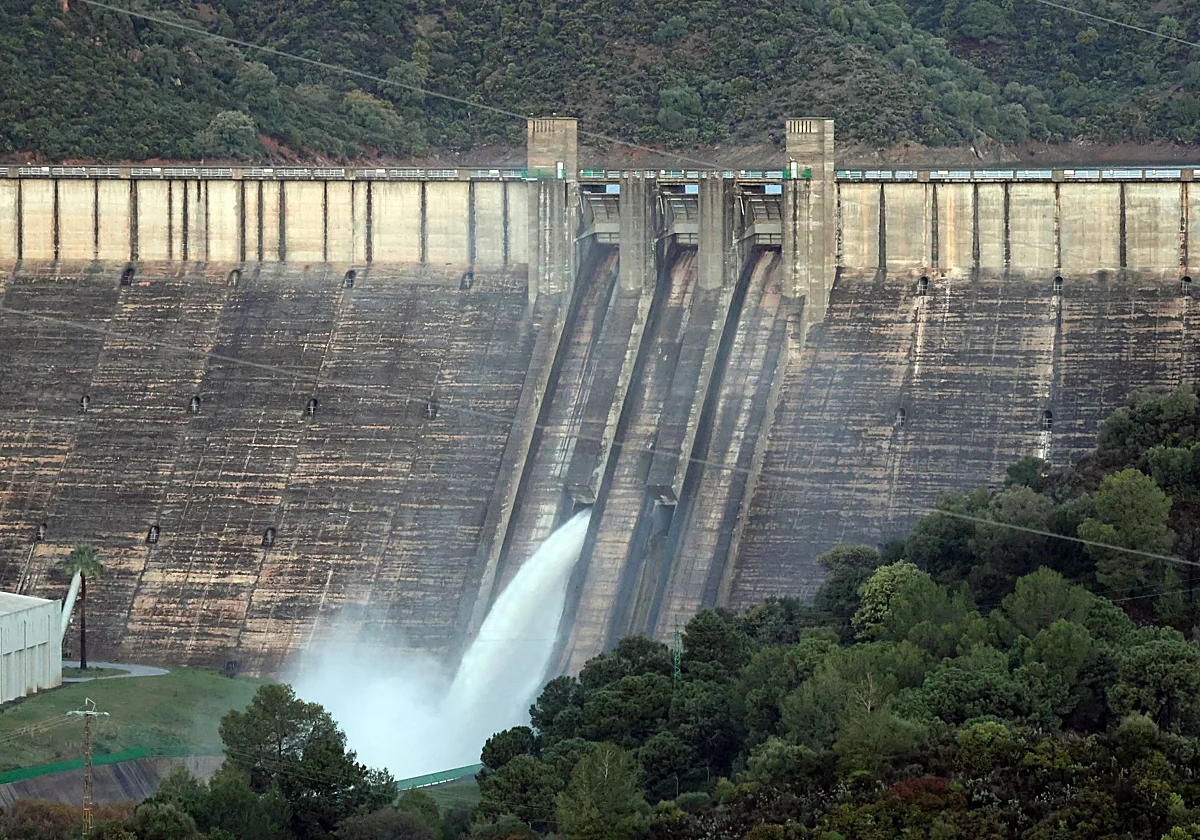
The reservoir at La Concepción dam was released on Monday, 5 January. JOSELE Water Costa del Sol's La Concepción reservoir releases water for safety reasonsThe floodgates will be open for 12 hours and will release 2.5 million cubic metres of water, the equivalent of 15 days of demand on the west coast in winter.
Málaga
Monday, 5 January 2026, 15:59
The La Concepción reservoir has been releasing water for safety reasons since Sunday night, after reaching 80% of its capacity in the middle of the rainy season and faced with the possibility of another storm arriving soon.
The spillway has been discharging at a rate of 60 cubic metres per second since 9pm on Sunday. This is 215,000 cubic metres per hour over 12 hours. The final objective is to reduce the volume of stored water by 2.5 million cubic metres, according to data provided by the Andalusian regional government's department of sustainability and the environment.
12
hours is how long the floodgates will remain open, which could lead to high flows in the Verde river
The reservoir contained 50 million cubic metres at 11am on Monday, which is 87% of its capacity. When the operation to release the water into the Verde river is completed, it will be around 47.5 million cubic metres or 80% of its capacity. Civil protection called for caution on Sunday night, in view of the rising level of the Verde during the hours that the drains will remain open.
Relative impact
To put the scale of a decision into perspective which, at first glance, is not good news for an area that suffers recurrent and severe water shortages, several reference points can be taken into account. Those 2.5 million cubic metres are the amount of water required to supply a population of 37,000 for a year.
On the Costa del Sol, the same amount would be enough to supply the entire population for two weeks during the winter. In summer demand soars and the same amount would barely cover a week's supply. It is worth remembering at this point that the supply in this highly populated area comes from a mix of resources including the reservoir, the Marbella desalination plant and wells.
Rise in reserves
The rise in water reserves in the province with the December rains is one of the fastest and most remarkable in recent years, given that previous winters have been particularly dry.
Before December, the reservoirs contained 277 million cubic metres of fresh water. At 11am on Monday, there were already at 337 million cubic metres, or 61 million more.. Given that Malaga city needs around 42 million cubic metres a year, this amount could supply the city for at least a year and a half. The best thing is that the runoff is constantly arriving and will continue to do so for the next few hours.
Guadalhorce reservoirs
Alongside La Concepción, the situation of the reservoirs in the Guadalhorce system (Conde, Guadalhorce and Guadalteba), which supply the city of Malaga and the Guadalhorce Valley, is particularly noteworthy. On Sunday night, the Grande river reached a historic record at Las Millanas, in Tolox, with a level of 2.98 metres. The previous high was recorded in October 2018, at 2.81 metres. Last week, the Guadalhorce river also set a new record.
This water could be put to much better use in the summer if the Cerro Blanco dam existed, as it would regulate flooding on the Grande and prevent the recurring floods that affect Cártama.
Faced with this situation, mayor of Malaga Francisco de la Torre has once again called for the construction of this reservoir, which the regional government has once again included in its hydrological plans, although it should be paid for by the central government because it is its responsibility. "Eight days ago, we had a record high at the Cártama iron bridge, because the middle basin of the Guadalhorce has no regulation," he said, adding that only Campanillas is (partially) protected thanks to the Casasola dam.
The Turón river is also very full of water, which flows into the Conde de Guadalhorce reservoir: it has risen by 12 million cubic metres in a matter of a few hours (to 72.5% of its capacity). The Guadalteba has gained five; and the Guadalhorce two.