3 min read
Curiosity Blog Sols 4804-4811: Kicking Off the Final Phase of Boxwork ExplorationMars Science Laboratory Mission Team Members
Feb 17, 2026 ArticleWritten by Abigail Fraeman, Curiosity Deputy Project Scientist
Earth planning date: Friday, Feb. 13, 2026
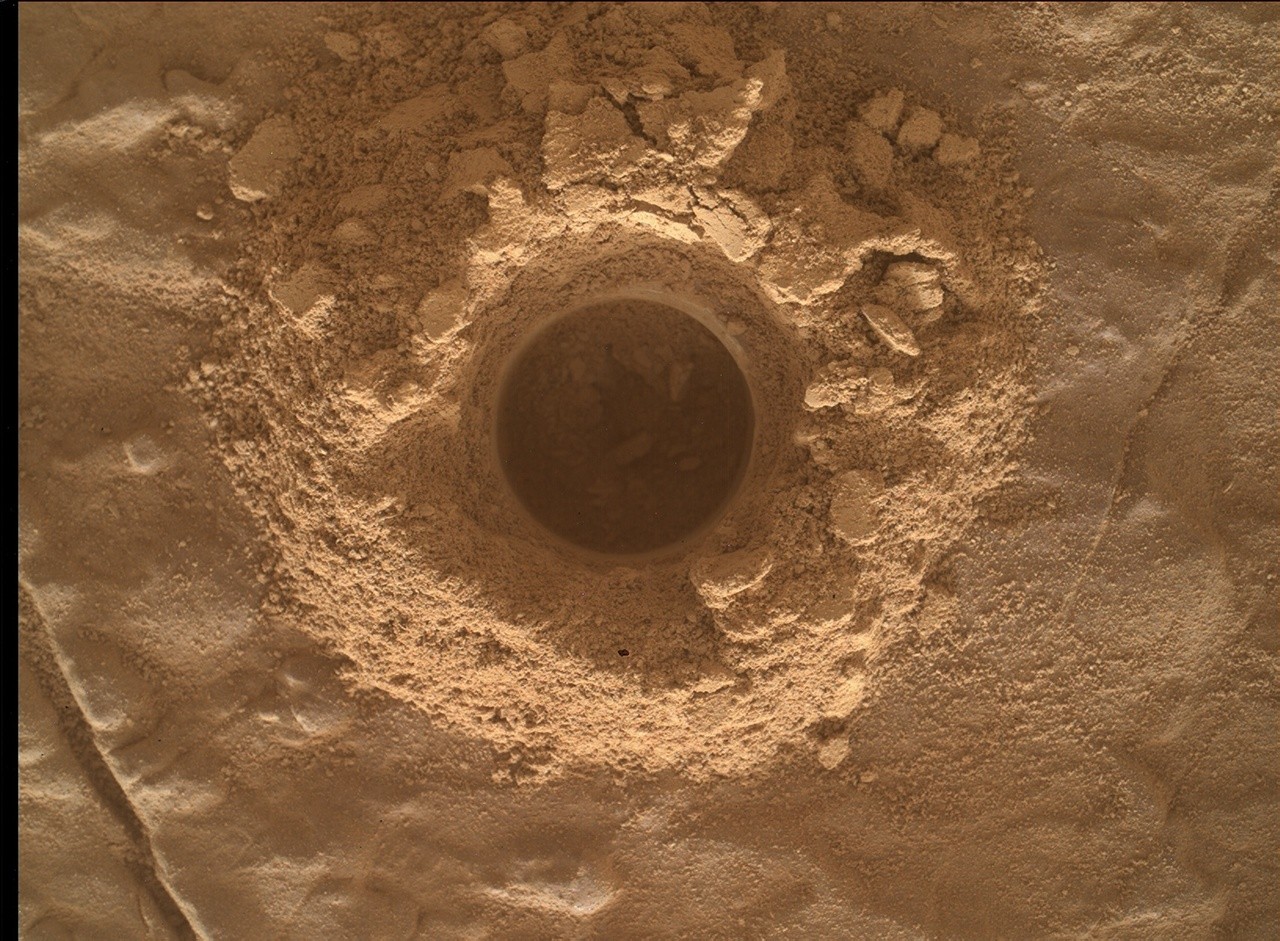
Curiosity spent this week at Gale crater completing the last few activities associated with the “Nevado Sajama 2” drill before kicking off our final phase of the boxwork exploration campaign. As we’ve explored the boxwork region, the science team has divided up our activities into four phases:
- Phase 1: First approach (sols 4534-4570 / May through June 2025) — This phase focused on making initial observations of the boxwork unit, which culminated in the team's decision to drill at the Altadena location.
- Phase 2: Establish regional context (sols 4571-4599 / June through July 2025) — During this time, we collected additional observations of the boxwork unit between the Altadena drill location and arrival at the “main” boxwork area. This included stopping at the distinctive “Volcán Peña Blanca” feature.
- Phase 3: Exploration of the best expressed boxwork structures (sols 4600-4805 / July 2025 to February 2026) — This period was the heart of the boxwork campaign. During phase 3, we collected lots of observations of the most well-defined ridges and hollows within the boxwork unit, and we used what we learned to select locations where we wanted to drill a hollow and ridge. We selected targets named “Valle de la Luna” and “Nevado Sajama,” respectively.
- Phase 4: Our final look (sols 4805- ??? / February 2026 and beyond) — We’re kicking off this phase now, which will focus on some last measurements of ridges and hollows as well as an exploration of the contacts between the boxwork unit and adjacent geologic units to the east and south. Once this is completed, we’ll wrap up and continue our climb up Mount Sharp through the recently named “Valle Grande."
Our first drive away from the Nevado Sajama drill took Curiosity northeast along one of the wide ridges. From near this spot, we have a good view of ridges and hollows to the east. We’re particularly interested in getting a better look of a hollow that, in orbital data, seems to have interesting-looking bedrock on its floor as well as a particularly narrow ridge that has many small ridges branching off it, which the team has dubbed “Los Flamencos.” These images will help us see if we want to drive to one or both features, and they will help us plan the exact places to drive next week. While we’re here, Curiosity will also collect lots of data on the bedrock in front of the rover, with APXS and MAHLI observations planned for targets named “Mollecita" and “Monte Cielo.”
We got so much wonderful data from the drilling activities over the last few weeks, and it feels really good to be back on the Martian boxwork road again to begin this final phase of our boxwork unit campaign.
Want to read more posts from the Curiosity team?
Want to learn more about Curiosity’s science instruments?
Share
Details
Last Updated Feb 17, 2026Related Terms
Explore More
2 min readCuriosity Blog, Sols 4798-4803: Back for More Science
Article 1 week ago 2 min readCuriosity Blog, Sols 4788-4797: Welcome Back from Conjunction
Article 2 weeks ago 3 min readCuriosity Blog, Sols 4750-4762: See You on the Other Side of the Sun
Article 2 months ago Keep ExploringDiscover More Topics From NASA
Mars
Mars is the fourth planet from the Sun, and the seventh largest. It’s the only planet we know of inhabited…
All Mars Resources
Explore this collection of Mars images, videos, resources, PDFs, and toolkits. Discover valuable content designed to inform, educate, and inspire,…
Rover Basics
Each robotic explorer sent to the Red Planet has its own unique capabilities driven by science. Many attributes of a…
Mars Exploration: Science Goals
The key to understanding the past, present or future potential for life on Mars can be found in NASA’s four…