Estimated Reading Time: 5 minutes
A recent piece prompts a follow-up series, investigating passing and receiving productivity related to next-read passes and checkdowns. Passing data is examined in Part 1, while situational receiving data is examined in Part 2.
Today’s pass-heavy NFL relies heavily on schemed-up first-read productivity, though next-read targets and checkdown targets specifically benefit certain positions, situationally. As detailed in Best target earners from the 2025 NFL season, “PFF charts 10,865 first-read passing attempts, 1,555 next-read passing attempts and 1,890 checkdowns thrown during the full 2025 season.”
This series uses the regular season rather than the full NFL season through Super Bowl LX to accurately inspect passing volume data via an unbiased, playoff-weighted sample. Its findings correspond helpfully.
Next-read and checkdown target data among Weeks 1-18.
Next-Read & Checkdown TargetsNext-Read Targets (Percentage of Total/Subtotal)Checkdown Targets (Percentage of Total/Subtotal)Total1,4781,799Wide Receiver Targets1,009 (68.3%)129 (7.2%)Tight End Targets378 (25.6%)414 (23.0%)Running Back Targets79 (5.4%)1,229 (68.3%)Early Downs1,010 (68.3%)1,405 (78.1%)Early Down WR Targets677 (67.0%)110 (7.8%)Early Down TE Targets271 (26.8%)285 (20.3%)Early Down RB Targets53 (5.3%)995 (70.8%)3rd Down389 (26.3%)370 (20.6%)3rd Down WR Targets279 (71.7%)18 (4.9%)3rd Down TE Targets86 (22.1%)118 (31.9%)3rd Down RB Targets23 (5.9%)222 (60.0%)2-Min. Drill211 (14.3%)270 (15.0%)2-Min. Drill WR Targets157 (74.4%)10 (3.7%)2-Min. Drill TE Targets42 (19.9%)59 (21.9%)2-Min. Drill RB Targets11 (5.2%)200 (74.1%)As mentioned in the article linked above, “[a]ll NFL teams currently average faster than 4.00 seconds in their average time to throw, leaving little time for quarterbacks to progress between the first read and the checkdown. Top-tier next-read target earners tend to be high-end pass catchers, regardless of position, highlighting how critical it is for pass catchers to be featured as first-read weapons for fantasy football purposes… Next-read opportunities must be viewed as ceiling elevators rather than reliable workload percentages.”
Upon further review, the quoted statement holds true, particularly for wide receivers who account for at least two-thirds of the overall next-read target sample, early down next-read target sample, third down next-read target sample and the two-minute drill next-read target sample.
Wide receivers account for less than 8.0% of all checkdown categories.
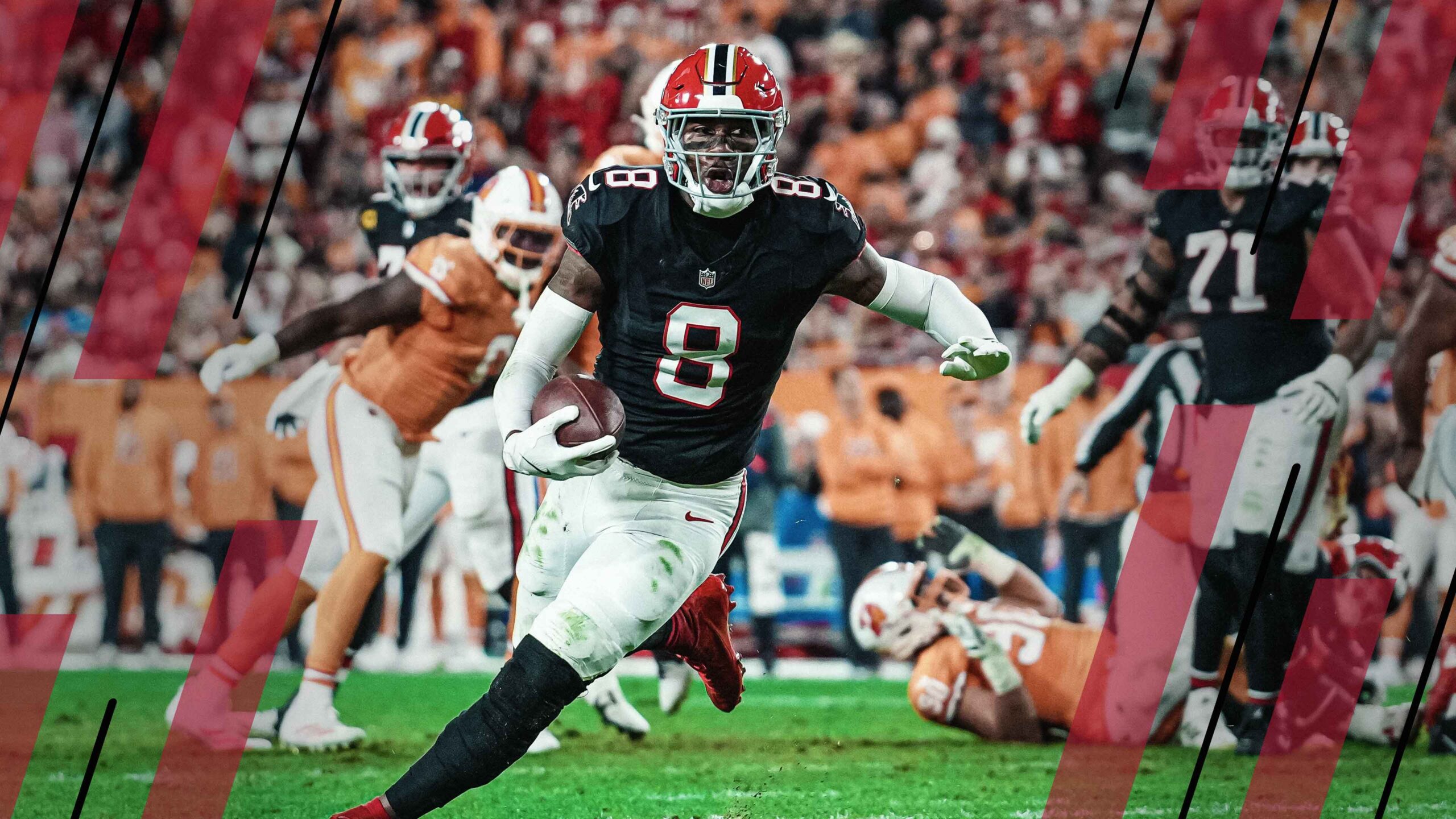
Tight ends fare similarly in both categories. Atlanta Falcons tight end Kyle Pitts (15) and Los Angeles Chargers rookie tight end Oronde Gadsden II (11) are the only players among NFL regular season tight ends who earned double-digit next-read targets. Pitts earned an 82.0 PFF receiving grade this season, while Gadsden earned a 71.1 PFF receiving grade. As mentioned in the article linked above, the Chargers’ “pass-catching corps’ next-read target data could be quarterback-related.” As shown in the prior partner piece, Chargers quarterback Justin Herbert (69)totaled the second-most next-read passes thrown among NFL regular-season quarterbacks. He earned a 73.0 PFF passing grade.
First-read workloads are critical for high-end wide receiver and tight end productivity, though featured No. 2 pass catchers tend to elevate their fantasy-scoring ceiling via next-read involvement.
Running back targets account for less than 6.0% of all next-read targets. Atlanta Falcons running back Bijan Robinson earns an 88.1 PFF receiving grade this season. His six next-read targets earned during the regular season rank first among NFL regular-season running backs. Next-read running back workloads are unreliable for fantasy purposes.
The position does, however, dominate the checkdown game, accounting for 60.0% or more of all checkdown categories and two-thirds-plus in three.
As detailed previously, “[r]unning backs who earn one or both passing-down roles hold a significant fantasy-scoring edge over their positional competition.” The table above confirms this; however, running backs earned 995 early down checkdowns, accounting for 55.3% of all checkdowns thrown. While passing down involvement helps players achieve high-end outcomes, running back snap counts on early downs form workload foundations and should not be overlooked. This likewise confirms previous findings: “Overall offensive snap share, situational snap share and rushing attempt share resoundingly showed the strongest correlation with the group, though low rushing attempt volume, stemming in part from pass-heavy offensive tactics, was positively offset by high target volume.”