Zoom
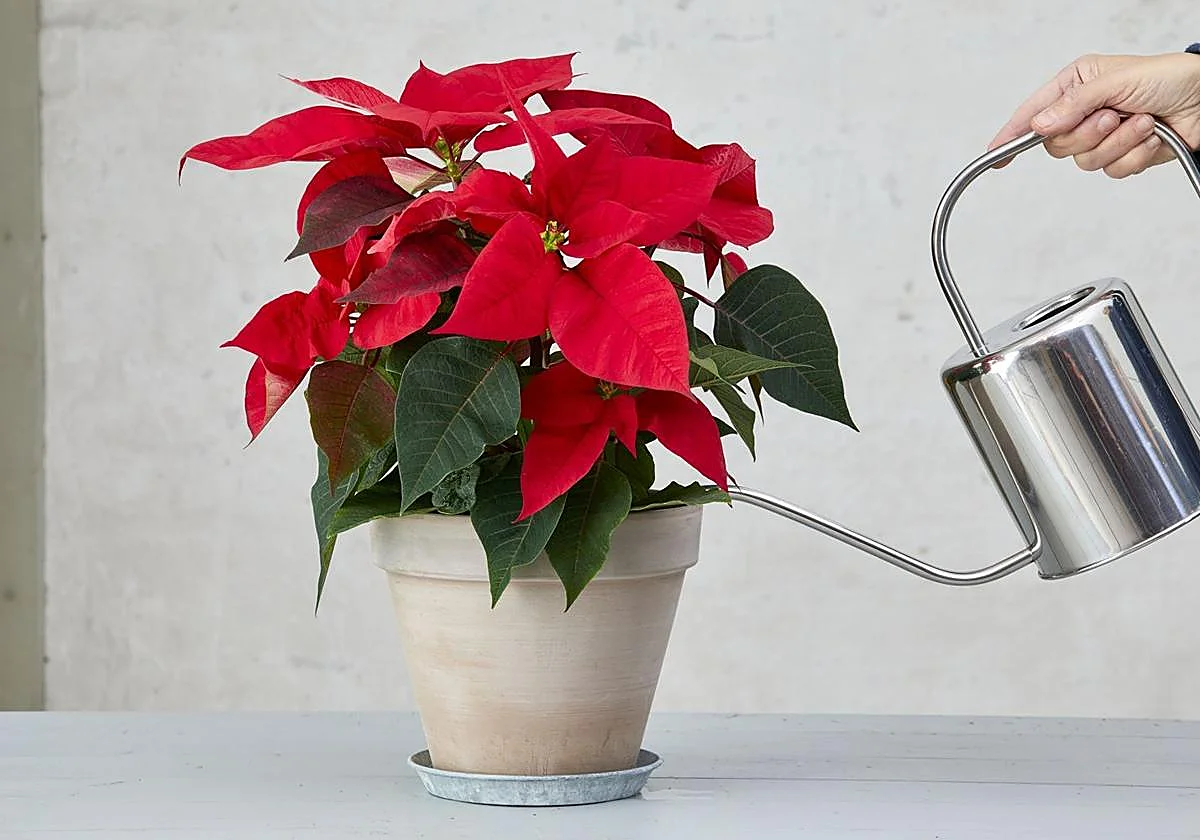
Stars for Europe Lifestyle Experts advise how to care for your poinsettia so it lasts beyond ChristmasKnown as the 'flor de Pascua' in Spain, it is one of the plants most associated with the festive season
SUR
Malaga
Friday, 19 December 2025, 15:10
The poinsettia (known as the 'flor de Pascue' or 'pascuero' in Spain) is one of the plants most associated with the Christmas season. It has become a traditional gift and an essential decorative element, but there is still a belief that it is a plant that only lasts during the festive season. Who hasn't had a poinsettia die on them?
The experts of Stars for Europe (SfE) - an initiative that brings together several European poinsettia producers - say that "with proper care" the plant can be kept in perfect condition for several months, namely from September until late winter.
The plant should be placed in a bright, warm room, where the temperature is between 15C and 22C, always away from draughts. As it is very sensitive to cold, it is essential to protect it during transport. Temperatures below 12C can damage it, so it is good to wrap it properly when leaving the shop and avoid long journeys outdoors with it. It is also advisable not to place it near fruit such as apples, bananas or tomatoes, as these release ethylene - a gas that accelerates the wilting of its leaves and bracts.
According to experts, after winter flowering, it is normal for the plant to lose its coloured bracts and enter a lethargy phase, which usually lasts until April. During this time it hardly needs any attention. It is enough to place it in a cool, bright place, where the temperature is between 15C and 18C, reduce watering to a minimum and avoid the use of fertilisers.
In southern Spain, Andalucía is one of the regions with the longest tradition in the cultivation of poinsettias. The combination of a Mediterranean climate with mild winters and a long growing season, especially in the province of Almeria, favours the development of this plant, making the region a key reference point for its cultivation.
Spring: time for renewal
With the arrival of spring, poinsettias begin to show signs of activity. As recommended by SfE, "this is when it is advisable to prune the stems to encourage new shoots, transplant it to a fresh, aerated substrate and start to gradually increase the frequency of watering". In this phase, the plant appreciates receiving fertiliser on a weekly basis, which will strengthen its roots and stimulate the appearance of new leaves.
However, when night temperatures exceed 10C, the plant can be moved outdoors, preferably to a balcony in semi-shade, where it will find the ideal conditions to recover vigour and remain healthy throughout the summer.
Summer: keeping the plant strong
The warmer months require special attention. "If the plant is in a pot with a saucer, it is advisable to remove any remaining water after about 15 minutes to prevent it from becoming waterlogged," the experts recommend. It is also important to place it in a ventilated space but protected from strong currents and direct exposure to the sun.
September: the great challenge of flowering
The real challenge for those who want the plant to regain its coloured bracts comes in September. To achieve this, it is necessary to subject it to a process of controlled darkness for a period of six to eight weeks. "The poinsettia must remain in darkness for 12 to 14 hours a day, without receiving any light whatsoever. Even a brief flash of light, such as from a television or a nearby street lamp, can alter its biological rhythm and delay the appearance of the colours," the experts say. If this cycle is respected with discipline, the plant will develop its spectacular bracts again in time for the festive season.