- D.K. Metcalf‘s verticality diminished in Pittsburgh: The Steelers receiver finished 2025 with a career-low 11.3-yard average depth of target and now has more options next to him at wideout.
- Juwan Johnson won't benefit from an improved Saints offense: Johnson now has to compete with Jordyn Tyson and Travis Etienne for targets and opportunities.
Fantasy football managers often chase last season's production, but not every productive player is positioned to repeat it. Sometimes, a player's fantasy value is driven by unsustainable volume, while age, declining efficiency or changes to the supporting cast make it difficult to justify their current draft cost.
These players all generated usable fantasy seasons in 2025, but their outlooks for 2026 don't align with where they're currently being drafted.
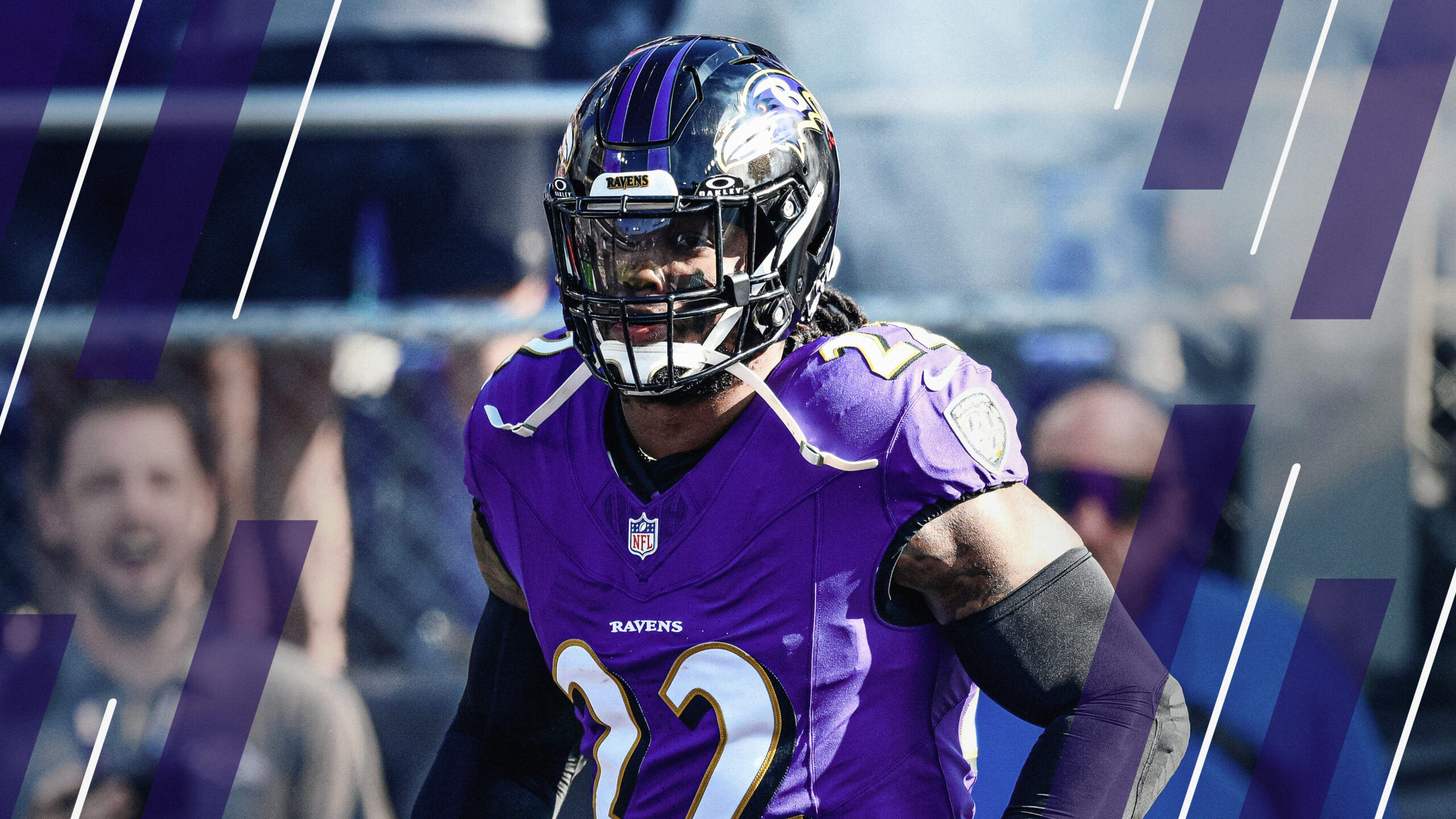
RB Derrick Henry, Baltimore Ravens
Derrick Henry once again proved that writing him off is a dangerous game, eventually finishing as the RB7 in PPR formats after overcoming a slow start to the 2025 season.
The veteran running back fumbled in each of Baltimore's first three games and earned sub-50.0 PFF rushing grades in two of those contests before finding his rhythm. Once he did, Henry looked like the same physical runner fantasy managers have come to expect.
The concern isn't whether Henry can still produce. It's whether his current fantasy price accurately reflects the risk attached to him.
Henry is coming off his second consecutive season with more than 300 carries, a workload that few running backs have historically sustained without seeing some decline. While Baltimore should continue leaning on him as its primary runner, fantasy managers are paying close to his ceiling rather than accounting for the downside.
His current Superflex ADP of 45.7 places him ahead of younger running backs such as Breece Hall, Kyren Williams and TreVeyon Henderson, all of whom offer comparable production with considerably more long-term upside.
Henry may very well deliver another productive season, but at his current cost, there are better bets available.
WR D.K. Metcalf, Pittsburgh Steelers
D.K. Metcalf‘s first season in Pittsburgh couldn't have gone much worse from a fantasy perspective.
He finished with a career-low 850 receiving yards while seeing just 99 targets, his fewest since his rookie season in 2019. Perhaps more concerning, Metcalf's average depth of target fell to a career-low 11.3 yards, a significant departure from the vertical role that has fueled his fantasy production throughout his career.
The Steelers' offseason doesn't suggest a bounce-back is imminent, either. Pittsburgh acquired Michael Pittman Jr., giving Aaron Rodgers another reliable possession receiver who projects to command a healthy target share underneath. That creates even more competition in an offense that already struggled to consistently support multiple fantasy-relevant pass-catchers.
Metcalf finished as the WR26 in PPR leagues last season, yet his current ADP of 94.0 still puts him ahead of players such as Makai Lemon, Jakobi Meyers and Alec Pierce, the latter of whom signed a lucrative extension with the Indianapolis Colts this offseason.
Unless Pittsburgh dramatically changes how it deploys Metcalf, it's difficult to see him returning to the WR1 or high-end WR2 production fantasy managers once expected.
Explore PFF Fantasy Tools
See projected points and full stat lines across PPR, Half PPR, Standard, DFS, IDP, and BestBall formats. Import your league to view projections tailored to your exact scoring settings. Fantasy Football Projections Projected points and full stat lines across every major scoring format—or sync your league to see projections built for your exact settings. (opens in new tab) Overall and position draft rankings by scoring type. We combine PFF grades, strength of schedule, and teammate quality to model upside and downside—among the most accurate in Fantasy Pros’ annual ranking competition over the last five years. Fantasy Rankings Season-long draft rankings by position and scoring type—powered by PFF grades, strength of schedule, and teammate context to capture upside and downside. (opens in new tab) Customizable, printable cheat sheets for PPR, Half PPR, Standard, 2QB, IDP, Dynasty, and Rookie leagues. Players are tiered by position from our draft rankings, with ADP from popular fantasy platforms factored in. Fantasy Draft Cheat Sheet Printable, customizable cheat sheets for PPR, Half PPR, Standard, 2QB, IDP, Dynasty, and Rookie leagues—players tiered by position using our rankings and ADP. (opens in new tab) Sync your fantasy league to unlock the Live Draft Assistant and custom Lineup Optimizers—real-time pick suggestions, waiver wire targets, and sit/start recommendations built for your scoring formats and roster rules. Fantasy League Sync Connect your fantasy league to unlock the Live Draft Assistant and custom lineup tools—real-time picks, waiver targets, and sit/start advice for your scoring and roster rules. (opens in new tab) Subscribe For Full Access (opens in new tab)TE Juwan Johnson, New Orleans Saints
Juwan Johnson quietly put together the best fantasy season of his career in 2025, finishing as the TE8 after emerging as one of Tyler Shough‘s favorite targets. That level of production will be difficult to repeat.
Johnson was one of just eight tight ends to eclipse 100 targets last season, benefiting from his role as the clear No. 2 option behind Chris Olave — who himself sat sixth in the NFL with 151 targets.
The Saints spent the offseason addressing the lack of playmakers around their quarterback. They drafted Jordyn Tyson eighth overall to complement Olave and added Travis Etienne to inject explosiveness into their running game.
Those additions should improve New Orleans' offense as a whole, but they also create more competition for touches. Johnson's target share is likely to decline simply because the Saints have more legitimate options than they did a year ago.
Johnson remains a valuable NFL player, posting a solid 66.5 overall PFF grade in 2025. His efficiency was also impressive: Johnson’s 11.5 yards per reception ranked third among qualifying tight ends, while his 7.6-yard average depth of target also slotted third at the position.
The problem is that New Orleans no longer needs Johnson to be one of its primary explosive-play threats. Tyson and Etienne should absorb many of those opportunities, making it difficult for Johnson to match the volume that fueled his TE8 finish.