- QB Justin Herbert, Los Angeles Chargers: Herbert is successfully adjusting to new offensive coordinator Mike McDaniel’s quick-passing scheme.
- Introducing the NEW PFF Pro subscription: PFF Pro includes everything in PFF+, plus an upgraded Premium Stats Pro experience, higher base access to Guru AI, revamped player and team pages, enhanced data and visualizations, an improved interface and programmatic data access for modeling. Click here to subscribe.
The NFL’s 2026 preseason is over. Although teams attempt to keep actionable information under wraps, derivable usage trends and tactics are still present.
The article below breaks down four need-to-know items from preseason Week 3.
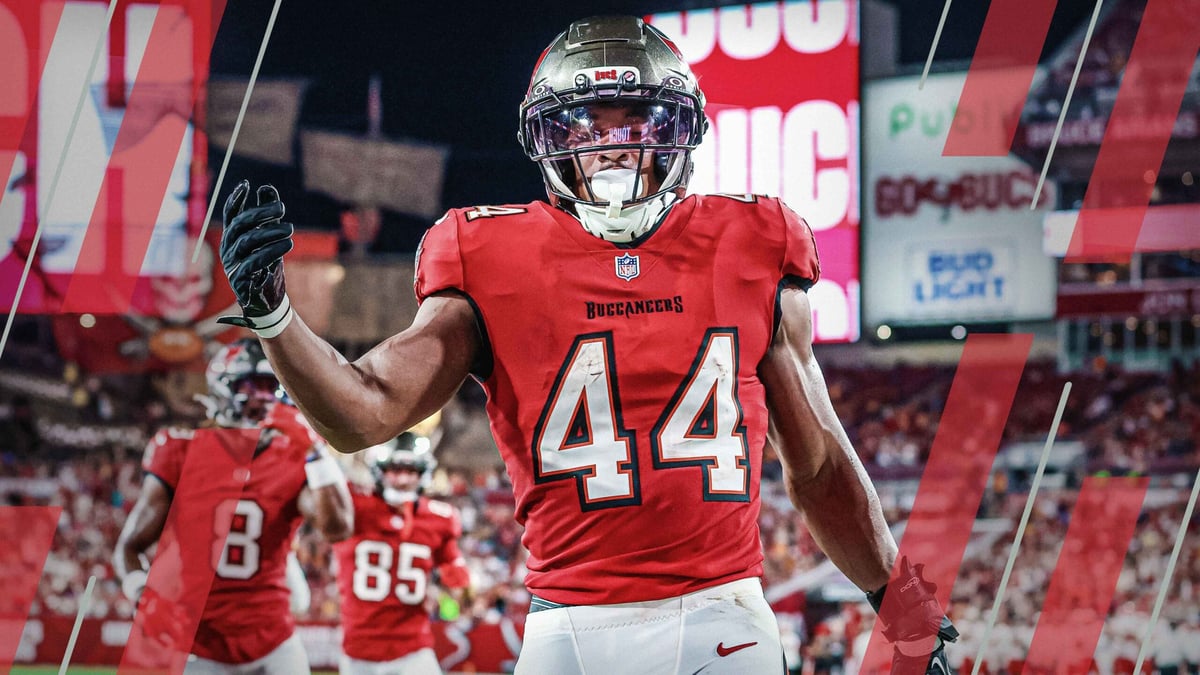
RB Sean Tucker, Tampa Bay Buccaneers: Plays poorly and takes a pay cut
As detailed in “Must-draft running backs for home leagues,” Tampa Bay Buccaneers running back Sean Tucker entered preseason Week 3 fighting for his roster spot, no longer possessing the short-yardage and goal-line job. Tucker uninspiringly and inefficiently outplayed running back Josh Williams for the No. 3 roster spot, though the front office leveraged Tucker into taking a $1.02 million pay cut to remain on the team. Williams was signed to the practice squad one day after being waived.
The fact that the Buccaneers’ front office was willing to release Tucker if he did not agree to receiving a reduced salary suggests the team is not relying on him to fill a clearly defined, critical role. Buccaneers “1A” running back Bucky Irving will likely take on a majority snap share in Tucker’s vacated high-value role.
Tucker earned a 47.8 PFF rushing grade in preseason Week 3, while Williams secured a 53.4 PFF rushing grade. Tucker failed to force a missed tackle while averaging just 2.0 yards after contact per rushing attempt. Williams forced one while averaging 1.5 yards after contact per rushing attempt.
Irving generated a 69.4 PFF offense grade on three preseason offensive snaps. He now profiles as a reliable RB2.
WR Tre Tucker, Las Vegas Raiders: Fantasy football starter
Las Vegas Raiders wide receiver Tre Tucker played 14-of-16 snaps on Las Vegas’ two first-team drives, plus one more snap on the third drive, earning a 72.6 PFF receiving grade. Tucker is going undrafted on Yahoo! and lacks a positional ranking. He is being drafted via a 17.06, WR66 ESPN ADP. At worst, Tucker should be treated as a matchup-based WR4/flex option.
Tucker led first-team Raiders players with three receptions, 25 receiving yards and three targets, including one first-read target, before which Tucker was sent in orbit motion while excitingly playing as the wide receiver in 22 personnel.
New Raiders head coach Klint Kubiak seemingly intends to diversify Tucker’s route tree this season. Although Tucker’s average depth of target (aDot) has decreased from 19.2 to 12.4 to 10.7 over his three NFL seasons, his 20.0% target rate from last year still ranks 12th among 40 NFL wide receivers with at least 90 targets in 2025.
Tucker averages 1.08 yards per route run (YPRR) over the course of his career (202 targets), yet that YPRR average spikes to 6.71 on targets thrown to him from one-to-nine yards downfield (69 targets).
Tucker is not an exceptionally talented player, though his 4.40-second 40-yard dash likely led prior coaching staffs to limit his usage. Route tree changes and a No. 1 wide receiver role should improve his fantasy football viability.
WR Caleb Douglas, Miami Dolphins: Receives starter treatment
The Miami Dolphins’ coaching staff rested third-round rookie wide receiver Caleb Douglas in preseason Week 3, while fellow third-round rookie wide receiver Chris Bell played football for the first time since tearing an ACL in his final college season last year.
Douglas should be expected to start in Week 1 against the Raiders, having earned a 72.9 PFF receiving grade in the preseason. Douglas makes for a boom-bust flex option to begin his career.
QB Justin Herbert, Los Angeles Chargers: Decreasing his average time to throw
New Los Angeles Chargers offensive coordinator Mike McDaniel said in May he intends to feature quarterback Justin Herbert’s quick-passing strengths by designing plays that allow him to get the ball out in 2.4 seconds or less, while also allowing Herbert to extend plays occasionally. Among Herbert’s six prior seasons, he averaged his fastest time to throw (2.61 seconds) in his 2020 rookie season. He averaged a career-high 2.96 seconds last year and has averaged 2.80-plus seconds in each of the past three campaigns.
Herbert encouragingly averaged 2.70 seconds via an admittedly small five-pass sample in the 2026 preseason, amassing a 73.2 PFF passing grade. He played in the preseason for the first time ever last year, averaging 2.82 seconds.
Herbert has not yet reached McDaniel’s sub-2.40-second goal, but the evident improvement, coupled with McDaniel’s positive assessment earlier this month, suggests things are falling into place for Herbert to perform as an elite, dual-threat quarterback this season.