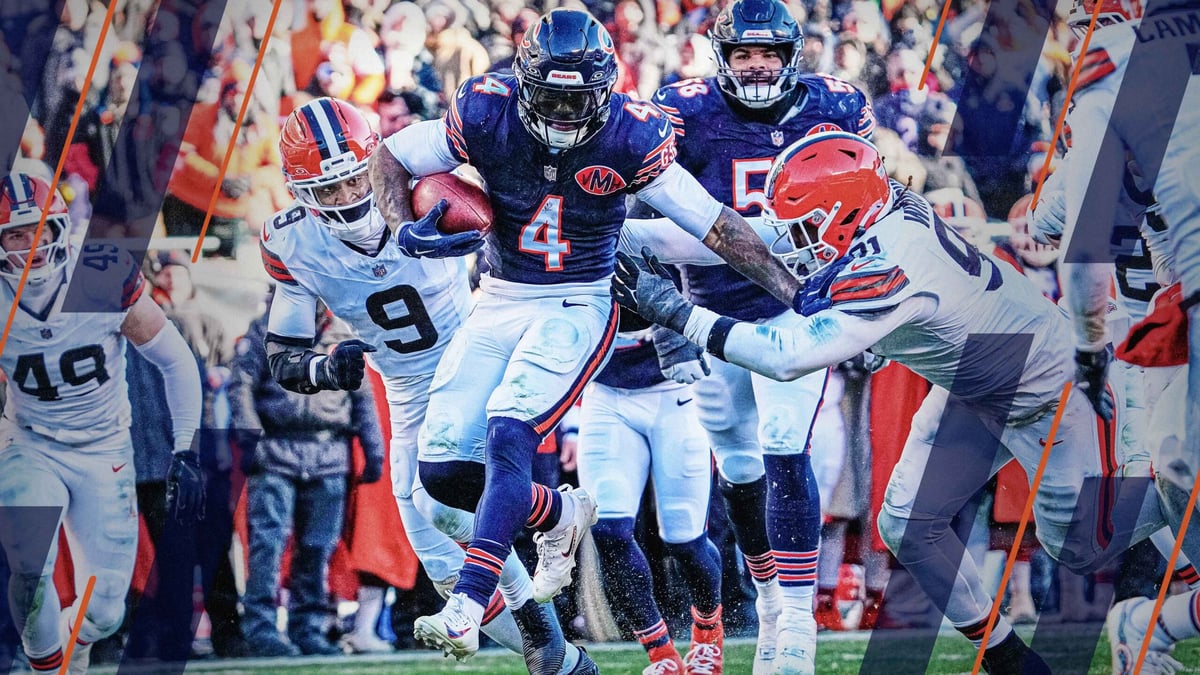
- David Montgomery has room to run: With Nick Chubb gone, Montgomery's primary competition is Woody Marks, who averaged 3.6 yards per carry last season.
- Last Chance! The PFF Early Bird Sale Ends Aug. 17: Save 33% and get PFF+ for just $79.99, our lowest price of the year.
The running back “dead zone” is a very real issue for fantasy managers in 2026. Roughly 20 running backs are expected to average at least 17 touches per game, while nearly everyone else will be part of some kind of committee. Some of those backfields remain unsettled, while others should feature rotations similar to last season.
The ideal strategy is generally to draft two running backs before reaching the dead zone, then shift your attention to other positions before targeting higher-upside backs in the later rounds. Of course, drafts don’t always unfold that cleanly. Sometimes value is simply too good to pass up, or your roster construction leaves you needing a running back in this range. In 10-team leagues or smaller, there can also be enough value available at other positions to draft two running backs early and still take another in the dead zone without sacrificing much elsewhere.
If you do find yourself looking for a running back in the dead zone, these are the players to target. The average draft positions below are a consensus of ESPN, Sleeper and Yahoo drafts for 12-team redraft leagues.
D'Andre Swift, Chicago Bears (ADP: 5.11)
Swift has spent the past two seasons as the Bears’ starting running back. He finished as a low-end RB2 in 2024, ranking 21st at the position with 12.6 fantasy points per game. That production came largely through volume rather than efficiency.
Chicago invested heavily in its offensive line last offseason, and the combination of improved blocking and Ben Johnson’s offense made life easier for Swift. He averaged 1.9 yards before contact per attempt, fourth-best among running backs, and that additional space helped him average a solid 3.0 yards after contact per attempt.
The improved efficiency only pushed Swift to 17th among running backs at 14.3 fantasy points per game, largely because he faced more competition for snaps from seventh-round rookie Kyle Monangai. Swift played 66.1% of Chicago’s offensive snaps in 2024, but exceeded that mark only twice last season, in Weeks 1 and 4. His season-long snap rate fell to 57.8%.
Most of the key pieces of Chicago’s offense remain in place, although there are a few reasons to expect a slight step back. Center Drew Dalman retired after earning a 74.0 run-blocking grade, second-best on the team. His replacement, Garrett Bradbury, earned a 55.9 run-blocking grade last season and has a career high of 70.5. That could lead to a modest decline in the quality of blocking in front of Swift.
There could also be slightly fewer carries available to Chicago’s running backs. Swift, Monangai and Caleb Williams accounted for 92.9% of the Bears’ rushing attempts last season. The additions of third-round rookie Zavion Thomas and veteran Kalif Raymond give Chicago more options for designed wide receiver carries.
Swift has more wear and tear than the typical starting running back, and he is at an age where improvement is unlikely. A slight decline is a reasonable expectation, leaving him as a low-end RB2. There is some risk that Monangai improves enough to take on a larger role, but Swift graded notably better as a runner, receiver and pass blocker last season, making a significant shift in playing time unlikely.
There is no such thing as a risk-free running back, but Swift offers one of the more stable RB2 profiles available after the first few rounds.
David Montgomery, Houston Texans (ADP: 5.10)
Montgomery has quietly remained one of the NFL’s most productive running backs over the past two seasons. His 86.6 PFF grade ranks 11th at the position over that span. The problem in Detroit was never Montgomery’s performance. It was sharing a backfield with Jahmyr Gibbs, who ranks fifth in PFF grade over the same stretch.
Montgomery has already shown he can handle a featured role. He played 74.3% of Chicago’s offensive snaps in 2020, although his snap share has gradually declined since then.
Houston traded for Montgomery this offseason and immediately reworked his contract, paying him roughly in line with the league’s average starting running back. More importantly, there is little established competition behind him. With Nick Chubb gone, Woody Marks is Montgomery’s primary competition for touches after averaging just 3.6 yards per carry last season. That leaves Montgomery with a clear path to his largest workload in years.