Endangered species
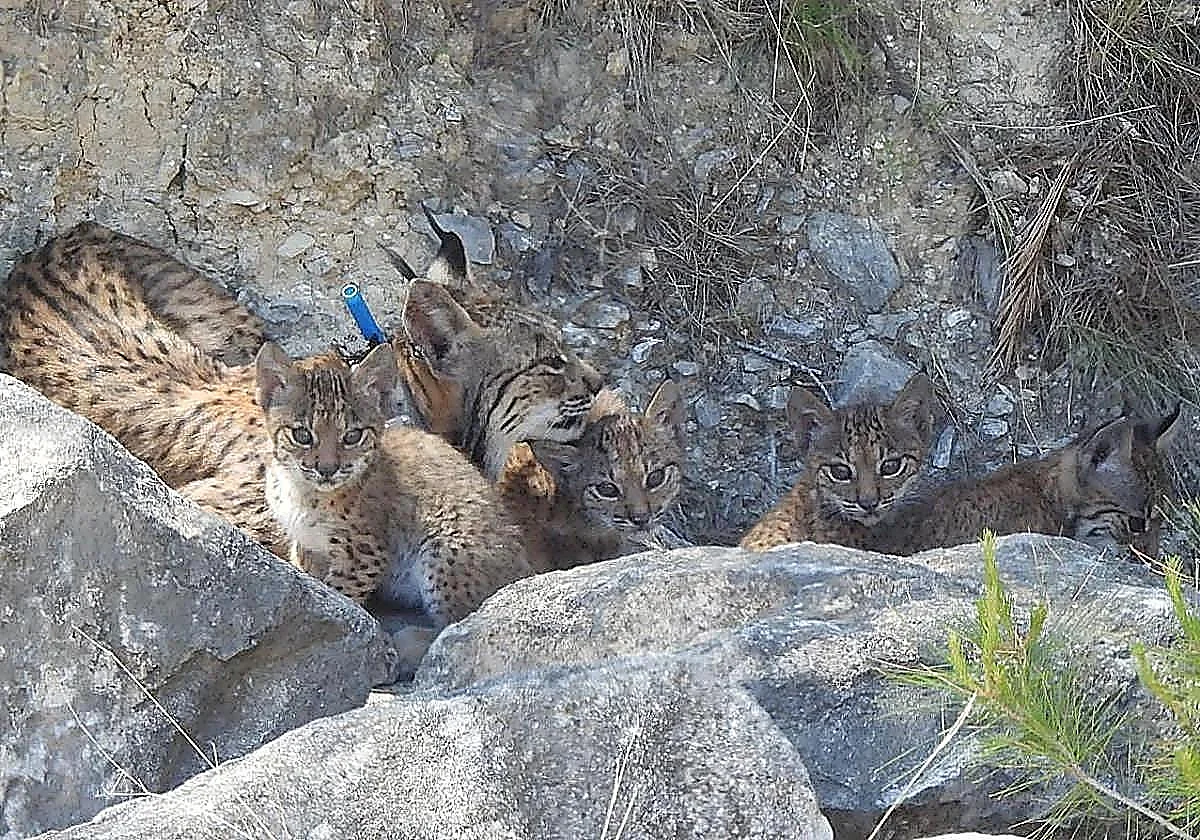
Four rare Iberian lynx cubs born in Murcia, Spain, in major wildlife conservation boostWildlife experts have discovered the first wild litter of the year in the Lorca highlands, marking the second successful breeding season for mother Urtsu
Añádenos en Google The female Iberian lynx 'Urtsu' with her four cubs barely two months old. (CARM)L. V.
27/05/2026 a las 13:43h.Four rare Iberian lynx cubs have been born in the highlands of Lorca, confirming the success of a major reintroduction programme in the Region of ... Murcia.
Field technicians monitoring the endangered species discovered the two-month-old cubs alongside their mother, ‘Urtsu’.
The birth marks the first confirmed wild litter in the region this year and the third since the reintroduction scheme began. Two litters have been recorded in the Lorca highlands and another in neighbouring Almería.
Related story
Nature
Héctor Barbotta
Conservationists said the births represent a significant milestone for 'Life Lynxconnect', an international project working to expand and protect the iconic species.
Urtsu, a two-year-old female weighing 7.6kg, was released into the wild in February 2024 from the Zarza de Granadilla breeding centre in Cáceres. She previously made history by giving birth to the first wild-born lynx cubs in Murcia since the project began, initially revealing two cubs before a third was located.
The President of the Region of Murcia, Fernando López Miras, celebrated the news by sharing images of the litter on social media, declaring the region as "Lynx Territory".
Ecological corridor
Juan María Vázquez, the Regional Minister for Environment, said the births proved the Lorca highlands provided the ideal habitat for the species to thrive.
"We are talking about an environment with sufficient food, shelter, tranquillity and ecological connectivity to ensure the survival of a species that just a few decades ago was on the brink of extinction," Vázquez said.
"The Region of Murcia has already become an essential corridor for the recovery of the Iberian lynx in Spain, connecting populations and contributing to the success of one of the largest conservation projects carried out in Europe."
Technical teams are continuing to track the family, reporting that both the mother and her cubs are in good health. Officials said the Lorca highlands were chosen for the project due to high-quality habitat and extensive environmental improvements made to the area.
Vázquez added: "Every birth in the wild represents extraordinary news from an environmental and scientific point of view, but also brings hope for continuing to recover part of our natural heritage."
The 'Life Lynxconnect' project aims to connect different lynx populations across the Iberian Peninsula to ensure long-term genetic diversity and territorial viability.
Captive breeding success
The wild births coincide with strong results from Spain's captive breeding centres, managed by the National Parks Autonomous Agency.
The 2026 breeding season concluded with 31 cubs born across 12 litters at the El Acebuche centre in Huelva and the Zarza de Granadilla centre in Cáceres.
However, conservation experts stressed that monitoring litters born in the wild requires intensive fieldwork, making the natural births in Lorca a particularly significant achievement for the survival of the species.