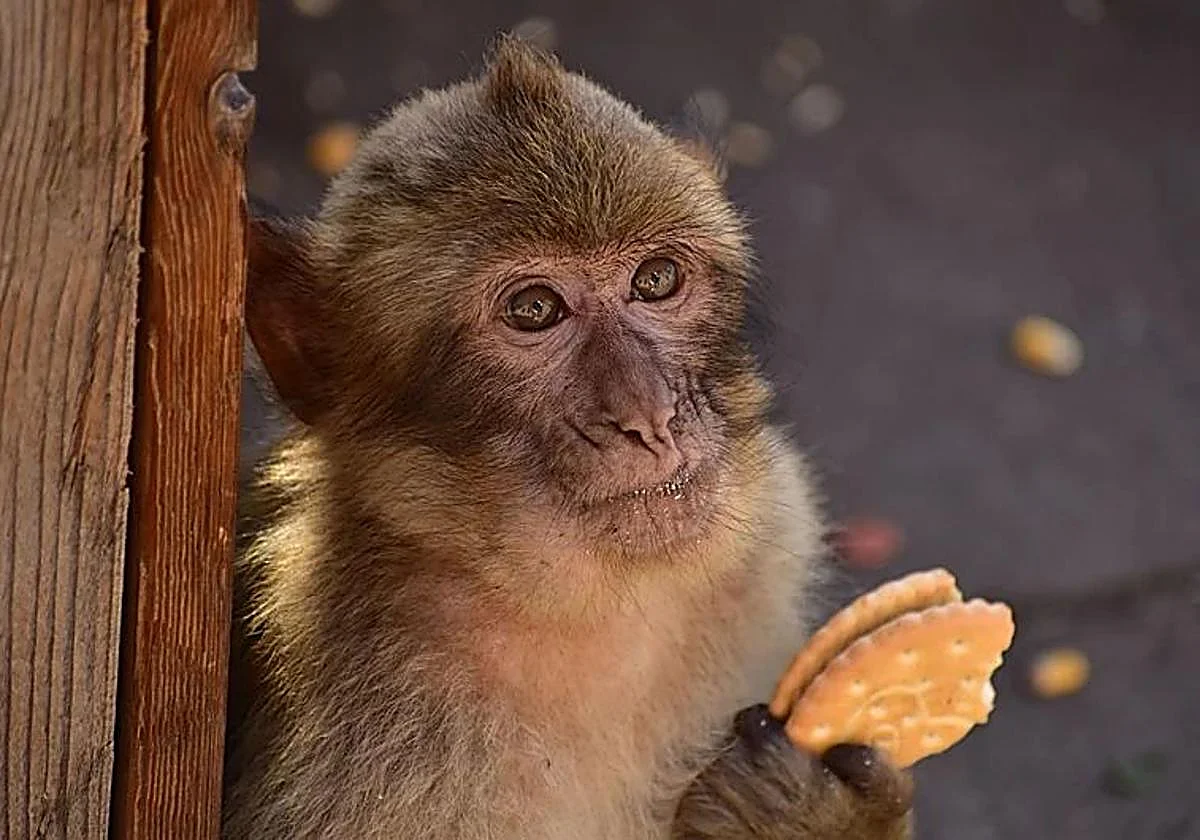
Zoom
This macaque is snacking on some biscuits he has found Proyecto de macacos de Gibraltar/Martín Nicourt Gibraltar’s macaques self medicating with soil to combat junk food dietReport shows eating earth relieves upset stomachs in macaques after binging on human snacks high in fat, salt and sugar
Judith de Jorge
Friday, 24 April 2026, 12:10
Barbary macaques, the true royalty of Gibraltar and the only free roaming population in Europe, came to the Rock from North Africa during Muslim rule. With around 230 macaques, divided among eight settled groups, they wander across the Rock’s nature reserve, much to the delight of the thousands of tourists who visit them every year.
Although touching or feeding them is punishable by heavy fines, many visitors cannot resist sharing their snacks with them, ranging from ice cream and biscuits to chocolate bars and crisps. Alternatively, the animals themselves often steal treats from bags and rucksacks, meaning that junk food has become a staple of their diet. Even macaques seem to have their guilty pleasure foods.
A study carried out by researchers at the University of Cambridge, shows that macaques have started eating soil as if they were taking ‘omeprazole’, to relieve stomach upsets caused by all the food they get from humans.
This deliberate ingestion of soil, known as geophagy, appears to provide them with bacteria and minerals absent from processed foods, whilst protecting the gut and alleviating or preventing irritation caused by excess sugar and fat.
Scientists observed the macaques for a total of 98 days between summer 2022 and spring 2024. They recorded 46 instances of geophagy (the consumption of soil) in 44 different animals, with an average of 12 occurrences per week. According to the researchers, this behaviour is very rare.
The only macaques that outdo them are the semi-wild macques in Hong Kong’s Kam Shan national park, which access large amounts of food from visitors. The action is akin to that of chimpanzees and lemurs, they swallow soil to obtain minerals and mitigate plant toxins. In human cultures, it is often associated with nutrient intake in pregnancy, although in macaques it doesn’t appear to be linked.
Zoom
Macaque has found some sweets to snack on Proyecto de macacos de Gibraltar/Martín NicourtLactose intolerant
“The food tourists bring that are consumed by the Gibraltar macaques is typically high in calories, sugar, salt and dairy” said Sylvian Lemoine, a biological anthropologist at the Department of Archaeology, who led the study published in the journal “Scientific Reports”.
Some cases of geophagy occurred soon after the macaques consumed bread and ice cream. “Non-human primates become lactose intolerant after weaning, so dairy is known to cause digestive problems in monkeys and ice cream is hugely popular with Gibraltar’s tourists and, consequently, its macaques,” the researcher said.
This completely differs to the healthy diet provided to the macaques by the park staff of fruits, vegetables and leaves.
Eating soil protects the digestive system and limits the absorption of harmful compounds.
“We believe that macaques have started eating soil to protect their digestive system against the high energy and low fibre content of these junk foods, which have been shown to cause gastric disorders in some primates,” explained Lemoine. “The consumed soil acts as a barrier in the digestive tract, lining the absorption of harmful substances. This may alleviate gastrointestinal symptoms, from nausea to diarrhoea. Soil can also provide beneficial bacteria that contribute to the gut microbiome.”
Some cases of geophagy occurred soon after the macaques consumed bread and ice cream. “Non-human primates become lactose intolerant after weaning, so dairy is known to cause digestive problems in monkeys and ice cream is hugely popular with Gibraltar’s tourists and, consequently, its macaques,” the researcher said.
Terra Rossa
Higher rates of soil ingestion was reported among primate groups that have more contact with tourists, mainly those at the top of the rock. Much less was observed in lower areas. The group that had no access to tourists or human food was the only group in which no soil consumption was seen. Moreover, the behaviour increases in the summer as visitors increase.
Zoom
Macaque finishing off a can of pringles Proyecto de macacos de Gibraltar/Martín NicourtThe group with more contact with visitors consumed more soil, especially during summer.
Around 30% of geophagy occurred in groups, with several animals eating soil together and 89% of all instances took place in the presence of other macaques who were often watching, suggesting that this behaviour is "socially learned".
In addition, the monkeys showed a clear preference for certain types of soil. The vast majority sought out the "terra rossa" or red clay soil found throughout Gibraltar. However, the Ape's Den group, which roams the lower western slopes of the Rock, had a predilection for tar-clogged soil collected from the potholes of tarmac roads.
Related story