Zoom
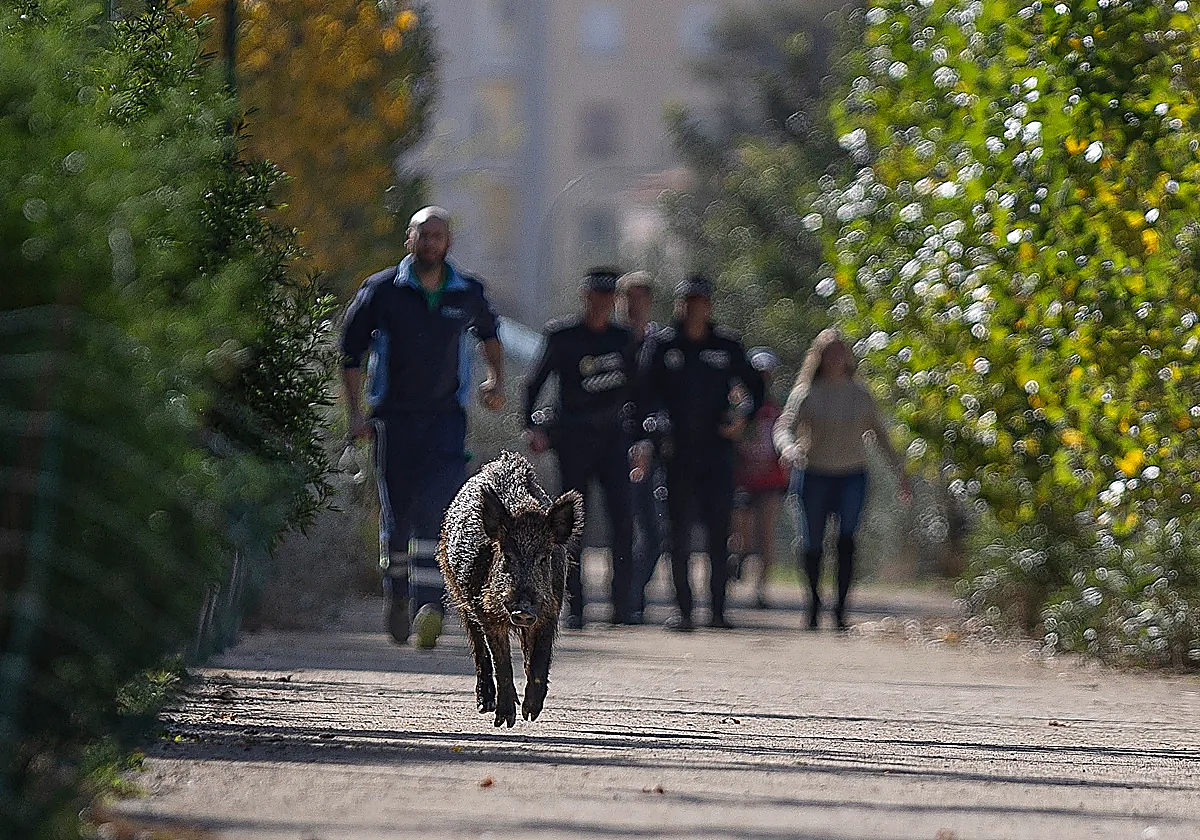
Police and other officials chasing after a wild boar near the Guadalmedina river in Malaga city. Ñito Salas Health Hepatitis E found as wild boar study reveals disease risk in Malaga urban areasThe provincial association of veterinarians has just made public the first results of an investigation based on the analysis of 80 specimens
Chus Heredia
Monday, 20 April 2026, 10:41
A pioneering study into the health of wild boars and feral pigs in Malaga has revealed a high prevalence of diseases that can jump from animals to humans.
The research, the first of its kind in the province, is analysing approximately 80 specimens that have encroached on urban areas and residential gardens. Preliminary results, released by the Malaga Veterinary Association’s One Health chair, have identified a significant presence of Hepatitis E.
The study was launched following growing concerns over the "plague" of wild boars across Malaga province. Beyond the risk of traffic accidents and property damage, experts are now quantifying the epidemiological threat these animals pose to public health.
Juan Antonio de Luque, president of the Malaga Veterinary Association, told SUR that definitive conclusions will be drawn once the final test results are processed at the end of May.
While the risk of disease through meat ingestion is considered minimal - limited to illegal, untested consumption - experts are alarmed by pathogens spread through contact or faeces in public spaces.
As for diseases that can be contracted through ingestion, the concern is minimal, as these would only affect cases of illegal, untested meat consumption. Of greater concern are those that can be transmitted through faeces or contact, such as hepatitis E.
The findings were presented during the 12th Costa del Sol vet meeting in Fuengirola on Saturday. Dr Ignacio García Bocanegra shed some light on the role of the wild boar as a reservoir of diseases transmissible to humans (zoonosis).
The analysis focuses on a critical array of infectious agents. These include the bacterium that causes Q fever; Listeria; Cryptosporidium spp; Encephalitozoon/Enterocytozoon; Salmonella; Shigella; Campylobacter; Escherichia coli; Staphylococcus aureus; Yersinia; Giardia duodenalis; influenza virus; Balantioides coli; Blastocystis, among others.
Hepatitis E
At present, the only virus showing a high prevalence of antibodies is hepatitis E. Scientists have started to carry out PCR tests, which is an important step, because the specimens in the study do come into contact with humans by accessing urban areas and playgrounds to rummage through rubbish.
Hepatitis E is an inflammation of the liver, primarily transmitted through water contaminated with faeces or undercooked pork. It is usually self-limiting and clears up between two to six weeks. There is no specific treatment, so prevention through hygiene and proper food preparation is essential. It poses a greater risk to immunocompromised individuals or those with pre-existing conditions.
Aujeszky's disease
These analyses also reveal a high prevalence of Aujeszky's disease (also known as pseudorabies). It is a serious, infectious viral disease that primarily affects pigs and wild boar, although it cannot infect humans.
What is the One Health chair?
The One Health chair, established in Malaga in 2023, analyses the substantial impacts of infectious disease pandemics on global health and the economy.
Eduardo Martínez (physician and Professor of Microbiology at Malaga University) and Miguel Ángel Moriñigo (biologist and Professor of Microbiology) are at the head of One Health, which also includes Rosa María López (physician and Professor of Preventive Medicine and Public Health), Fernando Fariñas (microbiologist, immunoinfectologist, vaccinologist and Director of Instituto de Inmunología Clínica y Enfermedades Infecciosas), Antonio Villatoro (veterinarian and head of Real Academia de Ciencias Veterinarias de Andalucía Oriental), José Luis Peñate (veterinarian and deputy president of the association of veterinarians) and Juan Antonio de Luque.