Legal
Jailed for fraudulently claiming unemployment benefits in Malaga with fake work contractThe provincial court has dismissed a worker's appeal after finding he never worked for the company whose fake employment records allowed him to claim 6,588.52 euros in unemployment benefits
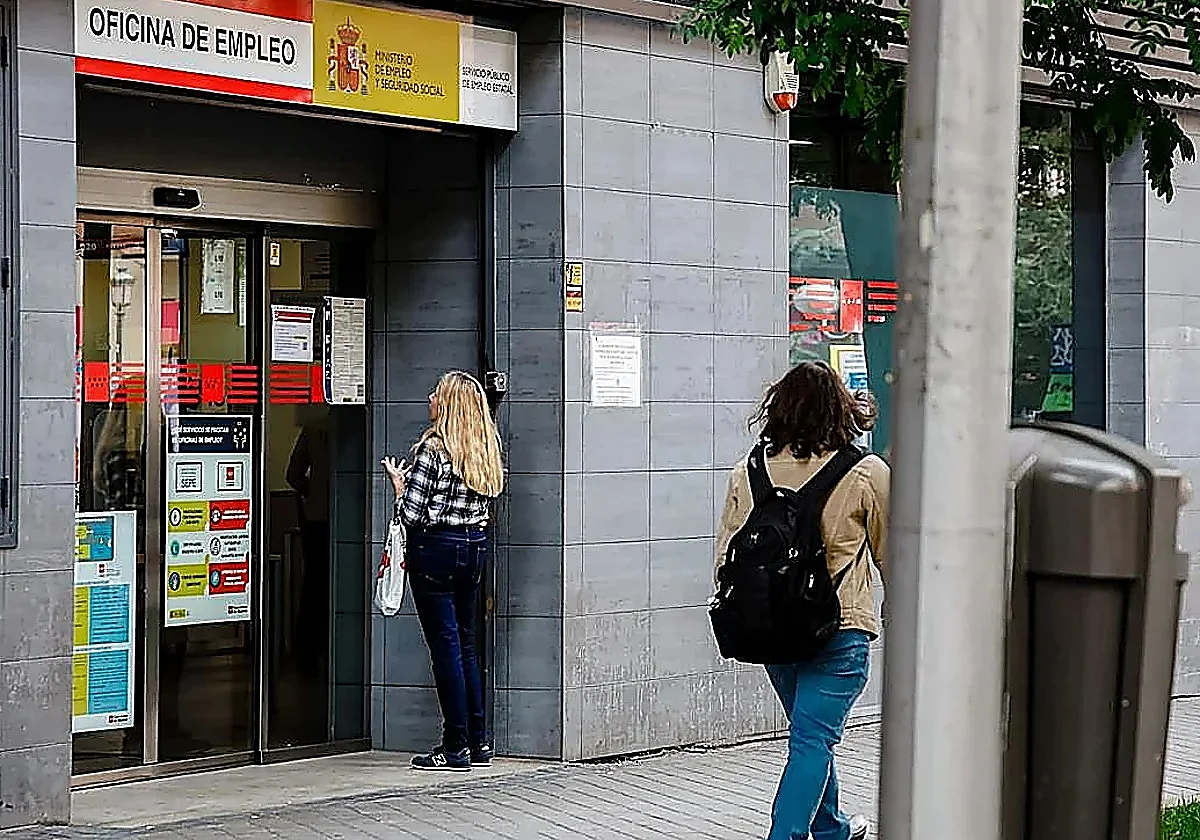
Añádenos en Google Photo of an office of Spain's public employment service. (SUR)Susana Zamora
07/07/2026 a las 16:16h.A Malaga man who claimed he had no idea his employment contract formed part of a fraud has lost his appeal against a prison sentence for unlawfully claiming unemployment benefits.
The defendant told the courts that he had simply been transferred to a different company without explanation, had continued doing the same delivery work and had never questioned the change because, all he "cared about was getting paid at the end of the month", as per his statement.
According to the ruling, the court dismissed his appeal and confirmed a sentence of 18 months' imprisonment for fraudulently obtaining Social Security benefits, combined with the offence of document forgery.
The ruling also orders him to repay 6,588.52 euros to Spain's public state employment service (Sepe), plus statutory interest, and bars him from receiving public grants, tax relief or Social Security benefits for four years.
Fictitious employment
The case stems from an earlier investigation that led to the conviction of the directors of the company involved. The courts found that they had created the business solely to fabricate employment contracts and enable people to claim public benefits unlawfully.
Judges concluded that the company carried out no genuine commercial activity and lacked the premises, vehicles and infrastructure needed for the goods distribution business it claimed to operate.
The defendant appeared on the company's payroll between 6 January and 19 February 2018, despite never carrying out any work for the business. He later used those contributions to claim unemployment benefit and received 6,588.52 euros.
On appeal, his lawyer argued that he had genuinely worked during that period. The defence said he had received wages and submitted bank records showing that another logistics company had transferred money relating to his salary. They also argued that he had already worked in the delivery sector and had simply been moved to another employer without anyone explaining why.
The appeal court rejected those arguments. It found that the banking documents did not prove that the receiving account belonged to the company in question or that the money ever reached the firm under investigation.
Judges also placed significant weight on evidence from the police involved in the investigation. They described the company as part of a network of shell businesses with no commercial activity, no lorries, no assets and "fictitious employee registrations for various purposes, including claiming benefits". According to the judgment, the company never genuinely paid wages.
Document forgery
The court also addressed the document forgery offence. It said the beneficiary does not need to forge the contract personally to commit the crime. It is enough to take part in the deception by allowing personal details to appear in official records to create the false impression of a genuine employment relationship.
The court also rejected the defendant's claim that he knew nothing about the company's lack of activity. Judges said that accepting employment with a company that had no genuine business operations, without making any enquiries, amounted to wilful blindness.
The ruling notes that the defendant admitted he had never asked why he had been transferred to a different company because he only cared about receiving his wages. The court found that this did not absolve him of criminal responsibility when he later benefited from unemployment payments obtained through a fictitious contract.
The provincial court concluded that the trial judge had assessed the evidence reasonably and properly, that the defendant's right to the presumption of innocence had not been breached, and that sufficient evidence supported the conviction. It therefore dismissed the appeal in full and upheld both the sentence and the order requiring him to repay the money he had wrongly claimed from Sepe.