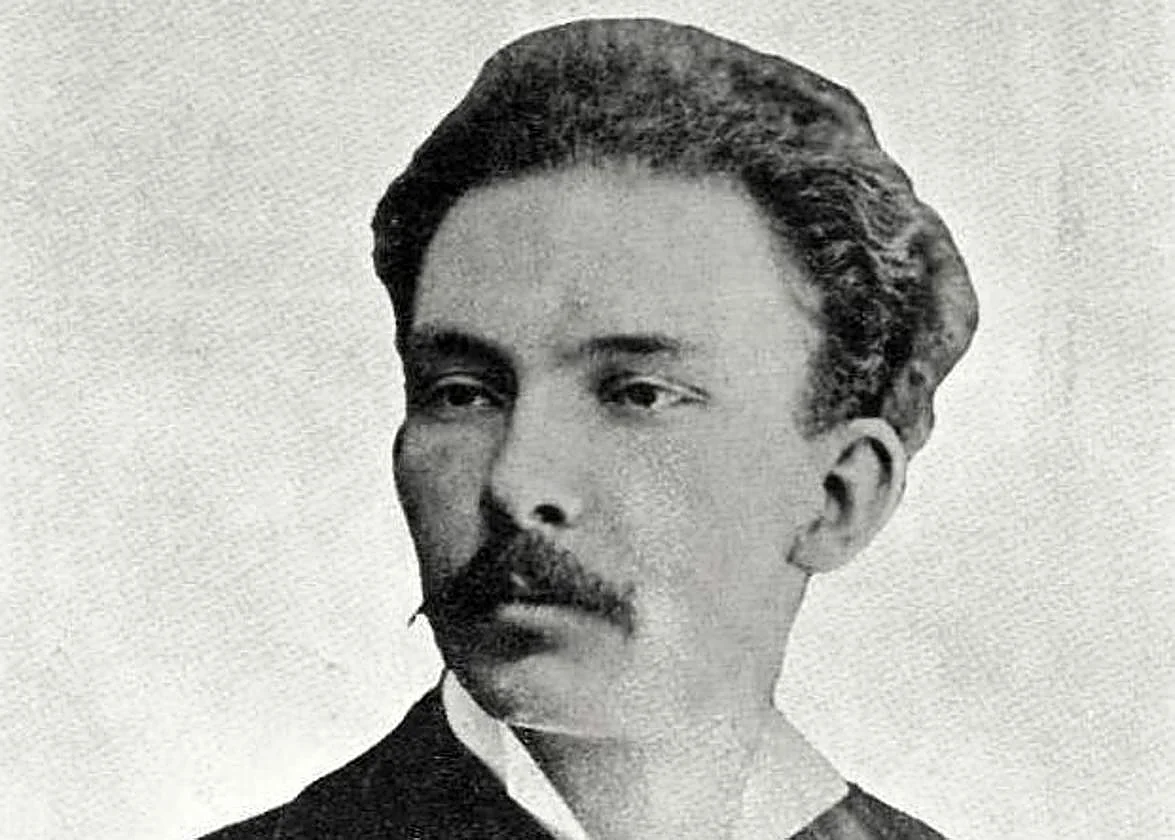
Zoom
The Cuban poet was considered one of the great intellectuals. SUR Foreign influencers in southern Spain José Martí: An intellectual 'loyal insurgent'An important figure in Latin American literature and a staunch political activist, the poet took part in the liberation of Cuba from Spain from an early age
Tony Bryant
Friday, 9 January 2026, 15:58
Considered a symbol of Cuba's bid for independence from Spain, the name of journalist, poet and philosopher José Martí has been honoured all over Spain with streets, plazas, plaques and monuments.
An important figure in Latin American literature and a staunch political activist, Martí was born in Havana in 1853 and began his role in the liberation of his country at an early age. He was a key figure in the planning and execution of the Cuban War of Independence (1895-1898), a conflict that escalated to become the Spanish-American War: this resulted in Spain losing its Pacific possessions and ended almost four hundred years of Spanish rule in the Americas, the Pacific and Asia.
Founder of the Cuban revolutionary party, Martí arrived in the port of Santander in 1879 after being deported to Spain for the second time because of his revolutionary ideals. Although the young prisoner's final destination was Ceuta, this order was later overturned and he was finally able to evade the sentence against him.
This period of residence in Spain was decisive in his development and the experiences of this time would significantly influence his subsequent growth as an intellectual and politician.
In the following months, many of his experiences would surface in his writing, both in his notes and letters, and in those he wrote for the press. Although treated harshly by the Spanish authorities, the recollection of the country in his later work would never be bitter: instead, his work was full of pleasant memories and humorous recollections, even though he criticised the sociopolitical situation, not only within Spain but also in its relations with Cuba and its other colonies.
Despite the unbridgeable political divide that existed between Cuba and Spain at the time, Martí, considered one of the great Latin American intellectuals, claimed he always felt part of the Spanish people because of his family's Spanish origins. It was because of his love of the country that Chilean writer Gabriela Mistral called him "the loyal insurgent", because his rebellion did not exclude the loyalty to the language, which, she claimed, he undoubtedly enriched with his own writing.
He died at the Battle de Dos Rios in May 1895, the first battle of Cuba's struggle for independence from Spain.