Zoom
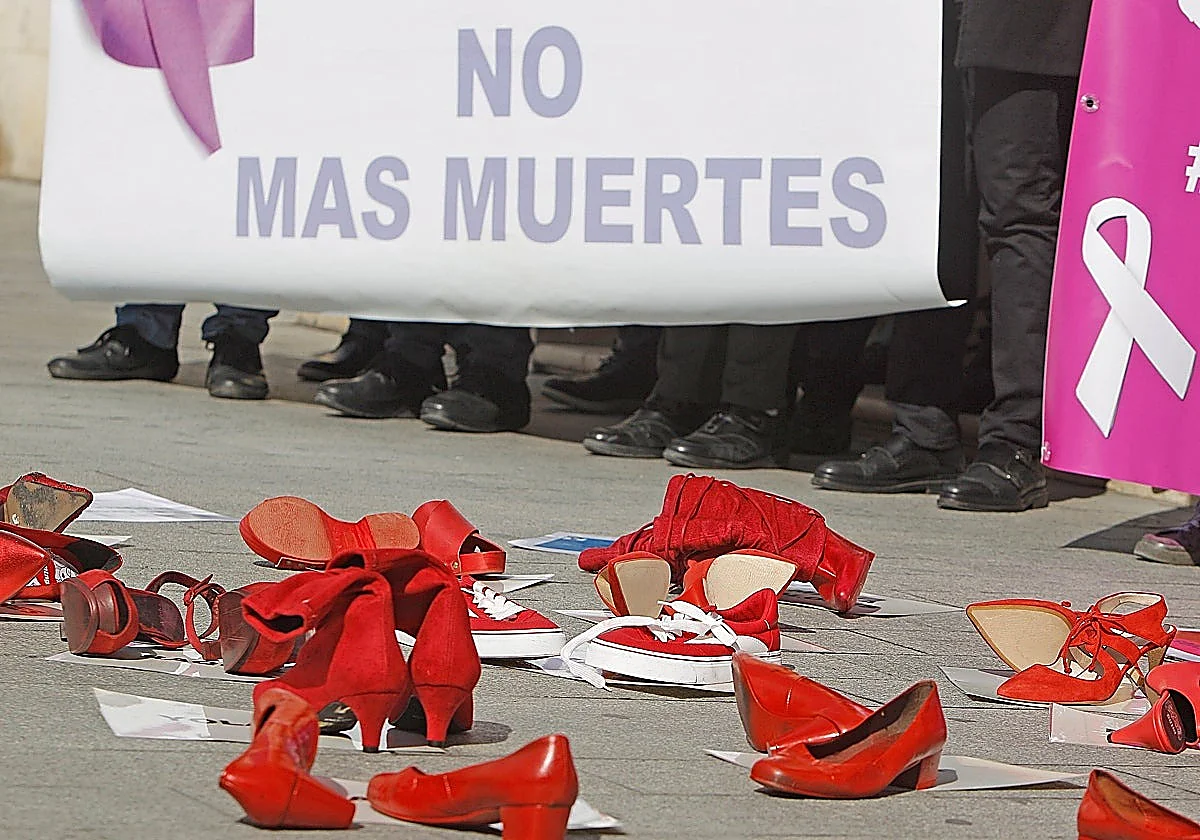
'No more deaths': protest against a gender-based murder. EFE Gender violence Judges in Spain concerned by rise in number of abused women who refuse to testify against their partnersFamilies, neighbours and friends also do not come forward to uncover gender-based violence, with only 1.9 per cent of the 579 daily reports coming from them
Madrid
Monday, 22 December 2025, 15:10
Judges in Spain are concerned about the significant increase in recent months in the number of abused women taking advantage of the legal waiver that allows them to forgo testifying during the investigation and trial against their husband or legal partner.
Between July and September there were 5,480 victims of gender violence who did not dare to become the main evidence against their alleged aggressors, which represents 11.5% or, in other words, more than one in ten victims took advantage of the exemption from the duty to testify against their husband allowed by the criminal procedure act. This volume of waivers, which is somewhat higher among immigrant women, represents an increase of 22.5% in just one year, according to figures from the Observatorio contra la Violencia de Genero del Consejo General del Poder Judicial (observatory against gender violence of the general council of the judiciary or CGPJ).
As the president of the observatory, Esther Rojo, points out, this is a "worrying" trend, given that on many occasions the victim's testimony is not only the main but also the only evidence against the alleged abuser, which means that refusing to testify against him can open the door to the case being dropped or his acquittal. After showing understanding for all these women, who on many occasions act in this way out of fear or dependence on the aggressor, Rojo conveyed a message of "calm" to them. She reminded them that "there are mechanisms to avoid direct confrontation between the victim and the aggressor when they have to testify in court and there are various types of measures designed to protect you and your children".
The positive counterpoint to this data is that, in fact, the percentage of convictions of abusers in Spanish courts is close to the maximum. Eighty-five per cent of the cases of gender violence that go to trial end in the conviction of the aggressor, a proportion that is even close to 95 per cent in the convictions handed down by the specialised courts for violence against women.
"The fact that almost nine out of every ten sentences handed down by the judicial bodies contain a conviction is evidence of the high level of efficiency achieved by the courts in a field such as gender violence, where there are significant evidentiary difficulties," Rojo stresses, adding that "the high percentage of convictions reveals that the margin of impunity for these crimes has decreased".
Breaking the silence
The second negative aspect of the report is that those closest to the victims, their families, friends, neighbours or work colleagues, continue to ignore the repeated calls from politicians, police and experts to come forward. This silence, sometimes complicit, prevents the protection of the most dependent and fearful victims in particular from their aggressors. Of the approximately 579 reports of abuse that arrive at police stations or courts in Spain every day, only 1.92% come from family members or relatives. Not only are they few, but they are decreasing. "Only by breaking the silence and taking a step forward can we break out of the spiral of violence, for which the involvement of those around us is fundamental," Rojo says.
The 53,268 reports of gender violence against 49,156 victims filed last summer in Spain are in line with the average of the same period of the previous year. Almost three out of four were filed by the victims themselves, 16% were the result of police interventions and 7% came from injury reports submitted by health professionals or care services.
The reports indicate that in Spain there are almost 20 cases of abuse for every 10,000 women, with rates well above the average in the Balearic Islands, the Valencia, the Canary Islands, Murcia and Cantabria. The regions with the lowest rates of abuse are Galicia, La Rioja and Castilla y León.
Spanish courts adopted 8,920 protection orders for victims of gender-based violence and their children in summer, which is seven out of ten of those requested, three points more than a year earlier. The vast majority are prohibitions on communication with the victim and restraining orders. There are also other complementary civil measures for the protection of the victim and her family, such as the obligation to pay alimony, provisional allocation of the home or suspensions of the visiting arrangements, custody or parental authority of the abuser over the children.