LGBT+
Latest LGBT+ magazine SIX tells story of Spanish victim of lesbophobia wrongly convicted of murderThe launch of the magazine in Torremolinos featured Editor-in-Chief of SUR Javier Recio, who was one of the only journalists to give Dolores Vázquez a voice while she was in prison
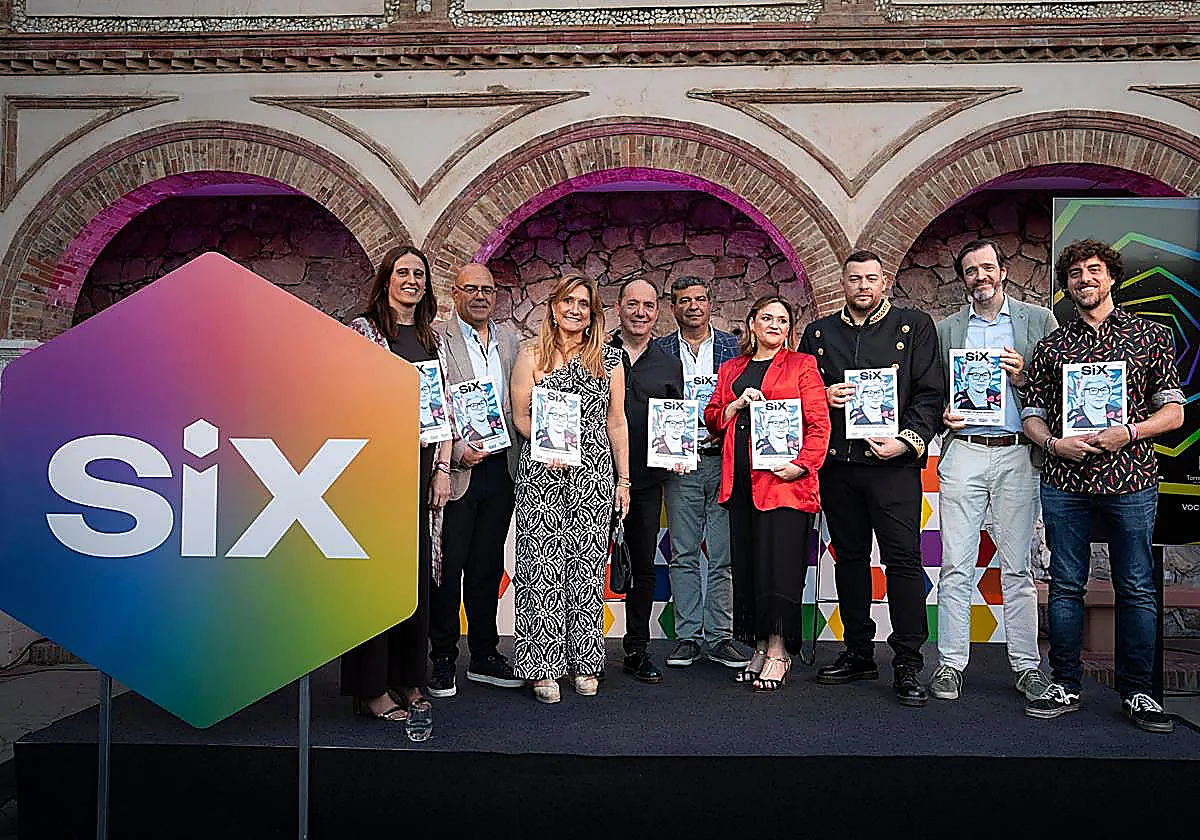
Añádenos en Google Group photo from the presentation of the new edition of the SIX magazine in Torremolinos. (Ñito Salas)Victor Rojas
29/05/2026 a las 15:08h.The new print edition of the SIX magazine, Vocento's LGBT+ magazine in Spanish, is now available in Spain, with a clear focus: the case of Dolores Vázquez.
An unjust case 25 years ago sent Vázquez to prison simply for being a lesbian. Despite a complete lack of evidence, the jury convicted her of the murder of Rocío Wanninkhof. The magazine looks back 25 years to reflect how lesbophobia marked what was arguably the most arbitrary trial in Spanish democratic history.
Director of SIX Iván Gelibter hosted the magazine launch at the Casa de los Navajas in Torremolinos, alongside SUR Editor-in-Chief Javier Recio, who was also one of the journalists who covered the case.
Related story
At the time, Recio was among the few who denounced the lack of evidence, the unfounded accusations and the absurdity of the case. At the same time, other media outlets, the police and the court viciously attacked this woman for fitting the unfounded stereotype of lesbians.
Gelibter recalled the fact that Recio was the only journalist who interviewed Dolores Vázquez during the investigation. "I saw that an injustice might be taking place. I wasn't sure of her innocence, but I was certain there was no conclusive evidence against her," Recio said.
"I had a very good relationship with her lawyer and I suggested we did a couple of written interviews while she was in prison. From the way she spoke, I realised she was there for something she hadn't done," he said.
Recio stated that the investigators in the case "concocted a narrative centred on the relationship between Dolores and Alicia (the murdered woman's mother)". "Their narrative was that she was the damned lesbian who had argued with the mother and murdered her daughter," he said.
Recio also said that SUR was the only newspaper that maintained a professional stance regarding the case. "The press handled it very poorly. Some colleagues were like hooligans," Recio stated. He believes a similar situation could not happen today.
SIX offers a comprehensive analysis of the case following Dolores Vázquez's return to the media spotlight after the tribute she received from the Ministry of Equality on International Lesbian Visibility Day.
This thorough analysis includes articles by experts on the subject, such as Iván Gelibter and Javier Recio, as well as by activist and author of La Construcción de la Lesbiana Perversa Beatriz Gimeno; journalist and friend of Dolores, Toñi Moreno; and SUR's crime reporter, Irene Quirante, who provides a timeline from the day Rocío Wanninkhof was murdered until the moment the true perpetrator was convicted.
"It's not obligatory for someone to publicly disclose their orientation, but does that person depend on the LGBT+ community? Do they work at Pride events? If you're going to give a speech and say you don't want labels, leave that space for others. What isn't named doesn't exist," Gelibter said.
He said that LGBT+ rights cannot be separated from other human rights, such as access to housing or the right to demand an end to war.
Other topics
The case of Dolores Vázquez occupies a large part of the new edition of SIX, but it is not the only relevant topic. One of the magazine's main objectives is to reflect the diverse realities of the LGBT+ community, not only in Spain.
A prime example is the special feature on Latin America by journalist Estupenda Márquez, who has compiled a list of some of the people who shape narratives and ways of being within their own communities. She also presents a report on archives that preserve the collective memory of the community and another on cultural centres where gay communities gather to celebrate.
Interviews with Argentinian writers Mariana Enríquez and cartoonist Maitena further exemplify the magazine's commitment to this approach.
One of the most impactful stories in this new issue comes from Iran: a report on Sogand, a young woman murdered for being transgender. Rober Astorgano, photojournalist and author of this article, participated in the launch to give voice to this story of resilience and remembrance.
"I wanted to do a report on the transgender community, but it was complicated because there is no freedom in Iran. When I met Sogand on the street, I saw that she defended her identity even though she was attacked every day," Astorgano said.
Astorgano said that Iran is one of the most discriminatory countries against the LGBT+ community. Despite this, gender reassignment surgery is legal, but with caveats. "Iran's leaders only accept people who have undergone the surgery, but it's very expensive, requires judicial and familial consent and involves psychological treatment. She told me she didn't need surgery to know who she was," he said.
The event concluded with the participation of Margarita del Cid, Mayor of Torremolinos (the municipality that has hosted the magazine since its first edition in 2018). She highlighted the freedom, diversity and respect that characterise life in the Costa del Sol town.
"This Pride event unites the main demand with our cultural identity," she said, referring to this year's Pride motto, "Where culture is sown, freedom flourishes," she stated.
The SIX is a free magazine that features contributions from prominent figures in the LGBT+ community, such as translator Juan Naranjo, poet Ángelo Néstore, cultural manager Violeta Niebla and drag queen Pink Chadora. It covers current topics that combine culture, stories and community, including interviews with designer Pedro Béjar and drag queen Samantha Ballentines, a study on the representation of trans women in the RTVE archives and a report on the demands of the asexual community.
The new, limited-edition issue will be available in the coming weeks in bookstores, bars, hotels and other LGBT+ venues, primarily in Andalucía, Madrid, Barcelona and Valencia.
The Spanish website (revistasix.es) publishes the most relevant articles available in the print edition. News, features and interviews from previous years can also be found on the website. The print edition of SIX comes out twice a year: in May and in November.
National debut
The Spanish magazine, which is the first LGBT-focused outlet published by a major group in Spain, made its national debut last year with a presentation in Madrid by Vocento.
The event brought together a large part of the city's LGBT+ community and featured Karla Sofía Gascón, who graced the cover of the first issue distributed nationwide, as well as Minister of Youth Sira Rego and Minister of Equality Ana Redondo.
Now, with the launch of issue number nine (the seventh published by Diario SUR and the second by Vocento) in Torremolinos, SIX is announcing its expansion. The launch served as a way to remember the magazine's origins and celebrate with those who have supported it since its inception in 2018, as well as those who have joined along the way.