Downloads
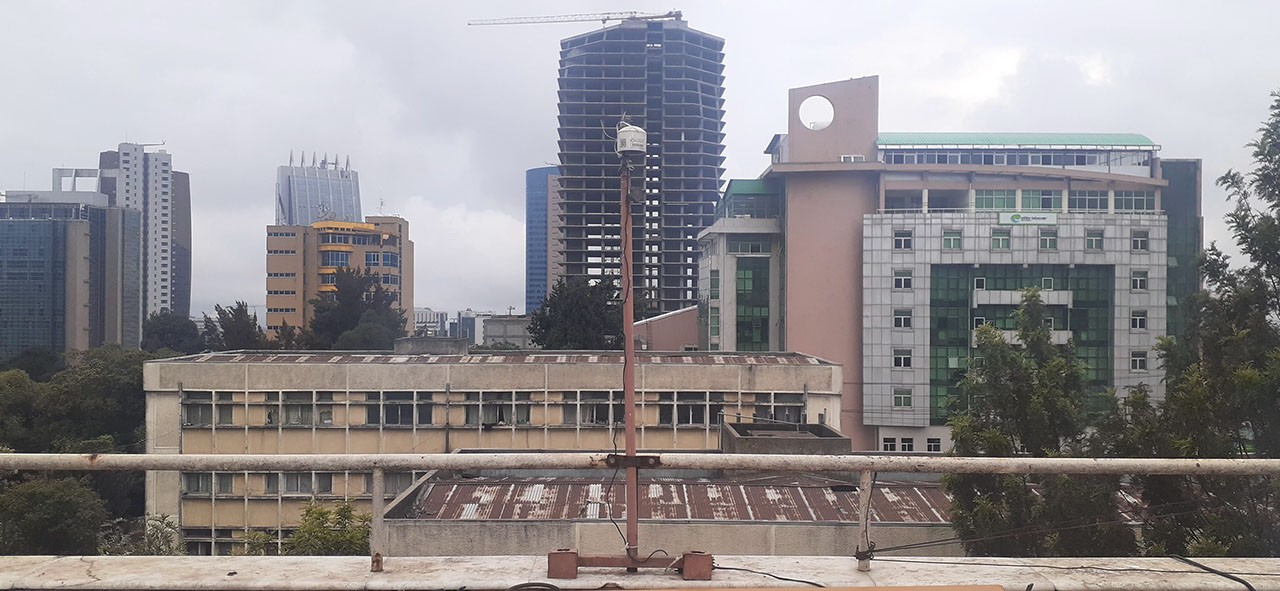
MAIA Air Sensor at Work in Addis Ababa
JPEG (1,018.53 KB)
Description
This roof-mounted air sensor in Addis Ababa, the capital of Ethiopia, is one of 10 used by NASA’s Multi-Angle Imager for Aerosols (MAIA) to study the city’s air quality. MAIA’s air sensors provide a detailed look at particulate matter that is 2.5 micrometers or less in diameter, also known as PM2.5, one of the world’s deadliest forms of air pollution.
Black carbon, or soot, is an important component of particulate pollution in Addis Ababa and is produced by diesel vehicles, fires, and other combustion sources. Detailed measurements from the MAIA air sensors reveal how pollution changes by time of day and season, including spikes produced by rush-hour traffic and holiday celebrations. The findings are relevant to cities around the world, including in the United States.
The 2025 State of Global Air Report, cited in the paper, estimates that these particles, some of which are tiny enough to enter the human bloodstream, are linked to around 4.9 million excess deaths per year globally. Of the many kinds of PM2.5, black carbon in particular has been linked to impacts on low birth weight, brain development, respiratory conditions, and premature mortality.
Keep ExploringDiscover More Topics From Photojournal
Photojournal
Search Photojournal
Photojournal’s Latest Content
Feedback