Health
Malaga colon cancer diagnoses to exceed 1,400 people in 2026The good news is that the survival rate will surpass 60 per cent thanks to early detection and advanced treatments
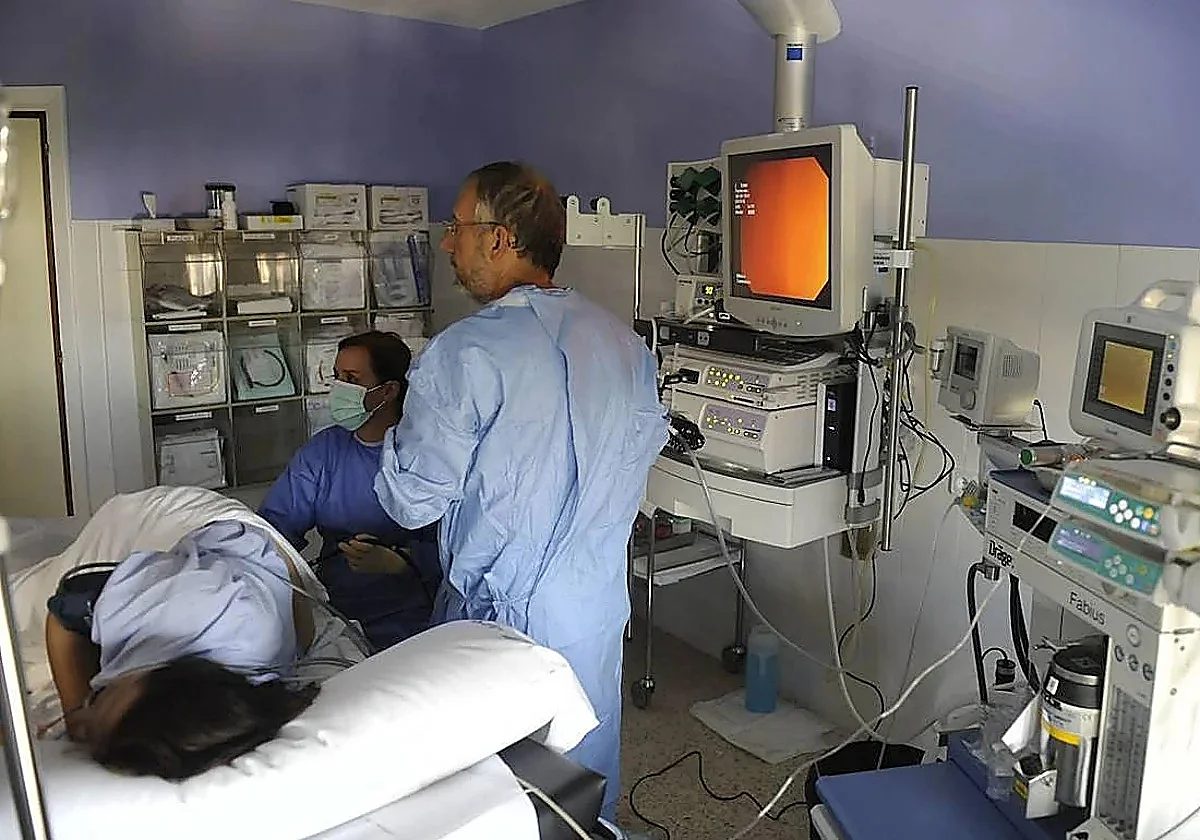
Añádenos en Google Photo from a colonoscopy procedure. (SUR)José Antonio Sau
25/05/2026 a las 11:17h.According to the Andalusian oncology society (Saom), more than 1,400 people in Malaga will be diagnosed with colon cancer in 2026. This is, in fact, one of the tumours with the highest number of new cases and prevalence in Andalucía and Spain.
Early detection is proving key to survival rates. Thanks to early detection techniques and the latest advances in cancer treatments, more than 60 per cent of patients will overcome it, 90 per cent if detection is in the really early stages.
The colon cancer survival rate in Spain has increased in recent years, reaching 64 per cent in women and 63 per cent in men.
Symptoms
Several symptoms indicate the possible presence of tumours: changes in bowel habits, such as a sudden shift from constipation to diarrhea or alternating constipation and diarrhea; blood or mucus in stool; unintentional weight loss that persists over time; significant weakness.
According to the Saom, early diagnosis and screening programmes, like the one that has been running in Andalucía for years, are significantly improving the survival rate and quality of life.
"It is a key tool for the early detection of this type of tumour in the at-risk population, especially in people between 50 and 69 years of age, both men and women," Dr Laura Medina from the El Clínico hospital in Malaga says.
The Saom insists on the need to continue promoting participation in this screening programme. However, seven out of ten people in Malaga do not undergo screening despite being in the at-risk population group and receiving an invitation. In Andalucía, participation has increased from 20 to 40 per cent.
Since its launch in 2014 (becoming widespread from 2020 onwards), the programme has detected 3,833 adenomas (polyps or potentially cancerous lesions, although not all progress to cancer) and 116 cancers. This provides an indication of the incidence of this type of tumours (data covers up to and including 2025).
The colorectal cancer screening programme in Malaga now reaches a target population of 507,588 people, of whom 502,060 are eligible. The target population includes all residents of Malaga between 50 and 69 years of age who are eligible for this mass screening programme.
The eligible population is calculated by subtracting from the target population those individuals who have recently undergone a colonoscopy or have a high genetic risk. To date, the healthcare system has sent 495,948 invitations, representing 98.78 per cent coverage of the eligible population.
The Andalusian regional government invites all Andalusians in that age range to take a simple and painless test, which analyses the presence of blood in stool. If the result is positive, the healthcare system refers the person for additional tests and, if necessary, a colonoscopy.
The most common cancer
Colorectal cancer is the most common cancer in Spain, with more than 44,000 cases to be diagnosed in 2026, 7,000 of them in Andalucía.
In the last five years, the incidence rate in Andalucía has increased by more than five per cent. This is likely to continue with sustained growth in the future, also at the national level, due to various factors such as the aging population, demographic growth and improvements in early diagnosis.
Related story
According to the Saom, it is the most common cancer in Spain and Andalucía, if we take into account men and women, ahead of breast and lung cancer. Men are more prone to having colon cancer than women.
New treatments for digestive tumours stand out today: neoadjuvant clinical trials for rectal cancer or the application of immunotherapy and new drugs for colorectal cancer.
The other key is prevention: avoiding alcohol, tobacco, sedentary lifestyle and obesity. A healthier lifestyle, with regular physical exercise and a balanced diet, reduces the risk by up to 40 per cent.
Advances in precision medicine, alongside the progressive incorporation of targeted therapies, and the better characterisation of colorectal cancer subgroups have represented significant advances in the strategy against the most advanced tumors.
Colonoscopy
Head of the digestive system unit at the Xanit Vithas Internacional hospital in Benalmádena Dr Pedro Rosón recently told SUR about the importance of undergoing regular colonoscopies.
"Nowadays, in almost all public and private centres, it's done with the patient sedated, asleep, just like when you go to bed at night. The difference between sedation and general anaesthesia is that the patient breathes on their own," he said.
"The preparation itself is a bit unpleasant. The day before, you have to take medication to cleanse the colon and ensure there's no stool. That's the only uncomfortable part."