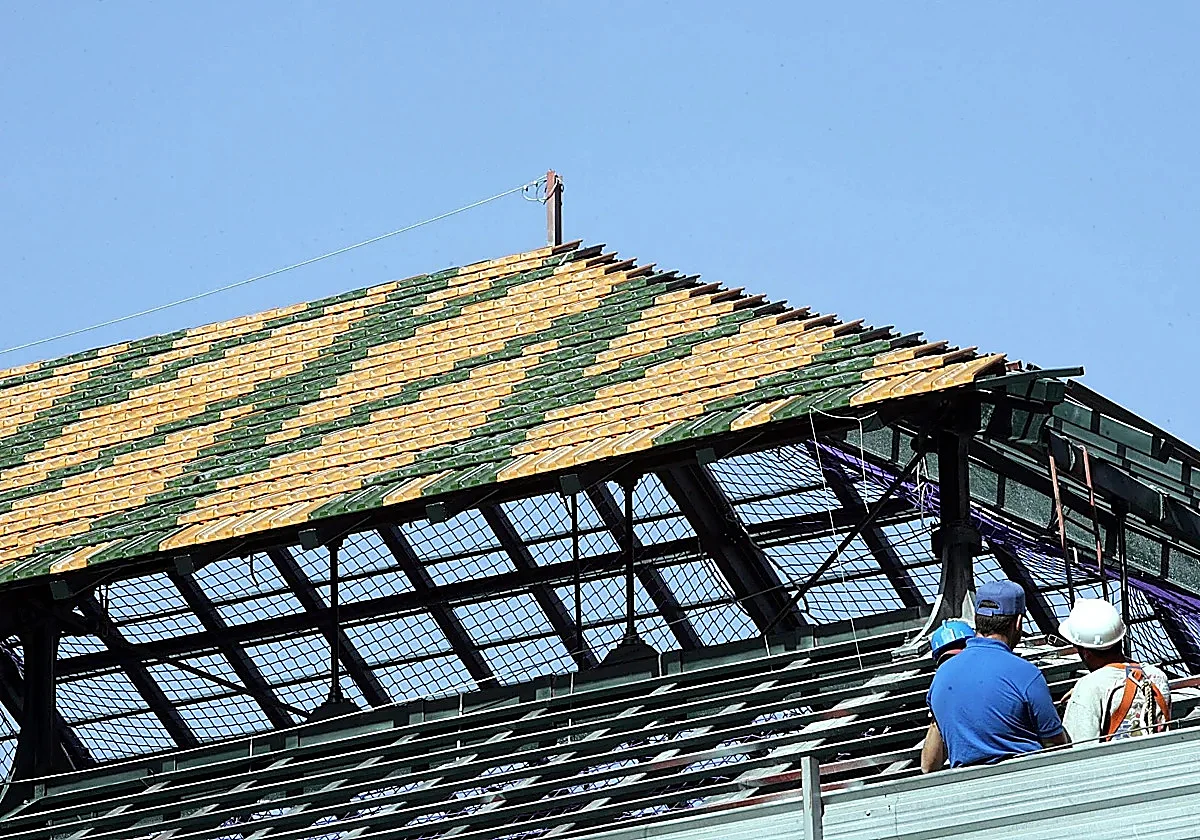
These problems directly impact the market's habitability. They have caused damage and dampness inside, even affecting the equipment and facilities of the vendors' stalls.
The technical document describes significant incidents, among them the accumulation of 110mm of rainfall in just three days at the end of January 2020. This caused extensive leaks in stalls and passageways.
That same year, the spring storm between 29 March and 5 April doubled usual rainfall levels. A total of 50mm accumulated on the morning of 1 April, which overwhelmed the drainage systems and created a curtain of water inside the building.
Works are urgent and cannot be postponed
Although the city council implemented temporary measures and repairs between 2011 and 2013 to increase drainage capacity, leaks have reappeared because the root cause of the problem has not been addressed.
The technical report warns that, without urgent and immediate action, the situation could lead to claims for damages against the municipality due to the disruption of public service.
In-depth analysis reveals that the underlying cause lies in a technical incompatibility of the solution implemented during the major restoration of 2010. The side aisles were covered with traditional flat tiles, manufactured by La Escandella, measuring 466 by 260 by 55 millimetres and with a two-tone glazed finish. These tiles were nailed directly onto wooden battens without any additional waterproofing.
The structure requires the installation of a supplementary waterproofing system beneath the tiles to ensure watertightness. This system was neither designed nor installed at the time due to heritage protection concerns.
The building audit also revealed serious hydraulic design flaws in the drainage system that are accelerating the roof's collapse. Firstly, the gutters collecting water from the upper slopes exhibit significant structural deformations, creating inverted slopes and pockets of water that eventually overflow in a cascading effect directly onto the lower tiled slopes.
Secondly, the inclined collectors and downpipes under the tiles, responsible for connecting the upper and lower gutters, collapse with heavy rainfall, causing water to back up and seep under the eave tiles or run down behind the facade.
The glass skylight of the central nave, made with laminated glass, shows evident wear on the elastic neoprene seals between the metal profiles and the glazing, which compromises its airtightness.
In order to avoid a costly comprehensive renovation that would require lifting all the roof tiles and lead to a complete halt to commercial activity, the city council has opted for dividing the work into sections.
The repairs will take place outside the market's opening hours so as not to hinder daily activity, ensuring that the visual appearance and monumental protection of the historic building of Joaquín Rucoba will not suffer any modification.
The complete renovation of the Atarazanas market took place between 2007 and 2010. The project aimed to restore the original 19th-century design by architect Joaquín de Rucoba, enhance its monumental ironwork and adapt it to modern commercial and technical needs.
The project removed additions that had distorted the space over the years and restored its original character. One of its most striking features was the restoration of the historic stained-glass windows. The cost exceeded 9.3 million euros.
Read dedicated local reporting for Malaga city