Zoom
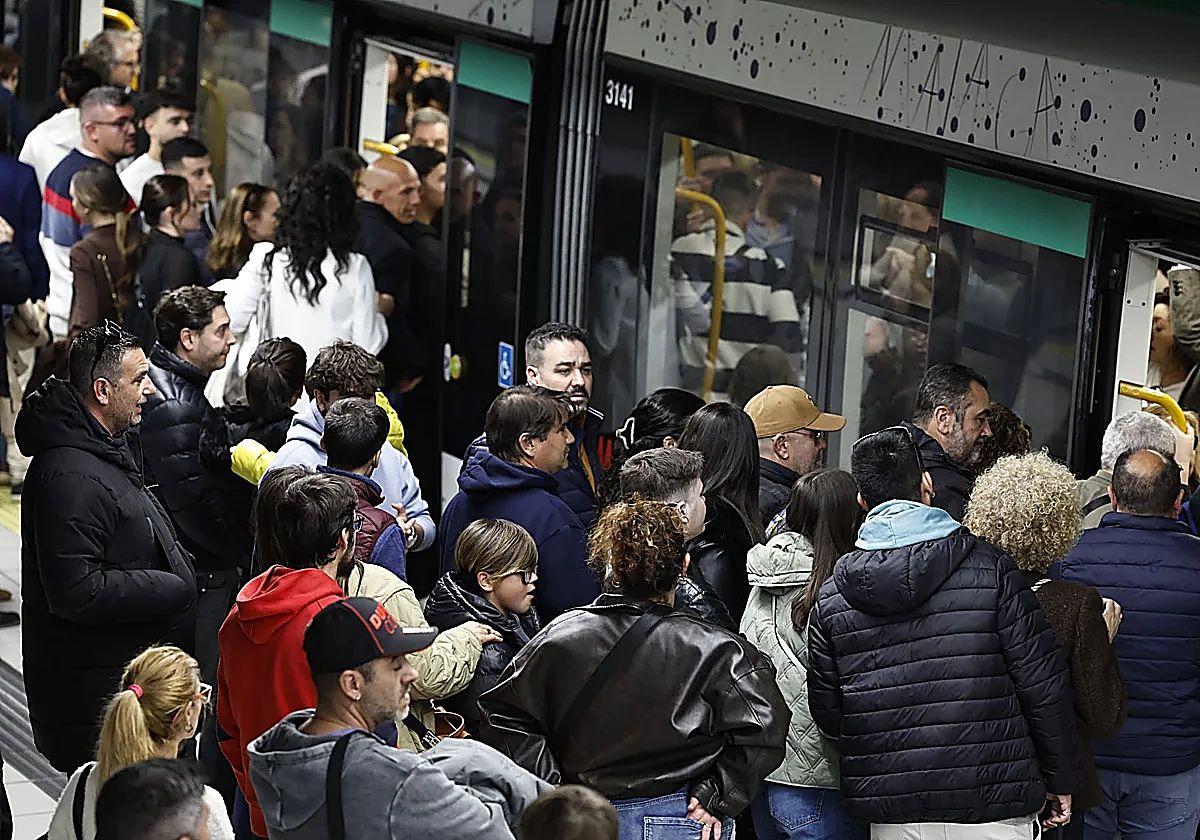
Passengers waiting to board a Malaga metro train on Holy Monday. Salvador Salas Transport Malaga metro breaks passenger record during Holy Week despite strikeThe network closed with almost 720,000 passengers, despite partial strikes reducing availability on key dates such as Holy Monday and Maundy Thursday
Ignacio Lillo
Malaga
Tuesday, 7 April 2026, 13:22
Malaga's metro closed Holy Week 2026 with the best passenger record in its history: almost 720,000 passengers (719,853) between Good Friday and Easter Sunday.
The regional ministry of public works has provided an overview of the past few days, which concentrate one of the highest demands of the year. There has been a slight increase compared to 2025, when there were 718,185 passengers during Holy Week (+0.2 per cent).
This figure is particularly significant, given that there was a partial workers' strike this year, which led to service disruptions on key dates such as Holy Monday, Holy Wednesday and Maundy Thursday.
The metro workers are trying to reach a new collective agreement and improved work conditions. The protests, widely supported by the staff, reduced train frequency during the three peak hours each day, specifically when people were heading to the city centre to see the processions. The greatest disruption occurred on Holy Monday, when thousands of Malaga residents tried to board the metro to reach the Cautivo procession.
Unstoppable demand
"Despite the reduced service frequency during the partial strikes, public demand has remained steady," sources from the regional government stated.
Over these ten days, the daily average was 71,900 passengers, with particularly high peaks on the main Semana Santa days. Holy Monday was again the busiest day, with 103,518; followed by Maundy Thursday, with 95,234. Meanwhile, Easter Sunday experienced one of the largest relative increases, with a 22.6% rise compared to the previous year, reaching 32,268 passengers.
The operation included the traditional 68-hour non-stop service between Wednesday and Friday, as well as extended timetables until the early hours of the morning on various days. The Atarazanas and Guadalmedina stations, due to their proximity to the official procession route, handled a large portion of the passenger flow and once again served as key nodes in the network.
The concessionary company Metro de Málaga, which reports to the regional government, also increased both line staff and security and surveillance measures. During the night shift, all trains had security personnel present. This, combined with overcrowding at times, led to some tense moments, but without major consequences.
Negotiations continue
Despite the positive review, collective negotiations remain without results. Last week, the workers' union praised the success of the protests and the unity of the workers in demanding improvements.
The day with the greatest impact was Holy Monday, when last year's number of passengers dropped by 10,000.
The protests, which caused significant queues, overcrowding and delays, discouraged many passengers, who opted for other means of transport or simply returned home.
In conclusion, had it not been for the protests, the operating results of the metro in this period would have been significantly higher.