Construction
Malaga officially appoints Sierra Blanca as lead developer for El Bulto regenerationThe Marbella-based promoter will build a 22-storey building with 153 flats
Añádenos en Google Recreation of the Sierra Blanca developer's project in the El Bulto area in Malaga. (SUR)Jesús Hinojosa
24/06/2026 a las 15:09h.Marbella-based developer Sierra Blanca, which took the first steps three years ago to lead the urban transformation of the El Bulto area in Malaga, will ultimately act as the appointed developer.
The municipal urban planning department confirmed this on Tuesday, concluding a two-part bidding process in which the Urbania also participated until the very last minute.
Ultimately, as SUR has confirmed, Sierra Blanca's initial proposal received the highest rating from the city council to lead the project, technically, architecturally and economically.
Related story
Construction
tennis club with the Rafa Nadal brand in that same area.
It will now assume the management of the planning as well as the development works, in exchange for acquiring part of the construction rights held by the landowners, including the city council.
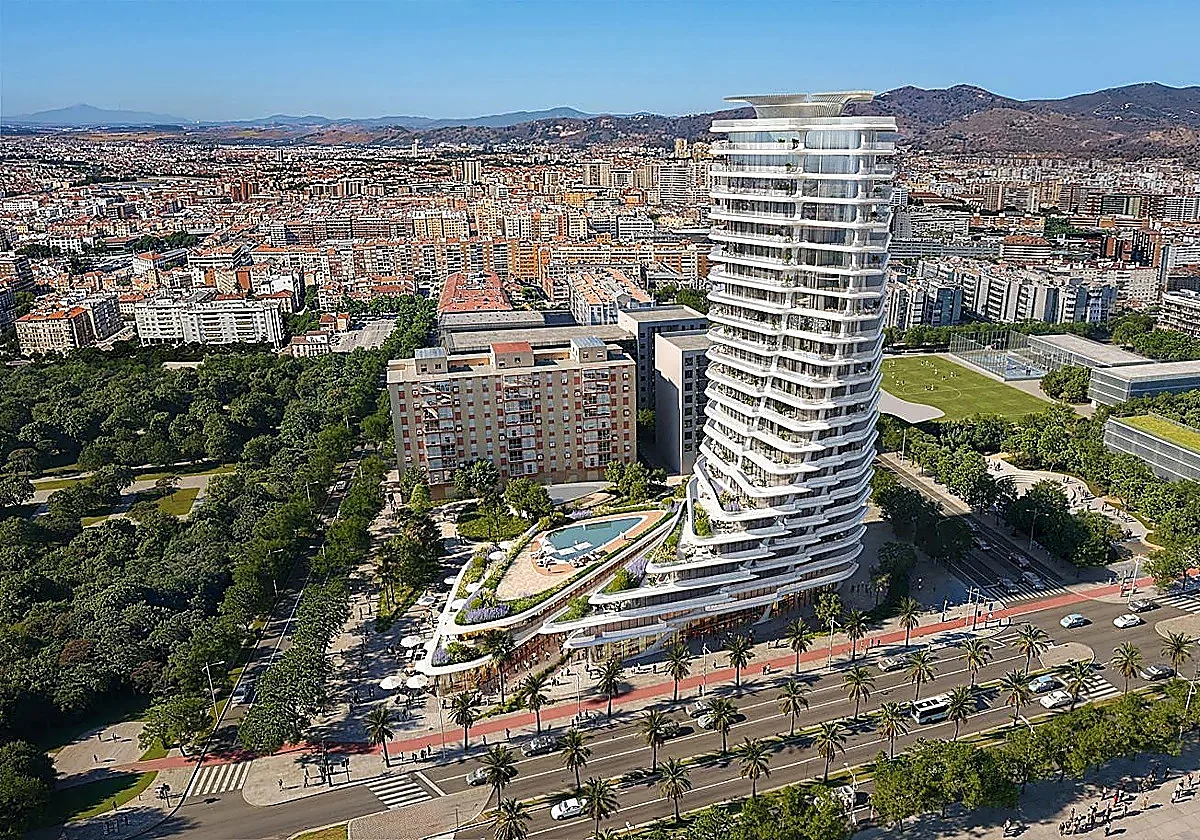
The Sierra Blanca project features a 22-storey tower, designed by the studio of renowned Iraqi architect Zaha Hadid, who passed away in 2016. It will house a total of 153 open-market flats. The construction, which would also have tertiary uses, would have a facade front of 40 metres and a volumetric layout (the height would decrease towards the Huelin park area).
The proposal, advised by consultancy firm Ejecución del Planeamiento, places this tower in the space currently occupied by the Cottolengo shelter, which would be moved to a new building on the corner of Paseo de Antonio Machado and Calle Góngora, according to an agreement that the developer has already reached with the Malaga diocese, if this intervention is successful. The new Cottolengo will occupy a plot of 2,800 square metres, on which the shelter will have 2,500 square metres of built space and a basement of 500 square metres for a minimum of 15 vehicles.
Sierra Blanca has stressed that the tower only occupies 13 per cent of the 295-metre facade of the area facing the Antonio Machado promenade, so it avoids the formation of an architectural wall, which could have prompted a negative report from the coastal authority.
The project keeps the Luis de Góngora public school in the same location but proposes the demolition of the municipal hostel and other buildings owned by the city council. In exchange, with the new development, which creates a large 21,055-square-metre block of interior facilities, the city council would have two plots of land "for uses it deems necessary and convenient for the area".
The proposal also includes the construction of two ground floor buildings plus nine for 40 social housing units (VPOs) each, with a cultural space on the ground floors. The aim is to rehouse the families who live in the houses that still remain in the area as heirs to the shantytown past of this area.
The football pitch next to the school would be dismantled to create an underground car park with spaces for public and private use. A new north-south-facing football pitch would be built on this car park.
The plan maintains the surface route of the port railway, but sizes the spaces in such a way that its undergrounding would be possible in the future. A wide north-south boulevard would be built above this underground section.
The city council now has to sign a planning agreement with Sierra Blanca outlining its obligations and rights for the development of the area. Among the obligations are meeting deadlines for the project's completion.
The environmental impact assessment for the project and its progress must be submitted within three months of the agreement's signing. The area's development plan must be submitted three months after the environmental approval and the development project six months after the initial approval of that plan.
If the chosen company fails to meet its commitments, the agreement sets out a series of financial penalties which, in the worst-case scenario, could lead to the withdrawal of the developer's status.