Zoom
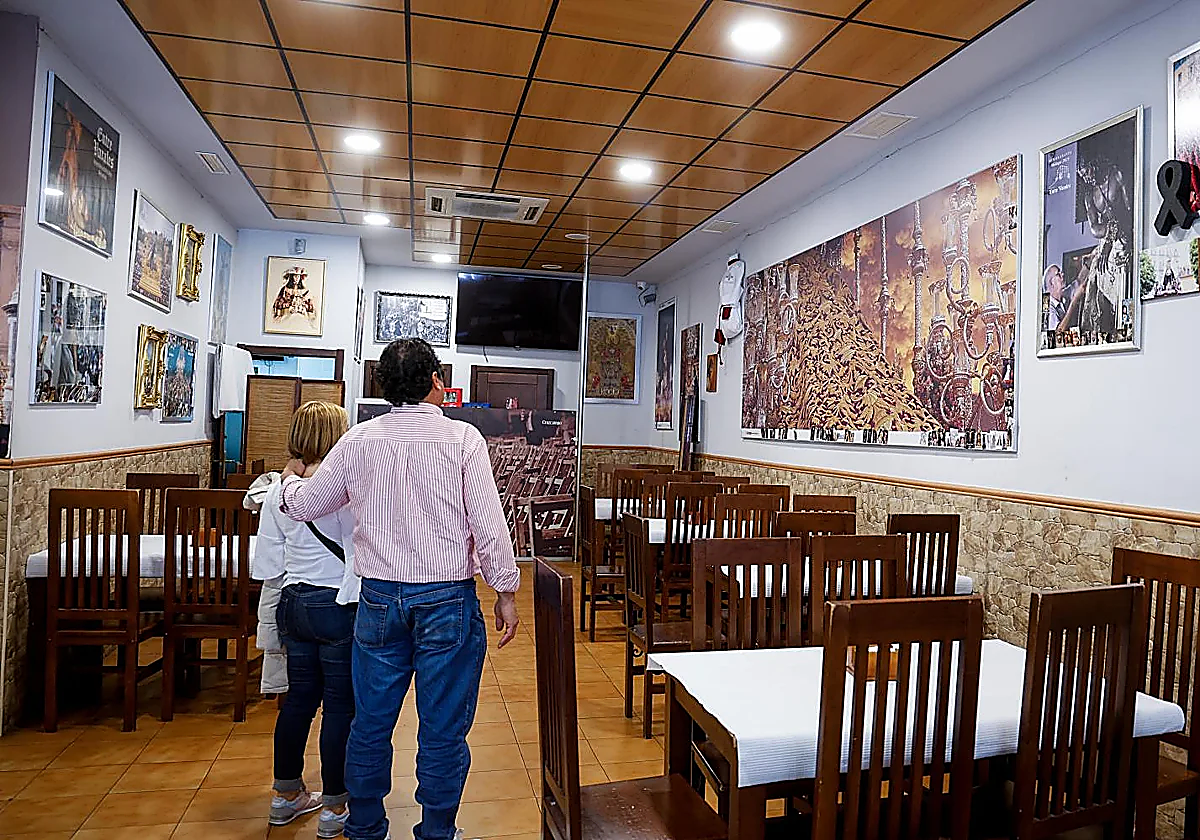
The Entre Varales restaurant in Malaga city, decorated with objects members of the brotherhood have donated. Marilú Báez Food and drink Malaga restaurants celebrate Holy Week traditions at the tableSeveral establishments in the city carry the smell of incense in the air and offer dishes that have practically converted into part of religion
Juan Soto
Malaga
Thursday, 2 April 2026, 14:19
Beyond the official processions, marches, banners and religious images, Holy Week also shows up in the kitchen and interior design of several establishments in Malaga city, offering nourishment for the soul and the stomach.
Religious brotherhood (cofrades) restaurans are sort of temples, where the scent of incense lingers the whole year. For those following the tradition of Lent and abstaining from meat, there are stews and other dishes to enjoy.
While these establishments maintain their essence throughout the year, it's during this week that they truly make their money. For restaurants like Entre Varales, Las Merchanas, Nerva, Los Hidalgos or the new Capirote, Holy Week isn't just a date in the calendar - it's "the moment", a time when the till fills up and the staff honour the faith of people as much as any gilded object in the processions.
Stepping inside, one understands that Holy Week in Malaga is an experience that transcends time: it's not about temporary decorations that are taken down on Easter Sunday. It's a way of understanding the city and the hospitality industry.
Owner of the iconic Nerva bar Joaquín Fernández sums up the sensation: "Here, every day is Maundy Tuesday." This philosophy also resonates among all his colleagues, who have transformed their restaurants into living museums fueled by devotion.
In these places, the walls tell stories. They haven't been decorated by interior designers, but by brotherhood members and customers who, year after year, leave their treasures. Antonio Medina, owner of Los Hidalgos, proudly points to his walls: "Everything here was brought to me by the members of the brotherhoods, from the Sepulcro to the Estudiantes. I haven't put anything here myself." His establishment also features images of La Piedad (in honour of the bar's origins, which began in the Molinillo neighborhood), figure of the Virgin of El Rocío and even one of the Virgen de Jaén.
Having this kind of folk art decor facilitates a connection between the customer and the tavern owner. Francisco López lovingly cares for commemorative robes and maintains a corner where Guardia Civil officers have left their tricorn hats next to a reproduction of the Virgen de la Trinidad's mantle. "Everyone likes to have their own little corner in the restaurant and to proudly bring their friends to see it."
During Holy Week, when the bell announces the approach of a religious procession, the dynamics of business change completely. In the city centre, the crowds are so overwhelming that managing the situation becomes almost heroic. Antonio Medina says that, at times, Holy Week becomes a logistical challenge: "When the processions pass by, people can't even get in or out. Sometimes, we sell more on a quiet weekend."
Respect for faith always takes precedence over business for these owners, however. On Tuesday, López told SUR: "On Holy Monday, the Pasión procession passed by my door and the first thing I do is ask people to move aside. We stop serving food until it passes and we turn off the lights to create a more welcoming atmosphere."
Meeting point
That balance between commercial activity and respect for religion is what defines the authentic brotherhood bar. Daniel Peregrina is one of the owners of Capirote - an establishment that has just opened in Alhaurín de la Torre. He aims to make his bar a meeting point where locals feel at home, even allowing people to hang their own religious images on a collective mural. "We want to become a meeting point for members of brotherhoods from outside the city," he says.
While your eyes might be distracted by images of the Virgen del Rocío or replicas of the Expiración, your sense of smell and taste will submit to timeless flavours. The cuisine of this time of year is a haven of traditional cooking that resists fleeting trends.
In Nerva, the dishes that have graced the tables since the beginning of Lent are stews potatoes with cuttlefish in a yellow sauce and cod fritters. For dessert, the classic trio: French toast, rice pudding and fried milk.
Interestingly, the culinary approach varies from establishment to establishment. While Entre Varales adapts its menu with names inspired by religious brotherhoods and specific Lent dishes, Los Hidalgo prefers to maintain its essence unchanged. "We make exactly the same food all year round," Medina says. "Gazpachuelo, dogfish stew, snails or anchovies with lemon. We want first-time customers to know us for what we always are."
At Capirote, the staff focus on montaditos (which they call capiros), gildas, meatballs and flamenquines. For those who prefer something hot, they offer puchero a la Encarni, named in honour of the mother of owner Saray Trujillo. "The most important thing is that people come to have a good time and enjoy tapas, which is slowly disappearing," Daniel Peregrina says.
These specialised establishments offer cuisine that attracts a regular clientele and customers who visit specifically during Holy Week, sometimes having already booked the previous year. "We host many gatherings of brotherhoods who have the custom of meeting before the procession," López says.
Speaking of Easter cuisine, during this time other types of restaurants also join in the celebrations, organising special events for religious brotherhoods or even offering the traditional Lent stew. La Máquina prepares the traditional version with chickpeas, spinach and Alaskan black cod during Holy Week. Taska Laska, on the other hand, garnishes it with crispy leeks and croutons to give it a slightly more modern look and flavour.
Legacy
The importance of these restaurants goes beyond the purely economic. Locals consider Nerva as guardian of the neighborhoods' identity. Joaquín Fernández says that they strive to pass on this passion to the youngest children and even give them the small, colourful capirotes they use to cover the hooves of the hams. "We don't want tradition to be lost."
As night falls, when the weariness of the men carrying the thrones and the penitents becomes evident, these bars become the last refuge before heading home. They are places where it's unnecessary to explain why a lump rises in your throat upon hearing a processional march or the passing of a religious image. There, amid the scent of wax, the taste of cod and the gleam of the paintings, Malaga rediscovers itself and shows reverence for its symbols.