Zoom
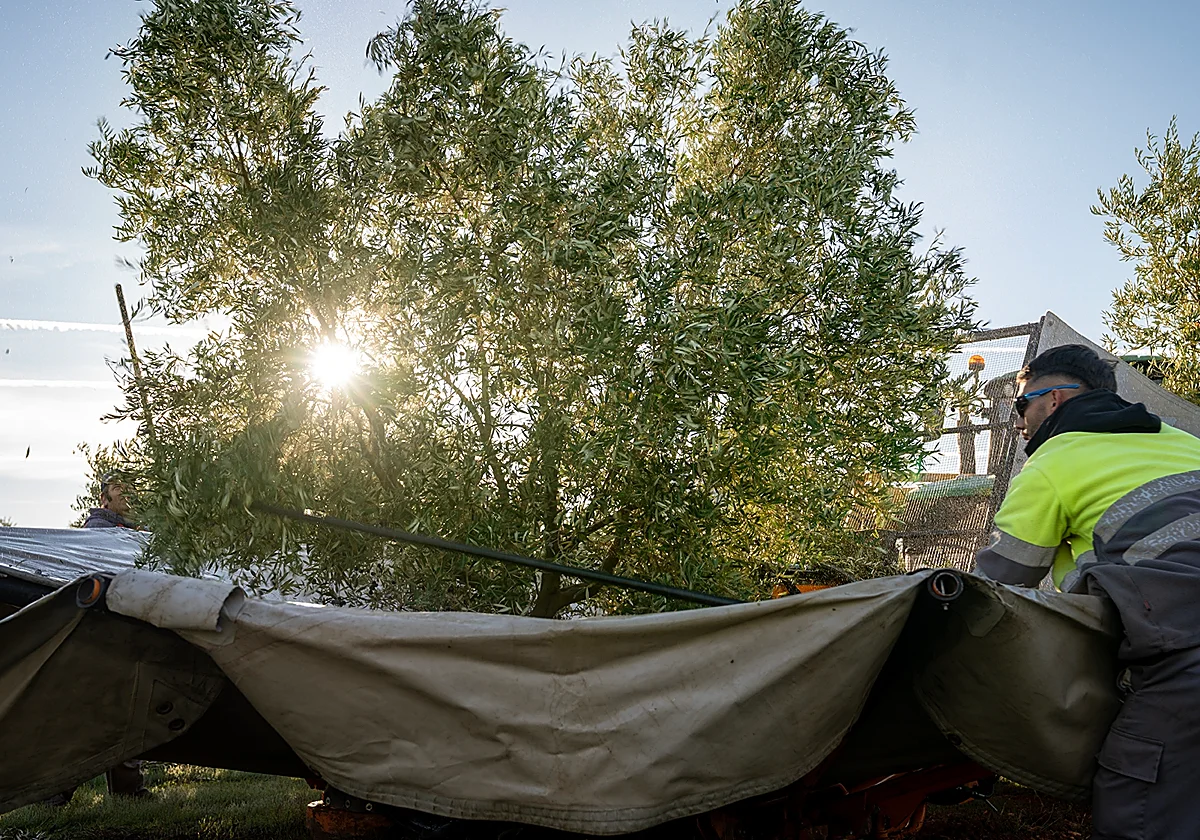
A farm worker harvesting olives. Antonio Contreras Agriculture Malaga's agricultural crisis deepens in 2025 with a drop in turnover of 39 million eurosThe effects of the severe drought and unfair competition are being felt by the province's crop and livestock sectors
Malaga
Thursday, 18 December 2025, 19:21
This 2025 has been a bad year for Malaga's agricultural sector. Neither the heavy rains in spring nor the occasional increase in production in some areas have allowed the pessimistic trend that has established itself in recent years to be reversed. This is what has emerged from the annual balance sheet drawn up by the Agricultural Association of Young Farmers (ASAJA), a detailed look at the turnover of the different crops and livestock in Malaga province. The sum of both areas has generated 633 million euros, a drop of some 39 million euros compared to last year's 672 million.
On Wednesday 17 December, the heads of ASAJA pointed to two main factors as the causes of this year's losses: the persistent consequences of the "severe drought" of recent years and unfair competition from outside the European Union.
"If we all thought we were going to have a higher turnover with the rains, this has not been the case. We have seen how this year the effects of the severe drought have continued to drag on. Here it has rained for the reservoirs, but not for the aquifers," according to the president of ASAJA, Baldomero Bellido.
In addition to the drought, there is also the problem of unfair competition. In a context in which the European Union is weaving an increasingly complex web of regulations, Malaga producers are suffering the entry of products from countries outside Europe into the market, where neither labour costs nor health requirements are the same. For Bellido it is "a situation that is increasingly unsustainable" and which is putting the Malaga countryside in a state of permanent crisis.
The positive news for the province's agricultural sector in 2025 can be found mainly in two crops: olives and avocados, which have managed to almost return to pre-drought levels. Olive groves account for 40% of Malaga's agricultural income, followed by horticultural crops (24%) and tropical crops (20%). Citrus and herbaceous crops represent six per cent each.
Zoom The heads of ASAJA, this Wednesday, at the presentation of its annual balance sheet. SURIn livestock farming, white pigs (41%), goats for milk and meat (33%) stand out, with the rest of production at around five per cent. Avian flu, dermatosis and swine fever have created a complicated scenario for livestock farming. Although the ASAJA insisted on the strictness of health controls on farms in Malaga and that there are no confirmed cases of any kind, those responsible admitted that these alerts always end up reducing consumption. Bellido demanded that the State and Andalusian governments provide an aid package to compensate for the losses.
The turnover of Malaga's agricultural sector, he said, could be higher if farmers could rely on a guaranteed water supply. This year's rains, Bellido warned, should not be used to forget that the province needs structural solutions to the drought. "Although progress is being made in the use of recycled water, the deficit persists.
Another dilemma affecting the countryside is the lack of labour. "It is a general problem that is becoming more acute in our area," Bellido said, and he did not hesitate to describe the current labour framework as a "drama" for the countryside. "Legislation has to encourage those who work, not discourage work," he concluded.