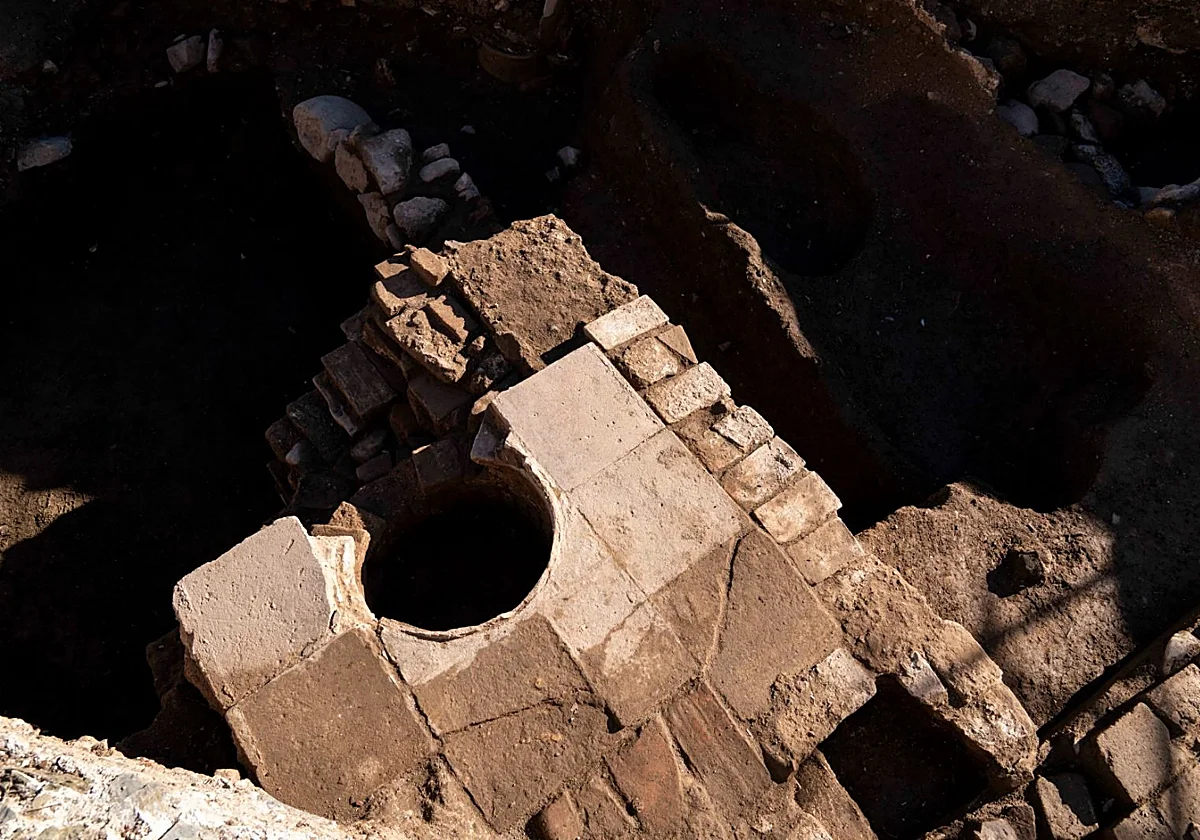
Tunnel works in the city centre and surrounding areas have unearthed remains from the Roman, Moorish and industrial eras of Malaga
Añádenos en Google Archaeological remains of Muslim Malaga discovered by the metro. (Dani Maldonado. Archivo)Málaga
19/05/2026 a las 16:19h.Over the two decades that the metro works have been underway, they have at times been a source of disruption for local residents and shopkeepers, ... due to missed deadlines and lengthy stoppages caused by cost overruns and funding issues.
However, it has been multitasking as both the public transport system used by thousands of Malaga residents every day and, more surprisingly, a remarkable time machine. In short, the underground has not only transformed present and future mobility, but has also rewritten several pages of Malaga city's history.
All of this will be showcased in the future exhibition space dedicated to the artefacts recovered during the excavation, which will be located next to Guadalmedina station, on the first level of the tunnel, and which already houses numerous items.
Most of these are remains from the Attabanim suburb and from various periods of Muslim Malaga. They are the remains found beneath Callejones del Perchel and Avenida de Andalucia, where in the 11th century there was an important neighbourhood outside the walls of the medina.
Roman and Arabic Malaga
The excavations revealed rectangular dwellings with courtyards, kitchens and latrines, as well as cobblestone pavements and the remains of the Almohad wall. Rather than being buried under the concrete, elements such as road and housing structures were integrated into the metro tunnel itself.
Related story
History
Ignacio Lillo
Unsurprisingly, the location was chosen to take advantage of the presence at that very spot of the two walls of the Attabanim suburb, which are designated as assets of cultural interest (BIC).
As well as this, the site already features an entire street from the 11th and 12th-century suburb; an Islamic oven from the same period; a modern Christian street (16th–17th centuries); and several jars and basins from an 18th–19th-century leather tannery.
The final part of the collection will now consist of the best-preserved pieces to be excavated from the previously unexplored Roman necropolis dating from the 1st to the 4th centuries AD, containing almost 700 burials from the High and Late Empire. Studies to date have already identified various types of burials, the finest examples of which will be preserved and displayed to the public.