The document uses two reference scenarios: one with intermediate-to-high emissions, consistent with global warming of more than 2C by 2050 compared to pre-industrial levels, and one with moderate emissions closer to current climate policy trajectories.
"The comparison between these two scenarios has fundamental educational value: it highlights that the decisions made in the coming years regarding energy transition, urban planning and industrial regulation will have direct and quantifiable consequences for heat-related mortality in Spain in 2030 or 2050," the study says.
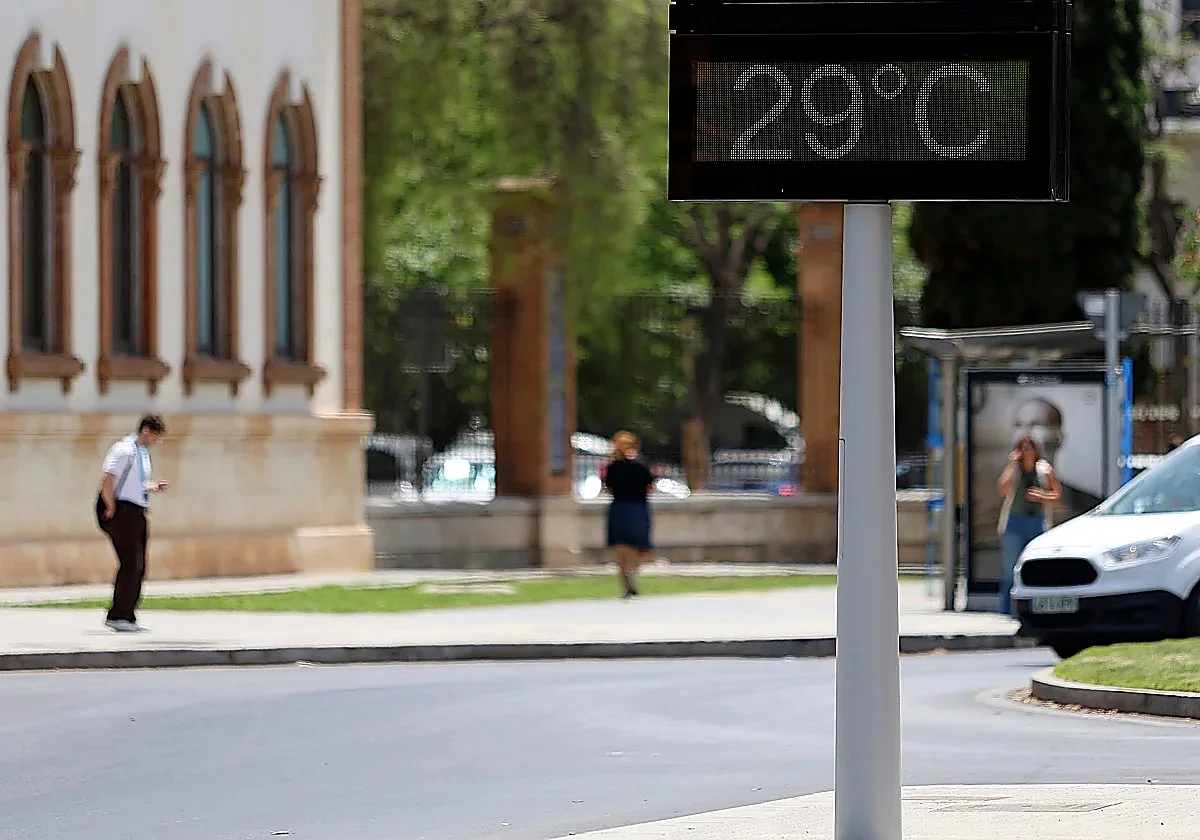
Malaga recorded 14 deaths attributable to the heat between 15 May and 8 July 2026, in what has been one of the worst starts to summer in the province, according to the daily mortality monitoring system for all causes (MoMo)
"Spain is not only warming up, it is doing so at a particularly rapid rate," the report's authors warn. Heatwaves will become longer, more intense and more frequent: instead of two or three episodes per year in 2030, some models point to between five and eight episodes by 2050 in the high-emissions scenario.
To combat this, it is necessary to incorporate heat risk as "a permanent element of planning and not as a seasonal addition". The report calls for adapting hospitals, primary care, emergency services and alert systems, because extreme heat will become a structural phenomenon.
All of this is based on the assumption that "extreme heat is not an exception but a seasonal norm that will last for months, not days".
From a health perspective, extreme heat impacts people's well-being in multiple ways. "Its effects unfold along a continuum that includes increased mortality and morbidity from cardiovascular, respiratory and renal causes, deterioration of mental health, complications during pregnancy and the geographic spread of vector-borne diseases previously unknown in our environment," the study explains.
Vector-borne diseases are those of mosquitoes capable of transmitting tropical diseases.
Mortality rates
Each 1C increase in ambient temperature is associated with a 35% increase in heat-related mortality. Anxiety rises by 43%, depression by 26%, the risk of suicide increases by 1.5-1.7% for each additional degree and psychiatric hospitalisations increase by 9.7% during heat waves.
There is a greater risk of premature birth, low birth weight or stillbirth. Furthermore, the risk of malaria and chikungunya cases increases.
Most deaths are not caused by the heatwaves themselves, but rather by the exacerbation of serious or chronic illnesses. The elderly are a particularly vulnerable group.
The report points out that beyond classic heat stroke and non-exertional heat stroke, which occurs "relatively infrequently", most deaths associated with high temperatures "occur due to the aggravation of pre-existing pathologies, which contributes to making extreme heat invisible as a health risk".
Risk to the healthcare system
This poses a risk to the healthcare system: paediatric visits for fever are up and hospitalisations in extreme episodes are up by 13.5%; hospital cooling is a challenge; drugs are less effective above 25C; computer and laboratory equipment failures may occur and there is a risk of overload due to a collapse in the air conditioning.
According to the report, 96.5% of Spanish healthcare workers describe working during heatwaves as exhausting. The increased admissions during these periods reduce the operational capacity of healthcare facilities, especially in hospitals with high baseline occupancy, the report states.
Managing bed availability may require extraordinary measures such as rescheduling non-urgent procedures, expediting hospital discharges or reorganising care pathways.
A critical aspect of the 2030 projections, the study says, is the increase in minimum nighttime temperatures. "Tropical nights" could increase by around 20 in the intermediate scenario and by nearly 30 in the high-emissions scenario, "significantly compromising the human body's ability to recover from daytime heat stress".
Access the broad Malaga and Costa del Sol news index