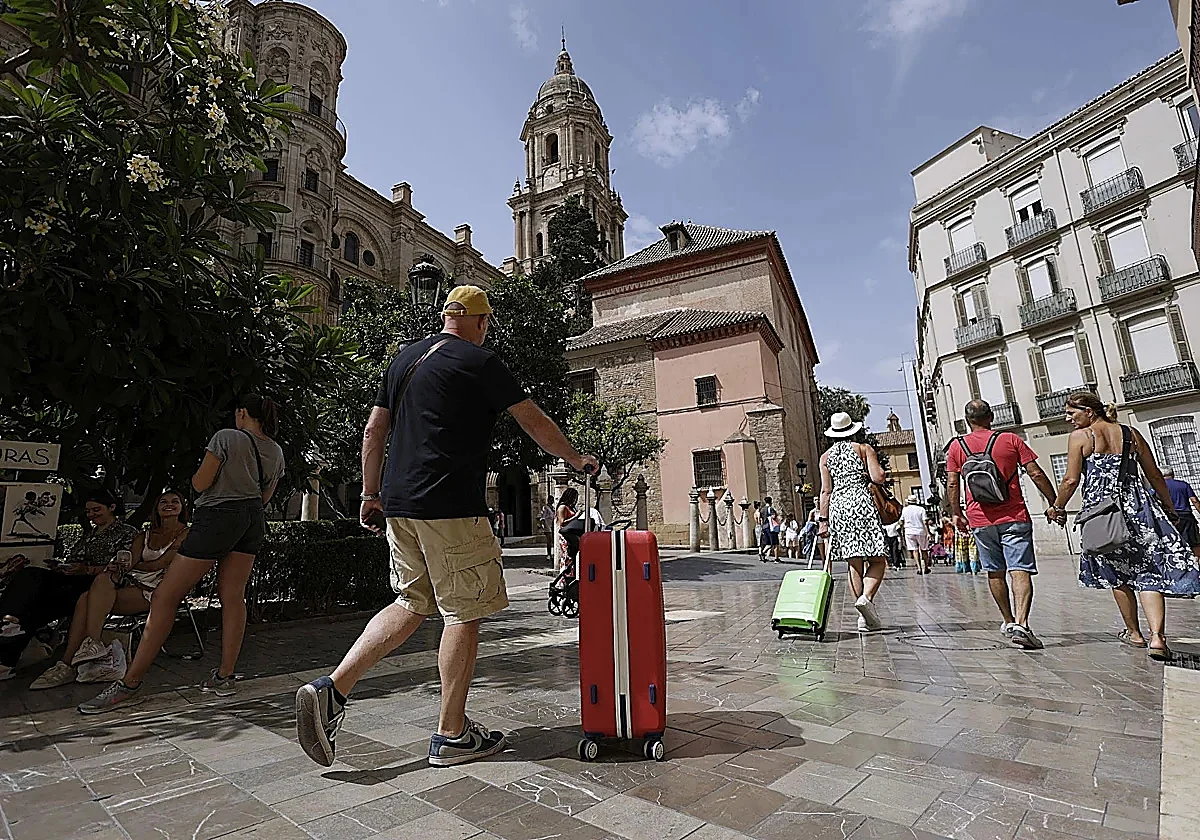
De la Torre said the council would complete the remaining legal procedures "as quickly as possible".
Currently, the PGOU considers accommodation as an alternative use for residential plots. Therefore, there is no limit on the construction of tourist flat complexes and hotels on vacant lots, provided they have independent access.
What projects does this announcement affect?
The ban will apply to all new planning applications submitted after the moratorium takes effect. However, the mayor also warned that the council may scrutinise applications lodged in recent days following what he described as a possible "last-minute rush" before the restrictions begin.
"The urban planning department will examine any applications submitted at the last minute to decide which, if any, can continue," De la Torre said. "Most are unlikely to proceed."
However, the city council later clarified that the moratorium will not affect projects that had already applied for planning permission or had already begun the planning process before the council publishes the agreement in the provincial official gazette.
De la Torre stressed that developers who had already started planning procedures or applied for a building licence before the cut-off date would be able to continue with their projects.
"We want to protect residential land while we consider how best to balance Malaga's tourism success with the need to preserve housing," the mayor said.
He did not explain exactly how the new planning rules will regulate tourist accommodation once the review finishes. Hotels on land already designated for commercial or hotel use will still be able to proceed.
The proposed amendment removes tourist accommodation as either an automatic alternative use or a compatible use on residential land. Currently, developers can either replace residential use entirely with tourist accommodation or devote up to 50 per cent of a residential development to tourist accommodation under certain conditions.
Under the proposed changes, all forms of tourist accommodation, including tourist flats, holiday lets, hotels, hostels, guesthouses and youth hostels, will become incompatible with residential zoning. Developers will therefore no longer be able to build them on land designated for residential use.
However, the city council has yet to decide whether this restriction will apply across the whole city or whether some areas with lower levels of tourist accommodation will qualify for exceptions. De la Torre declined to say whether the final planning rules would impose a city-wide ban or allow greater flexibility in certain neighbourhoods.
During the moratorium, anyone wishing to develop tourist accommodation on residential land will need specific planning approval. Developers will have to demonstrate that a project serves the public interest and obtain permission through a planning study or a formal amendment to the city's PGOU.
Read dedicated local reporting for Malaga city