Zoom
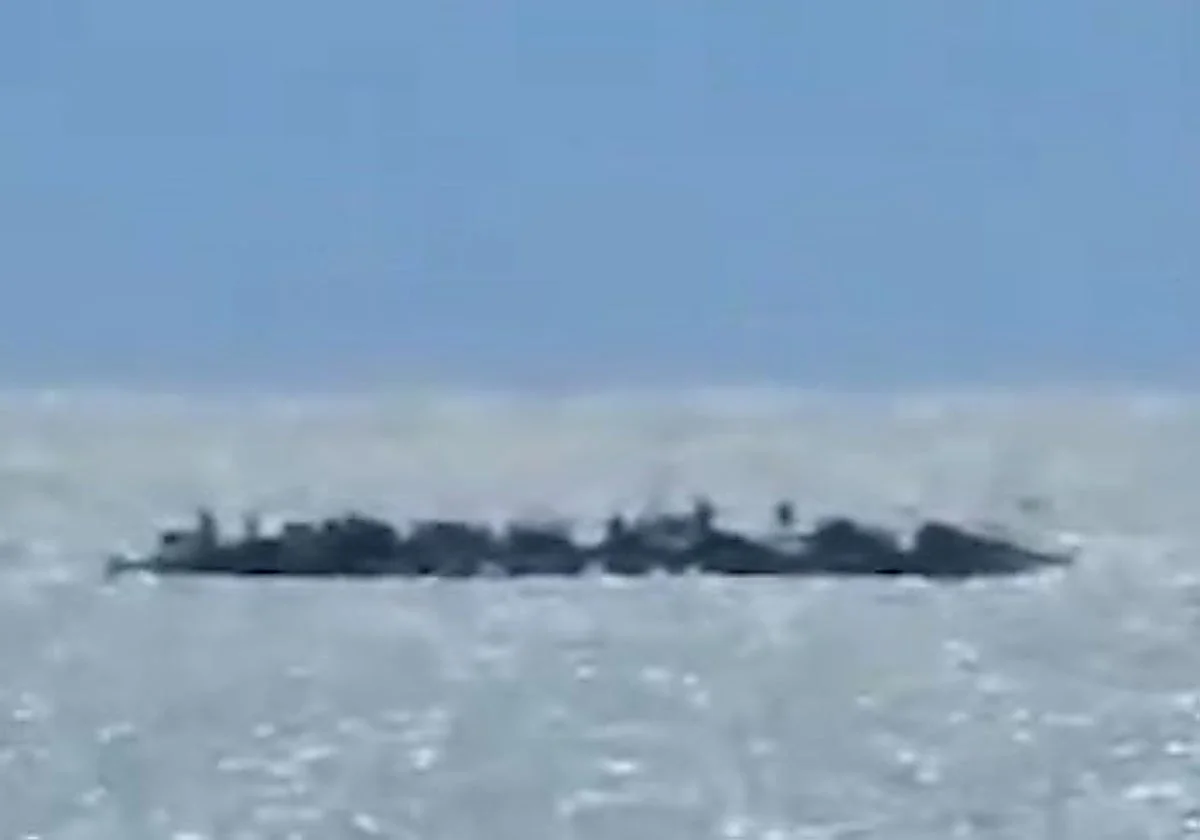
Archive image of a dozen drug-running boats ('narcolanchas') off the Sabinillas coast in 2024. SUR Crime Manilva 'overwhelmed' by brazen drug boat activity as Guardia Civil union warns of 'lawless' coastThe AUGC union warns that the town's main police station lacks the officers, off-road vehicles, and technology to combat drug traffickers who are using storms to seek shelter just metres from the shore
Monday, 23 February 2026, 16:01
The Guardia Civil’s professional association has warned that the Malaga coast is becoming "lawless territory" as drug traffickers operate with total impunity just metres from the shore.
The AUGC has conveyed this message in two separate letters addressed to the deputy director of operations (DAO) of the Guardia Civil and the deputy government delegate in Malaga, Francisco Javier Salas, demanding an urgent boost in both personnel and resources.
According to the association's assessment, while police pressure from 'Plan Carteira' is driving drug traffickers to seek refuge on the western Costa del Sol, the stations in this area are severely understaffed, "leaving them in a clearly unbalanced position for operational effectiveness".
"Everyone has recently been able to see that the coast of Malaga province has become an area where drug-running boats seek shelter during storms and they do so quite brazenly, acting with total impunity, as if the Spanish coast were lawless territory," argues the AUGC letter.
The AUGC pointed out that, in 2023, the station at Manilva was changed to a main station, despite the fact that this "modification was not accompanied by the necessary increase in human resources and material means and currently this main station has a number of officers clearly insufficient to respond to the real security demands that crop up in that part of Malaga province".
The AUGC went on to add that the lack of officers has led to alarming situations, in which the Costa del Sol town is left without coverage to respond to other emergencies.
According to the union, in addition to the increase in robberies, patrols are forced to cover duties in other municipalities, even guarding a 63-kilometre stretch of coastline. "You cannot demand heroism from Guardia Civil officers when they are denied the most basic resources", states the letter.
Another issue highlighted by the AUGC is that officers do not even have suitable vehicles to access tracks or rural terrain, which are common escape routes after a drugs drop-off. The letter also noted a lack of technology to monitor the movements of these criminal organisations.
Given this scenario, the AUGC letter calls for urgent measures, including an increase in personnel and the provision of technical resources, such as off-road vehicles and boats. Another demand is for changes in the law that would make the so-called 'petaqueo' (supplying fuel to speedboats ('narcolanchas') used for drug trafficking) a criminal offence.
Government investigation
The ongoing situation with drug-running boats has led the chief prosecutor of Andalucía, Ceuta and Melilla, Ana Tárrago, to open an investigation to gather information about the presence of these vessels on the shoreline along the entire Andalusian coast, as well as in marinas and on the Guadalquivir river, when seeking shelter from bad weather.
As noted by the region's public prosecutor's office, these high-powered boats have been banned since 2018 and are usually spotted in international waters, always involved in drug-running and the trafficking of migrants. During their stopovers along the Costa del Sol, they are being refuelled by supply boats.
This information has been shared by the media, the Guardia Civil and local mayors along the coast, who have expressed their concern and unease about the presence of these vessels within their municipalities.