Zoom
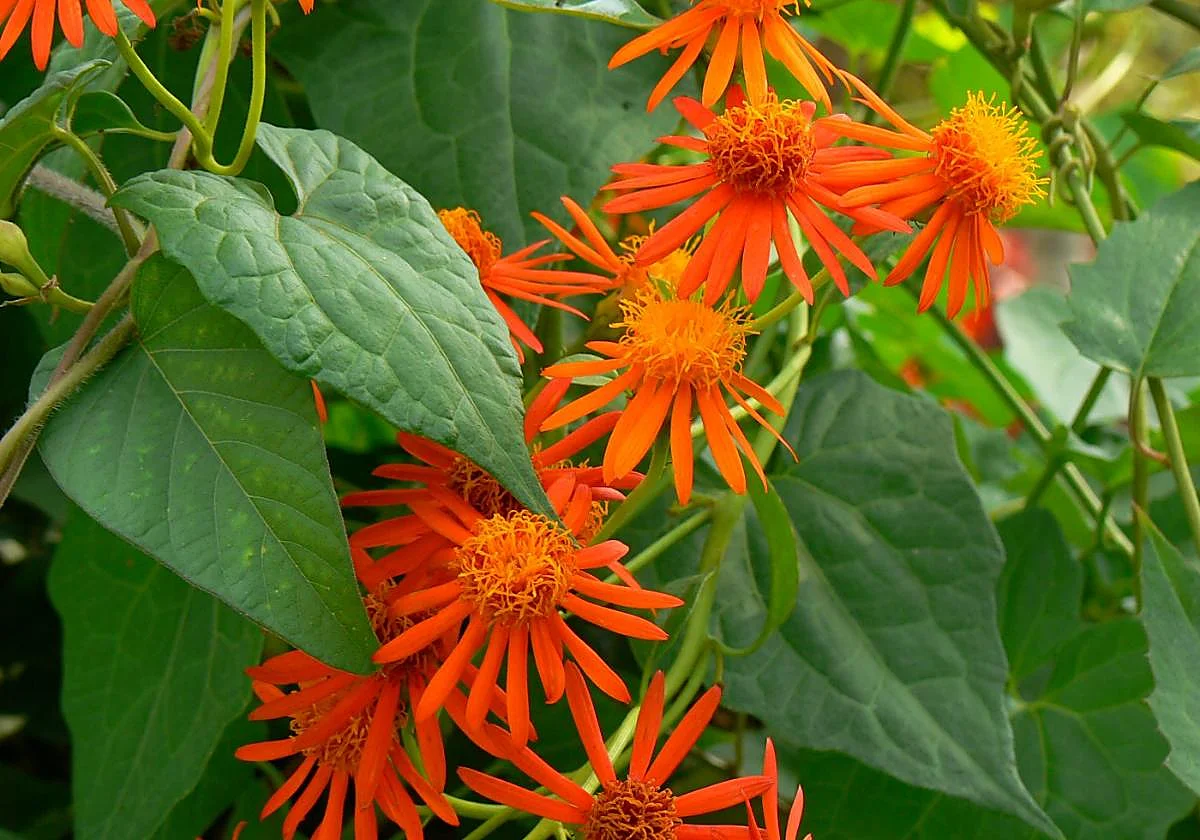
Pseudogynoxys chenopioides. Wikimedia Gardening in southern Spain Mexican flame vinePerfect for growing in the south of Spain, the Pseudogynoxys chenopodioides thrives in heat and full sun and prefers a rich, organic, well-draining soil
Denise Bush
Thursday, 2 April 2026, 11:53
Pseudogynoxys chenopodioides, also known as Senecio confusus or Mexican flame vine, is a fast-growing perennial climbing vine in the Asteraceae family, native to Mexico.
The plant produces fleshy, arrow-shaped leaves with serrated edges, around 10cm in length, and vivid orange, daisy-like flowers that appear almost continuously throughout the year in temperate climates. In colder regions it is typically grown as an annual.
It thrives in heat and full sun and prefers a rich, organic, well-draining soil. Once established it is drought hardy. It can reach up to six metres in height with adequate support, making it ideal for covering fences, trellises and pergolas. It also works well in hanging baskets, containers or as a groundcover for xeriscaping, as it spreads by rooting at the leaf nodes.
To encourage bushy, even growth and flowering along the whole plant rather than just at the tips, regular pruning is recommended.
Propagation is straightforward. It can be grown from seeds, which develop in dandelion-like seed heads after flowering, or from cuttings, which root easily in water.
Traditionally, the plant has been used in herbal medicine to treat eye disorders, inflammation and skin irritation. However, it should be handled with caution as it is toxic to dogs, cats and horses, and ingestion can cause serious liver damage in both animals and humans.