Zoom
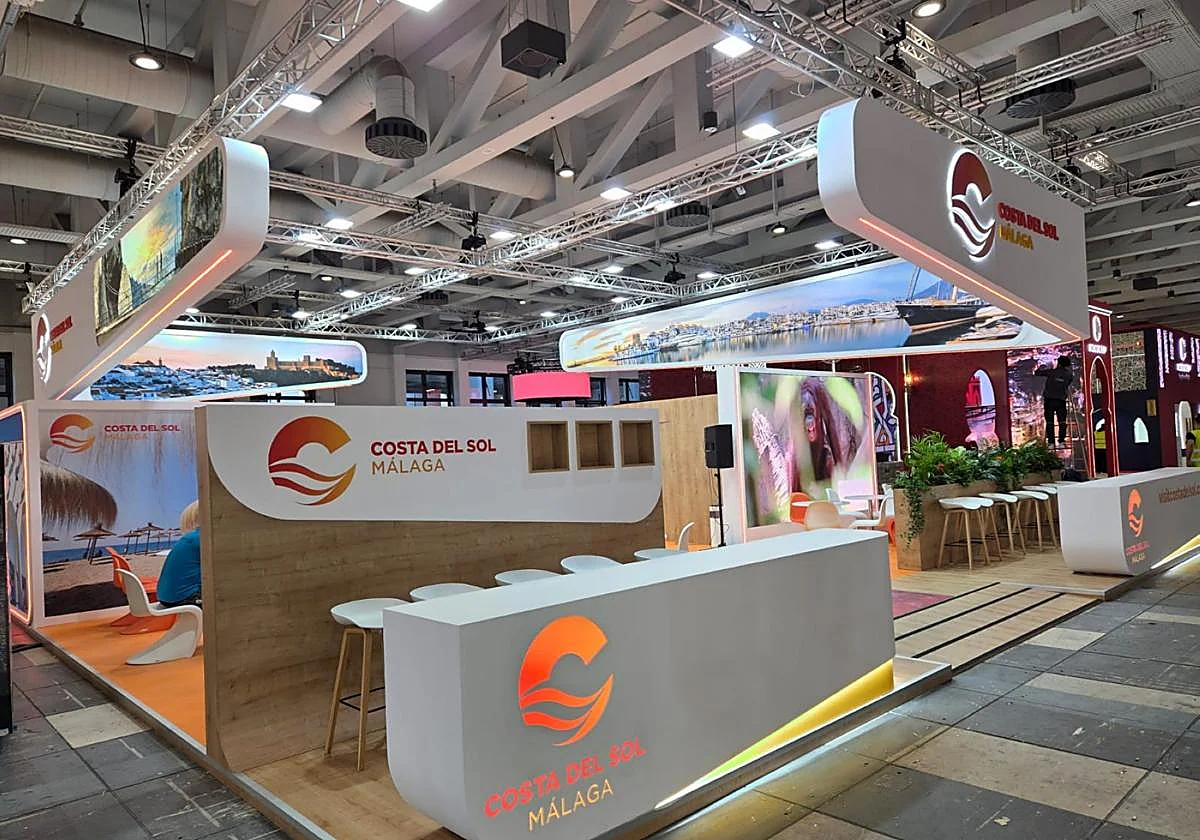
Final touches to the Costa del Sol's display at ITB Berlin 2026. SUR Tourism Middle East war tensions mark opening of biggest international trade fair in BerlinThe ITB fair opens with widespread concern over the impact the US attack on Iran will have on tourism
Málaga
Tuesday, 3 March 2026, 10:32
The ITB fair in Berlin, renowned for being the world's biggest tourism event, started on Tuesday with widespread concern over the impact that the US attack on Iran will have in the industry. Andalucía, the Costa del Sol and Malaga also share this worry, as they prepare their stands to attract niche German markets.
This year, the ITB (3-5 March) has its 60th anniversary. Instead of celebrating, the event launches at a time marked by global uncertainty - the worst travel companion. Experts agree that this ITB will become a key indicator of the new global landscape.
The increase in the price of petrol has become the first sign of the crisis in the Middle East. This has a direct impact on the increase in air fares and, therefore, on tourism.
It is worth remembering that all the countries of the Persian Gulf, most of which currently have their airspace closed, have a notable presence at this fair. Iran also usually has its own exhibition space.
Despite the war escalation, the ITB is going ahead, with 160 countries competing for a piece of the German market. More than 5,800 exhibitors from all corners of the globe are coming together.
For destinations such as Andalucía, the Costa del Sol and Malaga, the ITB is a key opportunity to continue attracting visitors from the second country in terms of tourist numbers. In 2025, Germans surpassed expectations in the province of Malaga.
Germans consider holidays a priority, even in the context of a weaker economy or instability. This increases the importance of attracting this market in the current global context.
Andalucía has a 535-square-metre stand at this year's ITB, "with a design that combines Andalusian identity, innovation and a clear visual expansion of the brand 'Surrender to Andalusian Crush'", as regional minister of tourism Arturo Bernal has said.
The aim is to reposition Andalucía's brand in Germany, targeting younger audiences, niche products and higher-value tourism aimed at low seasons and segments such as culture, nature, active tourism, golf and conventions.
This year, Andalucía is showcasing its commitment to innovation with specific strategies in which artificial intelligence (AI) is its ally. Each visitor will be able to select what most appeals to them and transform these preferences into personalised suggestions to design a tailor-made itinerary. Improving connectivity between Andalucía and Germany is among the main challenges.
The Costa del Sol and Malaga city have their own exhibition spaces, confident in their ability to continue growing in Germany after a year of double-digit growth. "Malaga set a milestone with the arrival for the first time of one million Germans," head of Turismo Costa del Sol Francisco Salado said.
According to him, "the German market is a strategic pillar for the Costa del Sol, with an economic impact generated by German tourism that reached 1.4 billion euros, 9.9 per cent more than in 2024, with revenue growing above the number of visitors". Hence, the objective for the 60th ITB is to "continue convincing German tourists that the Costa del Sol is the best option".
Malaga city also believes that Germans are "the perfect tourists". According to councillor Jacobo Florido, the city stand's focus this year "is to strengthen and improve the perception of Malaga as a destination with high added value".
Last year, hotels registered 101,977 German guests, 27 per cent more than in 2024, and 231,360 overnight stays, 11 per cent more. German tourists also stay for longer, with an average stay of 2.27 days, higher than the global average.