Zoom
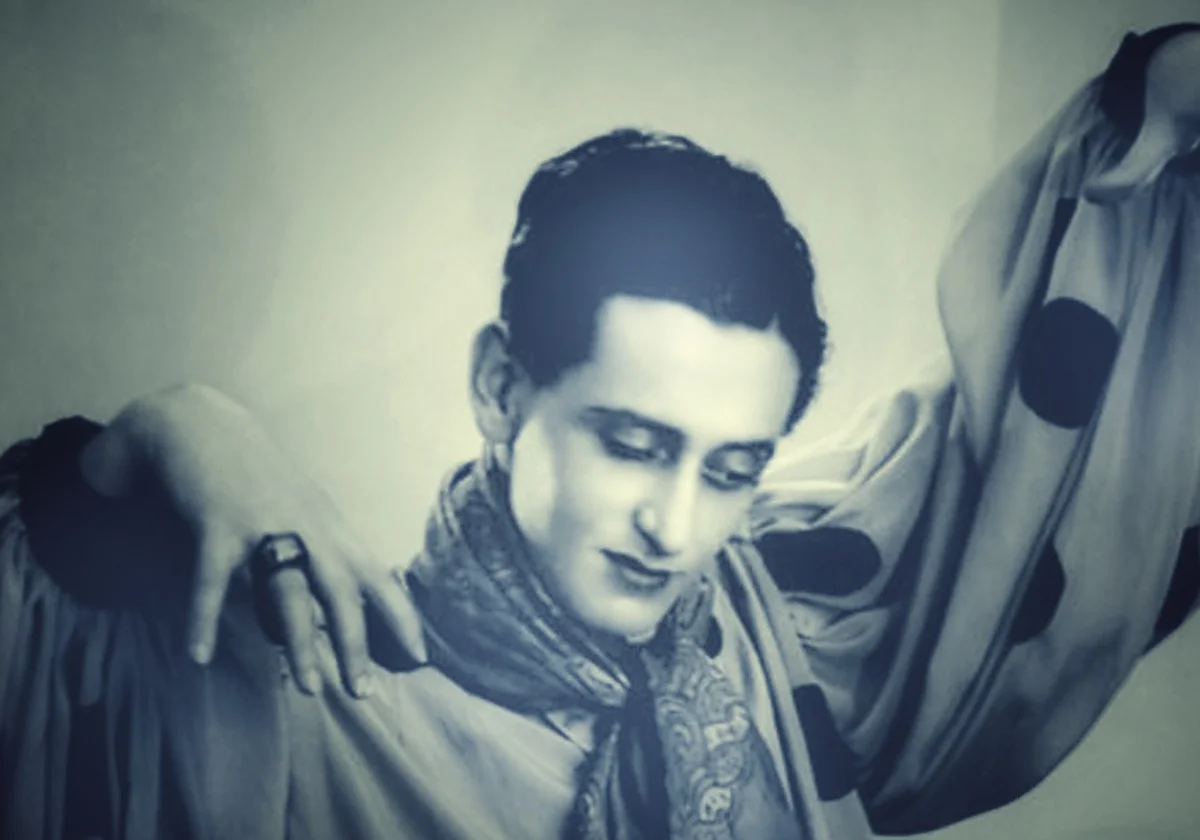
Miguel de Molina. SUR Miguel de Molina’s exile of the Spanish coplaThe Málaga-native artist suffered brutal repression at the hands of Franco’s regime due to his Republican convictions and his homosexuality, which led to his painful yet triumphant exile abroad
Alekk M. Saanders
Tuesday, 14 April 2026, 14:39
The copla is a blend of Spanish folk music with Andalusian motifs, known for its narrative lyrics devoted to love, jealousy and tragedy. One of the pillars of the copla genre, possessing a unique individuality as a male performer, is Miguel de Molina.
A symbol of audacity
The future ‘King of Copla’ was born on 10 April 1908 in the Capuchinos neighbourhood of Málaga into a modest family. His father was a cobbler and suffered from epilepsy, so his mother was the sole breadwinner of the family. Miguel was sent to a religious school, where his classmates bullied him by calling him a ‘little woman’. Soon, Miguel was expelled for throwing a glass inkwell at a teacher, as the priest had been taking liberties with him. He began working as a cleaner or errand boy in a brothel in Algeciras.
He quickly learnt to combine avant-garde stage techniques with popular songs in his sophisticated variety shows, thereby radically revolutionising the copla genre
At the age of 20, Miguel de Molina was guiding tour groups around flamenco venues throughout Andalucia. It was then that he realised his voice and unique style of performance were ideally suited to singing copla. Having come to believe in his talent, Miguel moved to Madrid in 1930. He quickly learnt to combine avant-garde stage techniques with popular songs in his sophisticated variety shows, thereby radically revolutionising the copla genre. This breakthrough was significant in itself, as he became the first male performer of this musical style, previously considered the preserve of women.
‘Malagueño’ won over the capital’s audience with his audacity and modernity. In the bustling city of Madrid, the young artist mingled with the leading cultural figures of the time, including Federico García Lorca. However, it was in Valencia that Miguel achieved his greatest successes, popularising songs such as ‘El día que nací yo’, ‘Triniá’, ‘Te lo juro yo’, ‘La bien pagá’ and ‘Ojos verdes’.
Escape to remain true to himself
The Spanish Civil War proved a turning point in his career. Miguel de Molina performed to boost the morale of the Republican troops, but when Franco’s dictatorship came to power, he was forced to either submit or face accusations regarding his Republican past. Moreover, the artist was threatened because of his homosexuality. Miguel de Molina always remained an honest and principled man despite the attacks and abuse. Incidentally, on one occasion Miguel was arrested in Madrid in his dressing room at the ‘Pavón’ theatre by three unknown men and subjected to torture. After a period of inactivity, he decided to flee.
Thanks to the help of a friend, Miguel de Molina obtained a passport and, in 1942, fled via Lisbon to Argentina. However, under pressure from the Spanish embassy in Buenos Aires—which regarded him as a ‘frivolous artist’ and an ‘immoral’ man—he was soon forced into exile in Mexico. Years later, a phone call from Eva Perón brought him back to Argentina. Evita, who wielded considerable influence over Franco, defended exiled artists and prevented the Spanish dictatorship from harassing Miguel de Molina.
He was the greatest populariser of copla in Argentina, changing the genre’s paradigm thanks to his lavish costumes that highlighted his unique androgynous style
Miguel de Molina became a music hall star in the capital. He was the greatest populariser of copla in Argentina, changing the genre’s paradigm thanks to his lavish costumes that highlighted his unique androgynous style. De Molina's influence extended far beyond singing and dancing. His unique aesthetic and sensibility were in demand across various fields of art (Miguel appeared in several films). In 1960, at the age of 52, Miguel de Molina decided to bring his artistic career to a close. It is reported that during that period he settled temporarily in New York.
Recognition of merit
Although Miguel Molina led a luxury life abroad, he always longed for Spain. Yet he always refused to return whilst the dictatorship remained in power. Apparently, he missed his hometown too. In an interview in 1990, he recalled his native Málaga with tears in his eyes.
While Miguel de Molina was still alive, Spain managed to express its appreciation for the artist. In 1992, Miguel de Molina was awarded the title of Knight of the Order of Isabella the Catholic. On this occasion, the artist emphasised once again that Spain had always been in his heart, but also noted that the recognition had come too late. The medal was presented to Miguel de Molina at the Spanish Embassy in Argentina. The following year, the artist passed away in Buenos Aires and was buried in the pantheon of the Argentine Actors’ Association at the Chacarita Cemetery.