Zoom
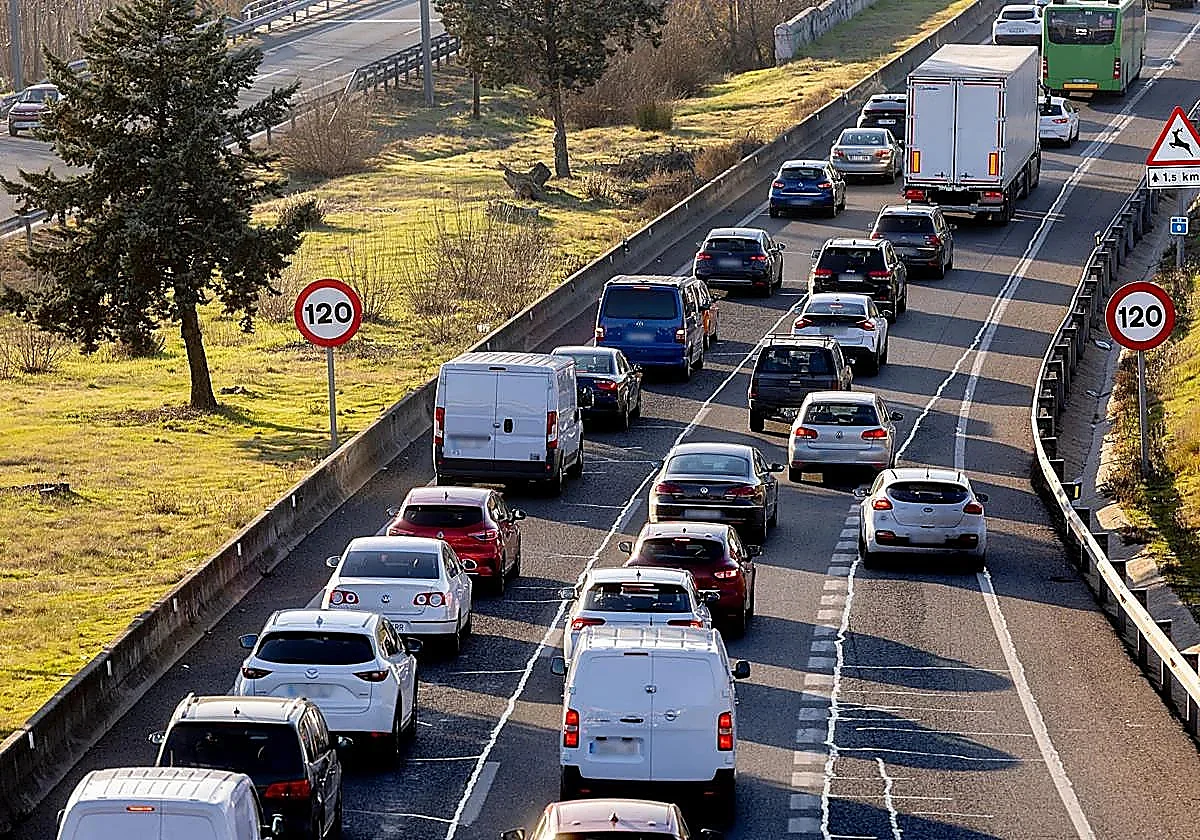
Cars in a traffic jam on a road in Spain. Traffic More cars in circulation in Spain than ever before: 34.7 million, 20% more than ten years agoThe Spanish vehicle fleet has registered an all-time high after a growth of 2.2% compared to the end of 2024, reaching the highest increase since before the pandemic
Edurne Martínez
Friday, 9 January 2026, 13:16
The total number of vehicles in circulation in Spain has reached an all-time high: 34.7 million units at the end of 2025, according to the insured vehicle register (Fiva) compiled by insurance business association Unespa.
In absolute terms, the number of vehicles in circulation increased by 746,540 units compared to the same period in 2024, representing year-on-year growth of 2.2%, the most pronounced since 2018. In addition, there are now 20% more cars on Spanish roads than ten years ago.
"The year-on-year growth rates presented in recent quarters show a continued upward trend, pointing to a structural recovery in the fleet after some moderation during the pandemic years," Unespa says. In comparison to the third quarter, the final stretch of the year saw an increase of 138,735 vehicles (+0.4%). This was the 50th consecutive quarter of increases, "which means that the vehicle fleet has been growing steadily for almost four years".
In the last quarter of the year, 4.7 million new vehicles were registered, compared to 4.6 million deregistrations, resulting in a net positive balance of 168,080 units. This includes all types of vehicles: passenger cars, motorcycles, vans, lorries and buses, among others.
50,000 CHARGING POINTS
The rise of electric cars is in part driven by the proliferation of charging points, which facilitate their adoption. By the end of 2025, Spain had 50,000 public charging points in operation, 10% more than in 2024, according to data from association for the development of electric transport Aedive.
High-power points (from 50 kW to 250 kW) had doubled to 5,600 by the end of 2025 and ultra-fast points (over 250 kW) had increased by 80% to 974 points, but almost 70% of them are still slow (less than 22 kW), which, according to Aedive, generates mistrust among the population when it comes to adopting electric vehicles.