Climate change
Most Spaniards believe climate change is already harming their healthA new study reveals a nation anxious about extreme weather but deeply divided by financial vulnerability, with the public favoring green incentives over restrictive costs
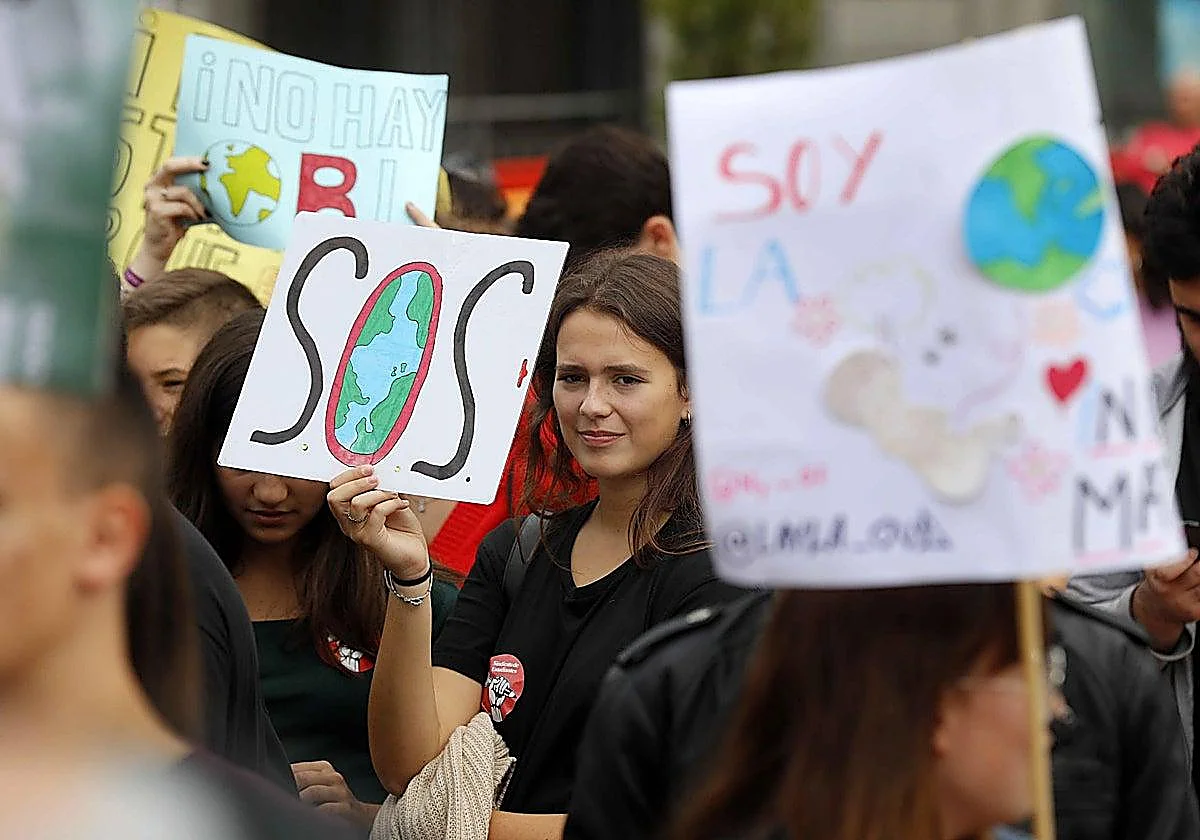
Añádenos en Google Student protest called throughout Spain against the climate crisis, in Asturias, 2019. (EFE)Madrid
28/05/2026 a las 11:53h.More than 70 per cent of Spaniards believe climate change is actively damaging their physical health, though rising economic pressures are causing many to downgrade ... environmental action as a top political priority, a new study reveals.
The State Report on the Social Perception of the Ecological Transition in Spain, published by the Just Transition Observatory, maps out a nation increasingly anxious about extreme weather, yet deeply divided over who should foot the bill for green initiatives.
A fractured public response
According to the study, which surveyed 3,284 residents across Spain in early 2026, the public falls into three distinct camps regarding the climate crisis:
• The Committed (47%): Predominantly urban residents who are actively willing to adjust their personal lifestyles.
• The Sceptics (33%): Individuals who acknowledge environmental shifts but attribute them to natural cycles, remaining highly reluctant to take on personal economic costs.
• The Inactive (20%): Primarily residing in smaller, rural municipalities, this group outright rejects green policy transformations.
Despite these ideological divides, an overwhelming 80 per cent of respondents agree that climate change is an undeniable reality, driven primarily by their direct experiences with extreme temperatures, prolonged droughts, and severe flash flooding (DANAs).
Notably, 44 per cent stated the climate crisis is having a "fairly high" impact on their health, while 29 per cent felt it affected them "somewhat." Furthermore, a third of the population fears the crisis poses an immediate threat to their physical safety, homes, and daily routines.
The barrier of economic anxiety
The research underlines a growing link between financial insecurity and climate anxiety. "The perception of the impact of climate change is formulated primarily in terms of economic vulnerability," the authors write, noting that lower-income households report significantly higher rates of climate-related disruptions to their health, housing, and mobility.
This financial strain has triggered a sharp decline in the political priority given to green policies. In just two years, the percentage of Spaniards who believe fighting climate change should be a government priority has plummeted from 69 per cent in 2024 to 56 per cent. Rather than a total rejection of green initiatives, researchers describe this as a shift toward a middle ground, as citizens prioritise immediate material crises such as affordable housing, international instability, and inflation.
This economic pragmatism is reflected in what actions individuals are taking. While half of the population has invested in home air conditioning or improved insulation, 60 per cent have failed to adopt broader preventative lifestyle changes - such as avoiding flood-prone zones, switching to renewable energy sources, or updating insurance policies.
Carrots over sticks
The study, compiled in collaboration with the Moeve Foundation and Red2Red, highlights a widening communication gap between policymakers and the public, with many viewing the green transition as detached from daily necessities.
To bridge this gap, the authors urge governments to adopt a "more practical narrative" focused on job creation, improved public health, and tangible local benefits.
The public remains highly supportive of clean energy, with solar power boasting an 84 per cent approval rating, followed by wind (78 per cent) and green hydrogen (69 per cent). Similarly, positive reinforcement policies - such as state-funded home energy renovations (75.2 per cent approval) and single-use plastic bans (72.7 per cent) - enjoy widespread backing.
Conversely, punitive or restrictive measures that impose direct costs on consumers face heavy public resistance. The report concludes that if Spain is to successfully transition to a green economy, leadership must focus on financial incentives, cutting red tape, and genuine community dialogue, rather than top-down mandates.