2 min read
NASA’s X-59 Experimental Supersonic Aircraft Makes Second FlightJennifer M. Dooren
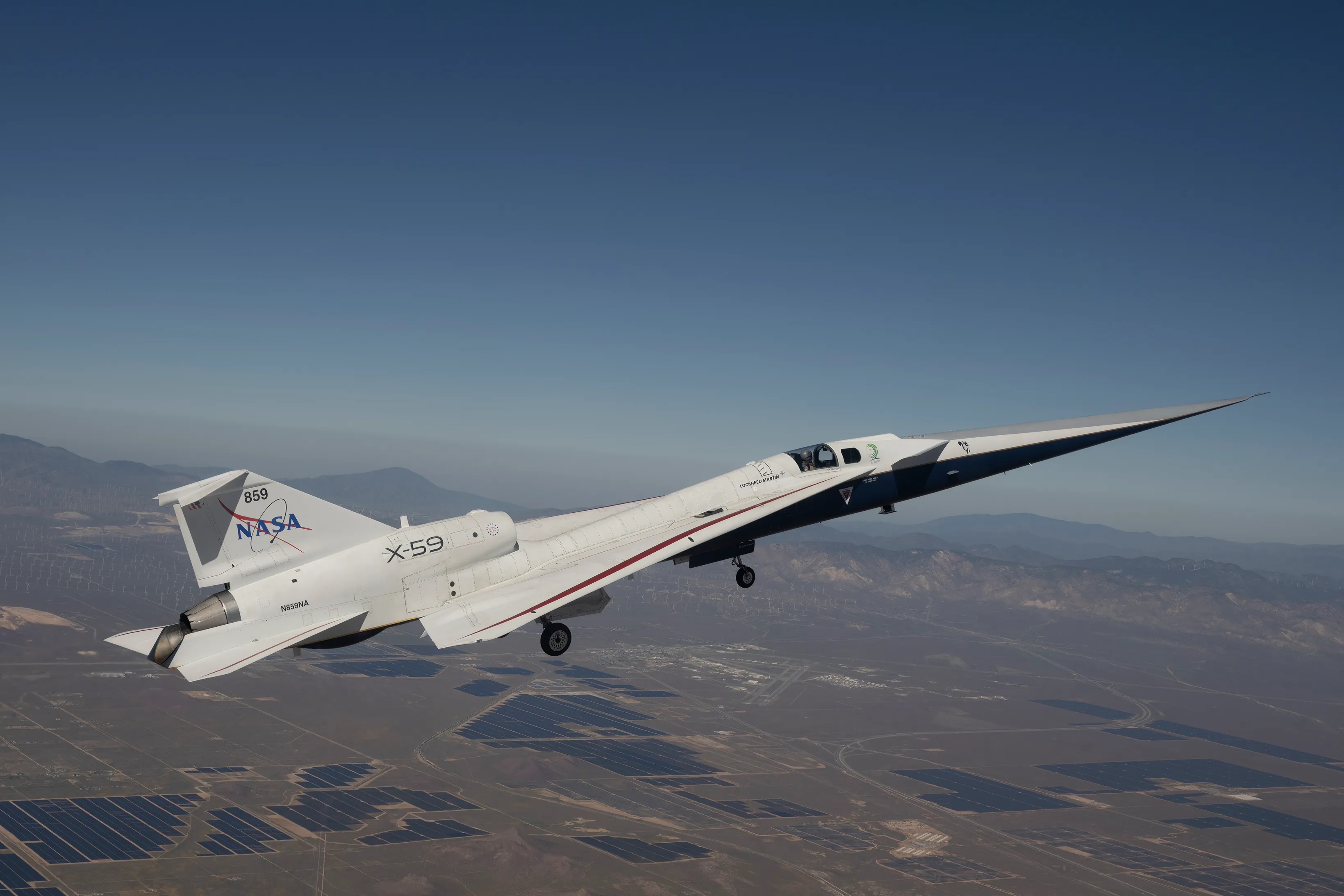
Mar 20, 2026 ArticleNASA’s quiet supersonic X-59 aircraft made its second flight on Friday, kicking off a series of dozens of test flights in 2026.
Although the flight duration was abbreviated due to a technical issue, the team was able to collect information that will inform future tests.
“Despite the early landing, this is a good day for the team. We collected more data, and the pilot landed safely,” said Cathy Bahm, project manager for NASA’s Low-Boom Flight Demonstrator at NASA’s Armstrong Flight Research Center, in Edwards, California. “We’re looking forward to getting back to flight as soon as possible.”
The aircraft took off at 10:54 a.m. PDT from Edwards Air Force Base, near NASA Armstrong. Several minutes into the flight, pilot Jim “Clue” Less saw a vehicle system warning in the aircraft’s cockpit. Following flight procedures, the aircraft landed at 11:03 a.m. after a return-to-base was called.
“As we like to say, it was just like the simulator – and that’s what we like to hear,” Less said. “This is just the beginning of a long flight campaign.”
The X-59 is designed to fly supersonic – or faster than the speed of sound – while generating only a quiet thump instead of a loud sonic boom. The X-59 is the centerpiece of NASA’s Quesst mission, which is working to make commercial supersonic flight over land a reality.
The aircraft is set to accelerate testing in 2026, demonstrating performance and airworthiness during a process known as envelope expansion, where it will gradually fly faster and higher, on its way to supersonic speeds.