Zoom
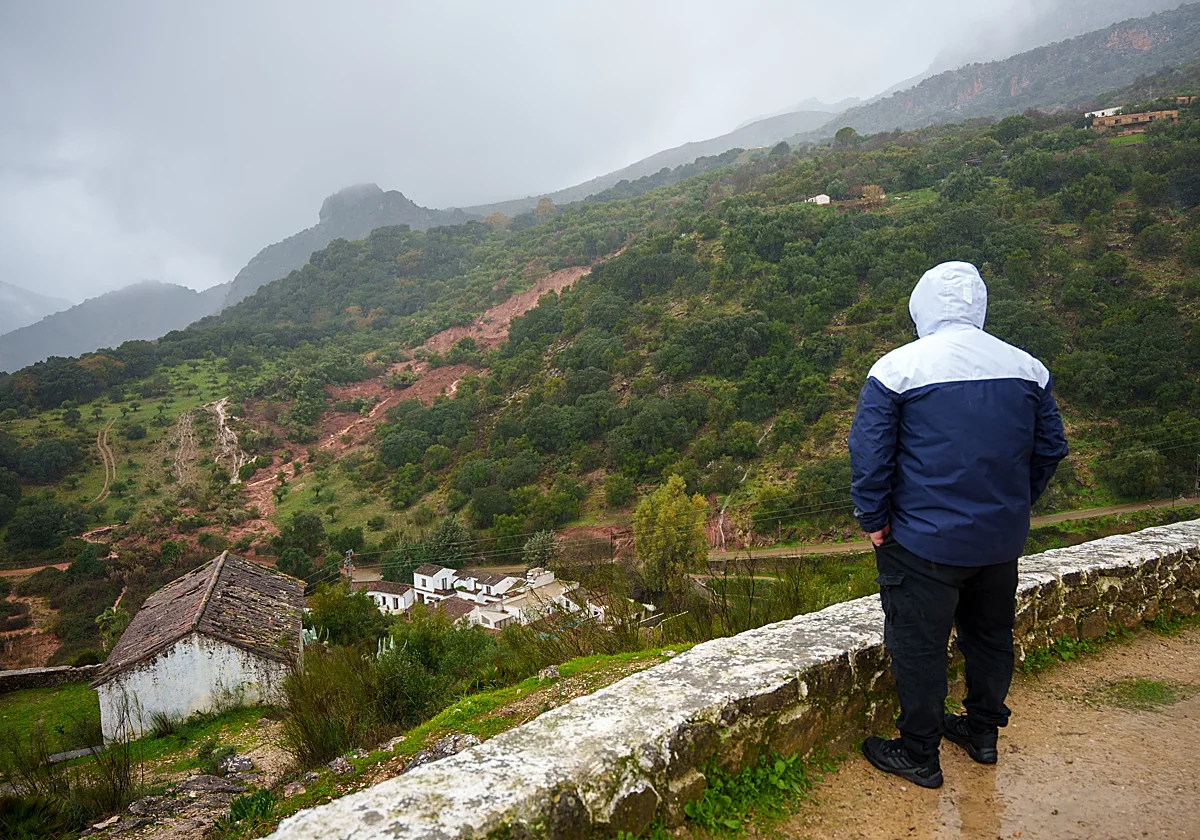
A Benaoján resident looking at the village during storm Leonardo. SUR Weather Not all of Ronda's earthquakes, underground rumbling and landslides can be blamed on waterThe Andalusian regional government has launched a campaign to stop the spread of misinformation and reassure the local population
Wednesday, 11 February 2026, 15:38
The Andalusian regional government (Junta) has launched a campaign to provide residents of the Serranía de Ronda with verified information about the seismic activity and underground rumbling they have been experiencing since storm Leonardo last week.
Many people have been fearing that the movements can be entirely attributed to water. According to experts and the Junta, however, the noises are a completely normal result of the underground aquifer getting filled with water.
Water can change pressures, cause landslides or ruptures, but not earthquakes. Light seismic activity is also normal for the geography of the area and cannot be blamed on the rains.
The event has proved the importance of following information on official channels and of responsible communication from authorities, especially when the circumstances present details that not everybody will be familiar with.
Myths and legends
It all started a few days ago when three tremors were registered in Gaucín. The mayor pointed to water as the cause of the tremors. Subsequently, the matter got out of hand with the great crisis that forced the evacuation of Grazalema. Noises, the sensation that the ground was exploding, the water looking for exits through sockets, doors, walls, floors naturally concerned residents.
SUR consulted some experts, such as Bartolomé Andreo, Professor of Hydrogeology at Malaga University (UMA) and a leading expert on aquifers. "I have no knowledge of anything like this. I am absolutely perplexed by this news," he said when asked about whether the rains had caused seismis activity.
Undergoung noises
SUR spoke to geological engineer Juan Carlos Romero, who has years of experience planning infrastructure. "When it started raining, the aquifers recharged and the water level rose to what it was 40 or 50 years ago," he said.
Romero explained that clay soils can undergo volume changes. That is to say, when they are very dry, they shrink and when they are soaked, they increase. This puts pressure on the ground, resulting in landslides. He said that this cannot cause tremors.
Seismic activity
The institute of geography explained that light-to-moderate seismic activity is normal in this area of the province. There is no scientific evidence that the rains had caused the tremors that locals felts.
On another note, the geological activity in the Serranía these days - landslides and tremors - has offered useful clues to local town halls, who are responsible for monitoring and detecting warning signs to take early action where necessary.
Science-based outreach
The Junta's collaboration with experts and the geography institute aims to provide local mayors with a first-hand scientific explanation of the observed phenomena. The meeting encouraged locals to stay calm and only follow science-backed information.