Zoom
Housing One third of Malaga province's properties were built during housing bubble yearsThe proportion is more than half in municipalities such as Manilva, Benahavís, Casares, Alcaucín and Ojén
Cristina Vallejo
Friday, 17 April 2026, 11:18
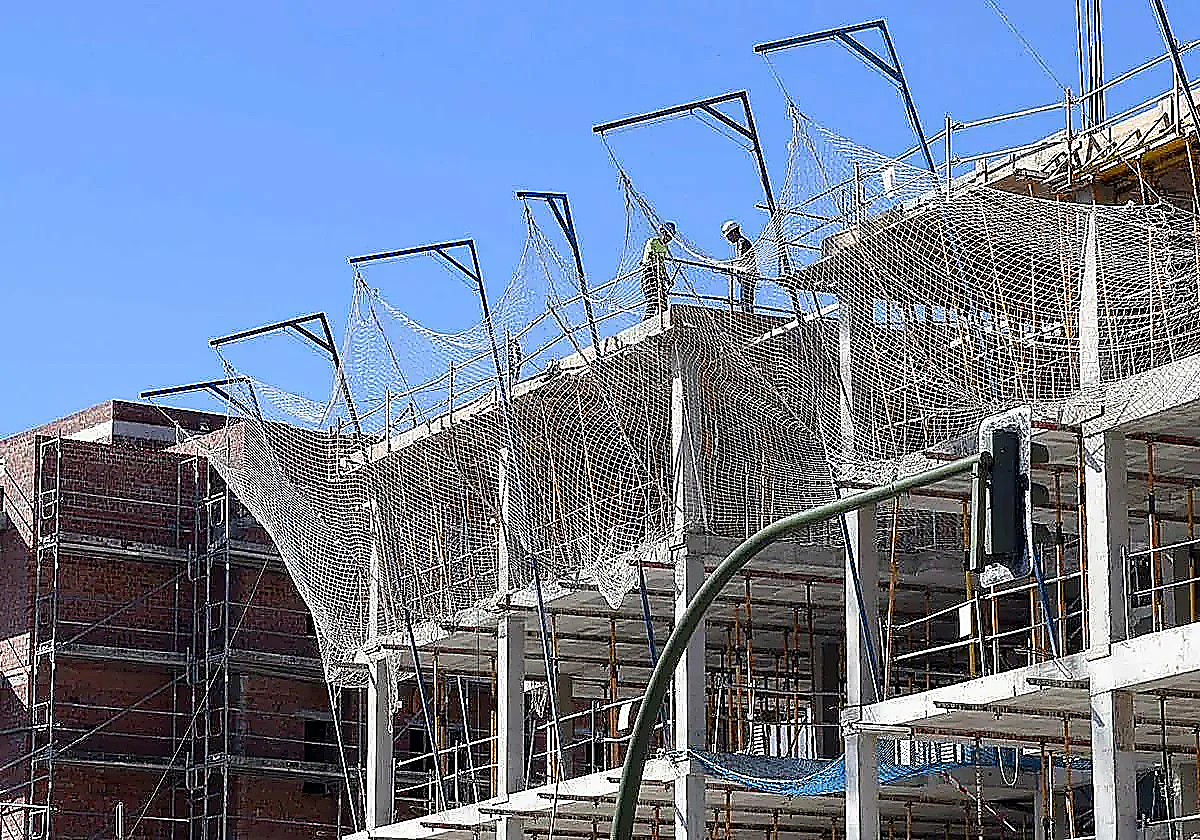
The years of the housing bubble still leave their mark on the real estate market in the province of Malaga. The intense construction activity of the first decade of the 21st century, which eventually led to a crisis, means that even today, one in three buildings in the province dates from the 2000-2009 period.
While the total housing stock in Malaga comprises 1.53 million properties, those built during those ten years exceed 513,000.
Across Andalucía, the proportion is slightly lower, dropping to 28%: of the nearly seven million buildings, close to two million date from those years. The Andalusian province the construction of properties during those years most heavily influenced was not Malaga, but Almeria, where the 2000s account for almost 40% of all construction.
Related story
Cordoba, where 20% of the housing stock dates from those years. Meanwhile, in Granada, Seville and Huelva, the proportion hovers around 25%, while in Cadiz it approaches 30%. These figures come from official Andalusian statistics, based on cadastral data and updated to December 2025.
Although that 33% figure represents the proportion of properties built in Malaga during the first decade of this century, the data varies considerably from municipality to municipality. Manilva tops the Malaga ranking, with 64% of the houses built between 2000 and 2009, representing approximately 18,300 of the total 28,560. In Andalucía, only the town of Vera in Almeria surpasses it with 70%.
In the province of Malaga, Benahavís, Casares, Alcaucín and Ojén also have at least half of their total housing stock built during that same decade. In Benahavís, for example, of the more than 16,200 properties in total, 10,000 were built between 2000 and 2009. The percentage of homes built in Cártama, Frigiliana, Mijas and Monda during the same period is almost 50%.
In short: in ten municipalities in the province, half or more of their housing stock was built during the years when the real estate bubble, which burst in 2008, was forming.
In 2008, the collapse of Lehman Brothers in the US, triggered by the subprime mortgage crisis (loans with a high risk of default that were packaged as bonds) caused global financial markets to freeze and credit to dry up, leading to a global slump in the property market and, consequently, in Spain too, affecting both construction and purchases.
In addition to the aforementioned municipalities, in Benalmádena, Torrox, Mollina, Rincón de la Victoria, Alhaurín de la Torre and Montecorto, the construction of that decade accounts for at least 40% of all new buildings. In Marbella, the figure drops to 36.5%. Above the provincial average of 33% are also Viñuela, Fuente de Piedra, Algarrobo, Coín, Vélez-Málaga and Casa Bermeja.
There are also some municipalities where the construction boom, during which more homes were built in Spain than in Germany, France and the UK combined, was barely felt. These are mainly small towns: of the 16 villages where construction between 2000 and 2009 accounts for less than 10% of the total, the largest is Cañete la Real, whose total housing stock barely exceeds 1,400 units.