Gardening in southern Spain
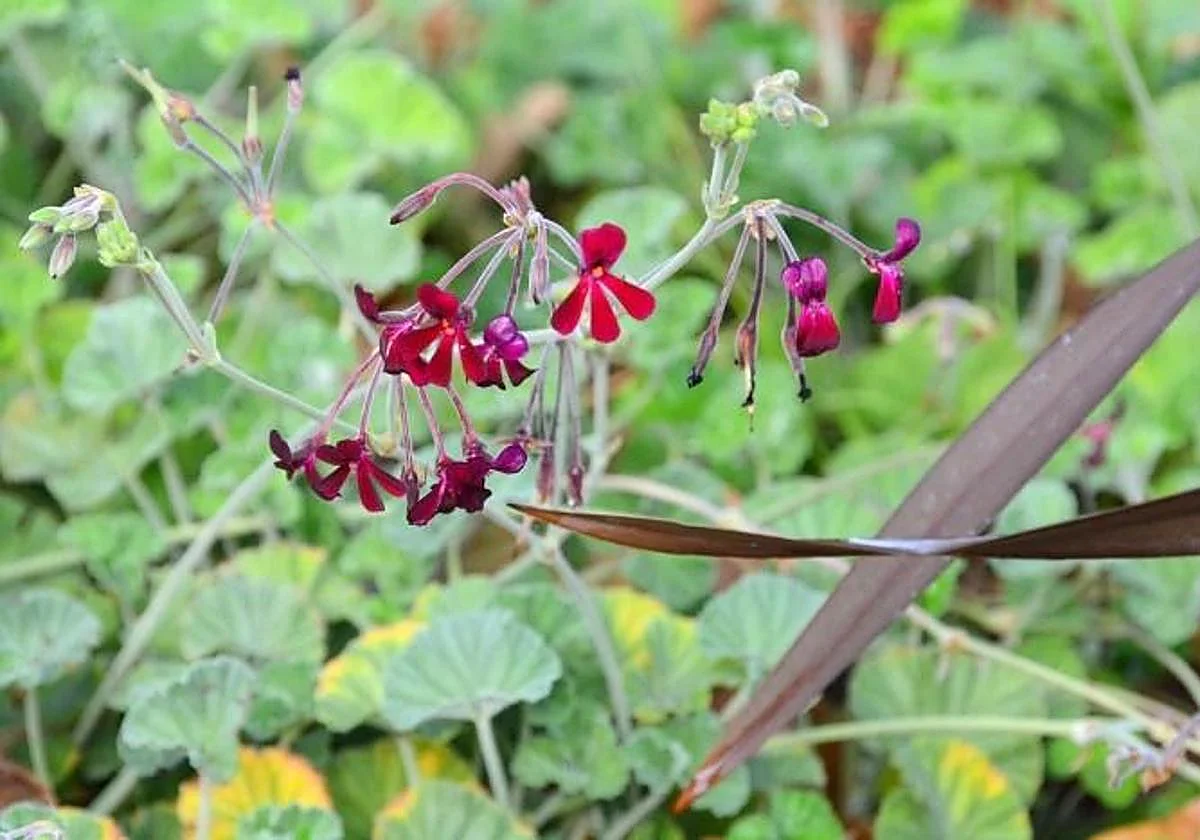
Pelargonium sidoidesPelargonium sidoides, commonly known as African geranium, is a rosette-forming plant with leaves that are heart-shaped, velvety and mildly aromatic and dark red - almost black - flowers
Añádenos en Google Pelargonium sidoides. (Easyscape)Denise Bush
29/05/2026 a las 12:39h.Pelargonium sidoides, commonly known as African geranium, is a rosette-forming plant with crowded, long-stalked leaves that are heart-shaped, velvety and mildly aromatic. It is easily distinguished from other pelargoniums by its distinctive dark, reddish-purple - almost black - flowers, which appear for much of the year but occur mostly from late spring to summer.
Native to South Africa, where it grows in grassland, it thrives in dry tropical climates and is well suited to bright, direct sunlight and warm conditions. It prefers well-draining soil and is drought-tolerant, making it an excellent choice for containers or rockeries.
During the hottest part of summer it benefits from some shade during the middle of the day. Good drainage is essential, as the plant must not be allowed to become waterlogged.
It will withstand short periods of frost, though top growth will die back. In exceptionally hot summers it may also die back, but thickened underground roots allow it to recover once cooler weather arrives - these roots also help it to survive fires which occur regularly in its native environment.
Although frost hardy for short periods, it is best to spread a thick layer of mulch around the base to protect the fleshy root system.
Pruning is best carried out in spring or after the flowering has finished. Cut back to maintain shape and encourage bushier growth, and remove dead or yellowing leaves and spent flowers regularly.
Propagation is quite easy as with most Pelargoniums: take basal cuttings of non-flowering stems around 10cm long in spring and place around the edge of a pot filled with a free-draining compost. Put the pot in a sheltered spot, away from direct sunlight and only water when the soil feels dry. Using a rooting powder will increase the chances of success.
The genus name Pelargonium comes from the Greek word ‘pelargos’, meaning ‘stork’, a reference to the appearance of the seed capsule, which resembles a stork’s bill. There are around 200 species in the genus, most of which are native to South Africa,
The specific epithet ‘sidoides’ reflects the similarity of the foliage to that of the European plant Sida rhombifolia.
Pelargonium sidoides has long been documented for its medicinal properties and is used by the pharmaceutical industry in treatments for bronchitis. It is also used in traditional folk medicine for a range of purposes, including the relief of sore throats and congestion.