Zoom
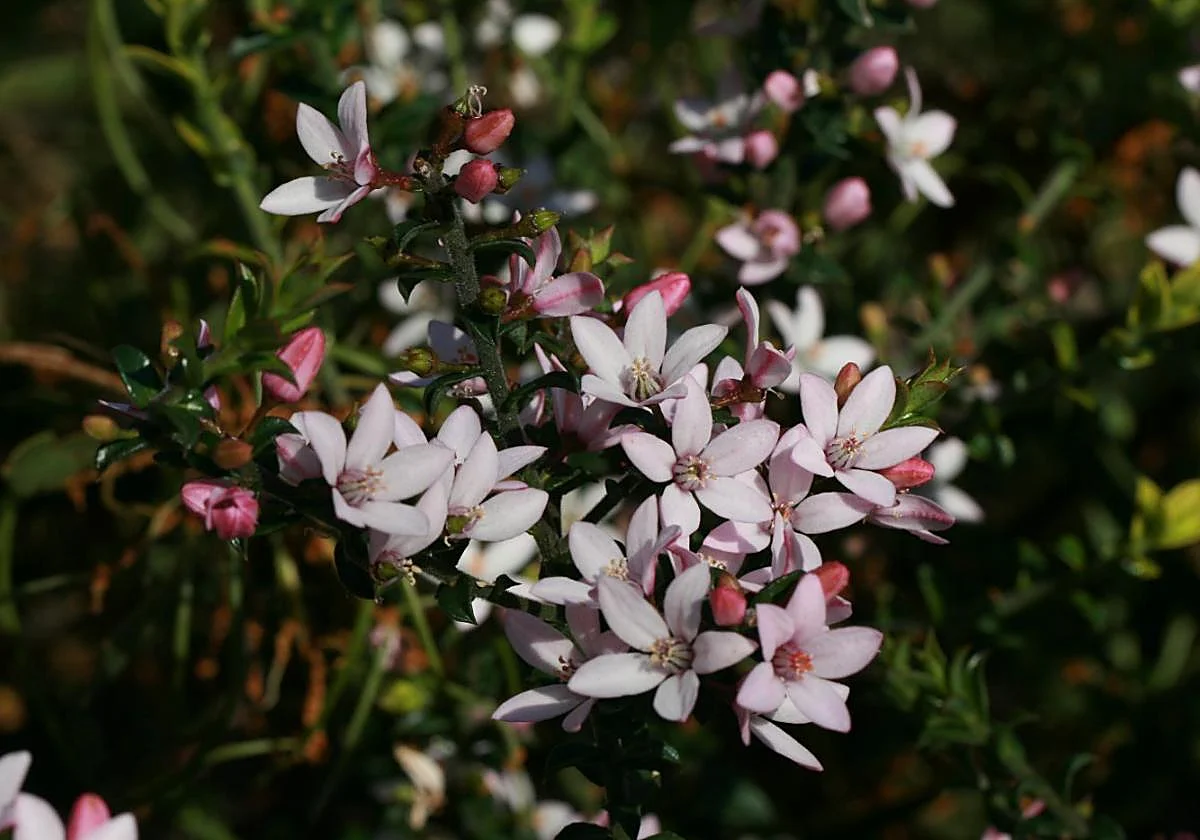
Philotheca buxifolia. Wikimedia Gardening in southern Spain Philotheca buxifoliaThis attractive shrub produces small, star-like flowers that cover the plant from late winter through to late spring
Denise Bush
Friday, 6 March 2026, 11:17
Philotheca buxifolia, commonly known as the box-leaf waxflower and sometimes referred to by its synonym Eriostemon, is a member of the Rutaceae family. There are approximately 45 species in the genus, although only a few are commonly cultivated. It is native to New South Wales, Australia, where it grows naturally on rocky, exposed ground and in open forest.
This attractive shrub produces small, star-like flowers that cover the plant from late winter through to late spring. The thick, wax-like blooms may be white, pink or mauve, opening from dark pink buds. The leaves are dark green, egg-shaped, and measure around 6 to 12mm in length.
Philotheca buxifolia is well suited as a screening plant or windbreak and can also be grown as a specimen in a container. Planted along paths or near a doorway, it rewards gentle brushing with a citrus scent released from its aromatic foliage.
It requires free-draining soil with plenty of organic material incorporated before planting and will not perform well in heavy soils. It is not drought tolerant and will need watering during prolonged dry spells. A position with some dappled shade during hot afternoons is ideal. Clipping back after flowering will help maintain a compact shape.
Philotheca buxifolia will reach height of around 1.5 metres once mature.