The regular season has come to a close, the playoff field is set, and the draft order for every non-playoff team is now official. For draft fans, that’s the real starting line.
Here’s a brand-new first-round 2026 mock draft built off the finalized order.
As you follow along, you can explore Trevor Sikkema’s full top-300 big board inside the PFF Big Board Tool, giving you every grade and data point you need on the class. Then build out your own rankings with the fully customizable Big Board Builder or run endless draft scenarios in the Mock Draft Simulator.
Through the holidays, get 30% off a PFF+ subscription with code HOLIDAY30.
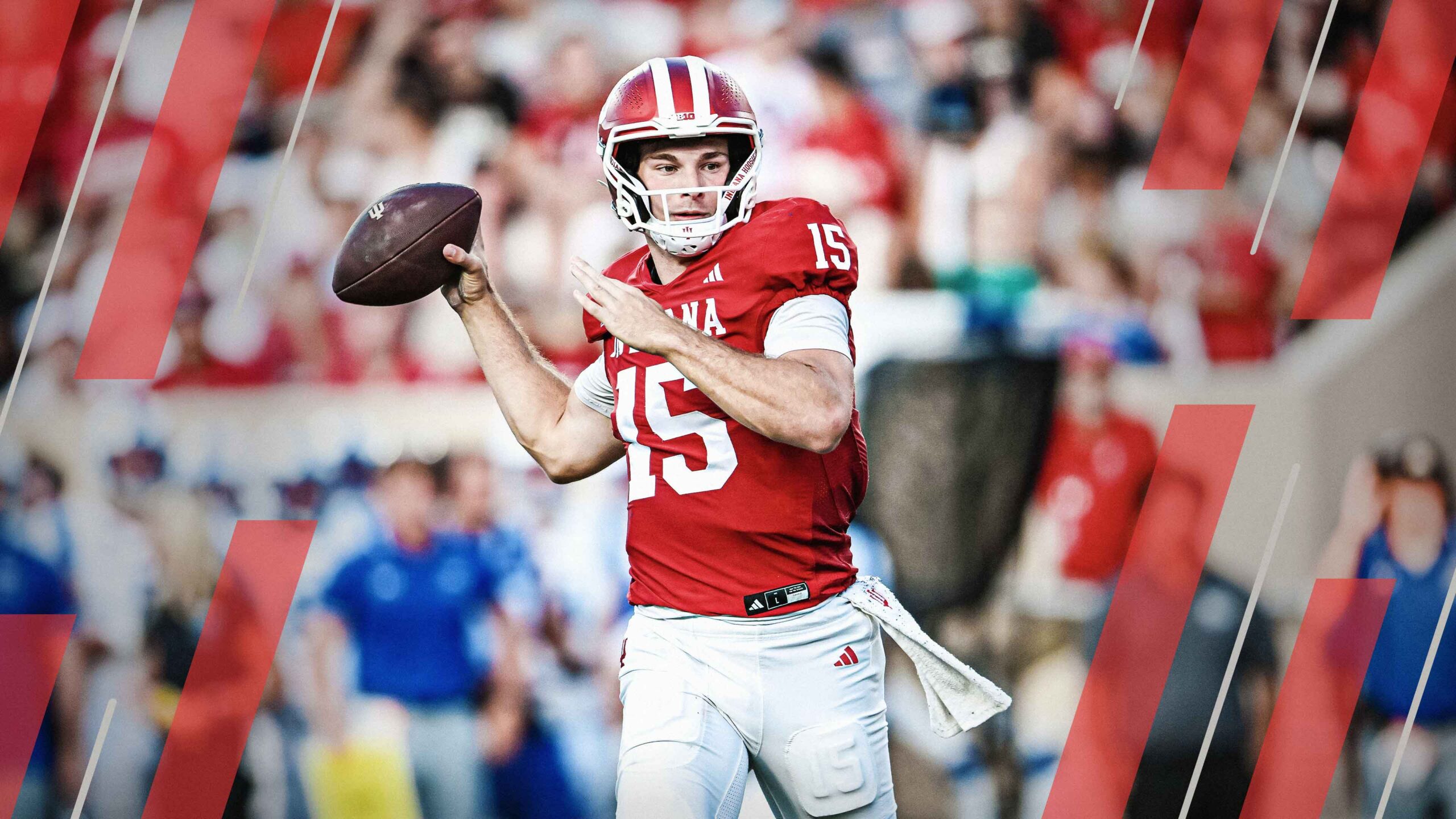
1. LAS VEGAS RAIDERS: QB FERNANDO MENDOZA, INDIANA
The Raiders are officially on the clock, holding the No. 1 overall pick in the 2026 NFL Draft. Geno Smith remains under contract for 2026, but Las Vegas cannot realistically enter next season with him as the unquestioned starter, especially with a partially or entirely new coaching staff likely coming to town.
Indiana quarterback Fernando Mendoza, the 2025 Heisman Trophy winner, enters the draft as the clear favorite to go first overall. He brings a rare combination of poise and production, posting a passing grade above 70.0 under pressure while also earning elite PFF grades on both intermediate and deep throws.
2. NEW YORK JETS: QB DANTE MOORE, OREGON
The Jets attempted to make it work with Justin Fields, but it has been widely understood that he is unlikely to be the team’s starter in 2026 despite signing a two-year deal. While it is not guaranteed that Dante Moore will declare for the 2026 NFL Draft, New York would be expected to show strong interest if he does.
Moore has posted an adjusted completion rate over 80.0% this season, highlighting his touch and accuracy, and he boasts an excellent 7.2% big-time throw rate compared to just a 2.5% turnover-worthy play rate. The Jets are not forced to address quarterback here, given that they hold five first-round picks over the next two drafts, but if Moore is available, this is a spot where they could justify taking a swing at a potential franchise quarterback.
3. ARIZONA CARDINALS: OT FRANCIS MAUIGOA, MIAMI
The Cardinals are likely to have an opening at starting quarterback this offseason, but without a top-two pick in the draft, they may be forced to look to the veteran market for a short-term solution. Regardless of when Arizona finds its franchise quarterback, upgrading the offensive line remains a priority.
Right tackle Jonah Williams is set to hit free agency, creating a clear opening on the edge. Francis Mauigoa is a natural fit after starting at right tackle for three straight seasons at Miami. He earned a career-best 85.1 PFF overall grade this season. While there will be questions about his length at the NFL level, Mauigoa’s steadiness and consistency are exactly what Arizona needs up front.
4. TENNESSEE TITANS: ED REUBEN BAIN JR., MIAMI
Bain will be one of the most debated prospects in this year’s draft due to the contrast between his production and his physical profile. He earned a 92.6 PFF overall grade, including a 92.3 PFF pass-rush grade on true pass sets, but questions about his arm length will factor heavily into his evaluation.
While shorter arms limit his ceiling in some schemes, Bain Jr. should still be a difference-maker at the NFL level. With Jeffery Simmons and T'Vondre Sweat coming off career-best seasons in Tennessee, adding Bain Jr. would give the Titans one of the most talented defensive lines in the league.
5. NEW YORK GIANTS: WR JORDYN TYSON, ARIZONA STATE
The Giants aren’t devoid of defensive talent, and a new coaching staff in 2026 should allow that unit to outperform its 2025 results. Offensively, the line remains a long-term concern, but the more immediate issue may be the lack of playmakers. With Malik Nabers recovering from a major knee injury and Wan'Dale Robinson set to hit free agency, New York could be forced to add another difference-maker in the passing game.
Tyson offers that upside, boasting the highest ceiling of the group after earning an 89.5 PFF receiving grade against man coverage this past season.
6. CLEVELAND BROWNS: OT SPENCER FANO, UTAH
The Browns clearly need more playmakers at wide receiver, but they also must address the offensive line with young, starting-caliber talent. Quality receivers can often be found later in the draft, but that is rarely true for offensive linemen.
Fano struggled early in 2025, yet his long-term profile remains strong. He was one of the highest-graded offensive linemen in college football in 2024 and still finished this past season with an 82.0 PFF pass-blocking grade and a 79.4 PFF run-blocking grade.
7. WASHINGTON COMMANDERS: S CALEB DOWNS, OHIO STATE
Downs may end up being the most underappreciated player in the entire 2026 NFL Draft. He is likely to be a consensus top-three prospect on big boards, yet some will hesitate to view him as a top-10 pick due to outdated ideas about positional value at safety.
Downs is far more than a traditional safety. He embodies the modern defensive chess piece, lining up for 241 snaps in the box, 240 as a deep safety, 146 in the slot and 44 on the edge, all while earning an elite 87.6 PFF overall defensive grade. His versatility fundamentally changes what a defense can do at all three levels.
8. NEW ORLEANS SAINTS: LB ARVELL REESE, OHIO STATE
The Saints could certainly look to add another offensive playmaker alongside Chris Olave after trading Rashid Shaheed, but quality wide receivers can be found later in the draft. Defenders with Reese’s pound-for-pound explosiveness and strength are far harder to come by. He profiles as a hybrid linebacker in the mold of Georgia’s Jalon Walker from last year’s draft, but his highest value comes as an edge rusher — precisely where New Orleans needs help.
Reese earned a 75.7 PFF overall defensive grade while splitting his time between 327 snaps on the defensive line and 286 snaps in the box as an off-ball linebacker, showcasing the versatility that makes him such an attractive fit.
9. KANSAS CITY CHIEFS: RB JEREMIYAH LOVE, NOTRE DAME
It’s fair to question whether the Chiefs would invest a top pick in a running back given other roster needs, but Jeremiyah Love is one of the best players in the class — regardless of position.
At 6-foot, 215 pounds with sprinter-level speed, outstanding contact balance, soft hands and legitimate route-running ability, Love is a complete offensive weapon. He has earned elite PFF overall grades north of 91.0 in each of the past two seasons, and his skill set would give Chiefs fans flashbacks to the Priest Holmes era the moment he steps on the field.
10. CINCINNATI BENGALS: DT KAYDEN McDONALD, OHIO STATE
Cincinnati finished dead last in the NFL in rushing yards allowed this season, surrendering nearly 150 yards per game on the ground. Adding Kayden McDonald would go a long way toward fixing that issue.
The Ohio State interior defender earned a dominant 92.1 PFF run-defense grade and posted an elite 31.2% run-stop rate, giving the Bengals a true anchor in the middle of their defensive line. There’s a scenario where Cincinnati could trade down and still land McDonald, but with the board finalized and no trades in this mock, addressing their biggest weakness directly made the most sense.
Build and customize your own NFL draft board by creating, grading and weighting traits for prospects, then stacking those evaluations alongside PFF grades, rankings, WAA and Trevor Sikkema’s analysis to generate your own final rankings.11. MIAMI DOLPHINS: CB JERMOD McCOY, TENNESSEE
McCoy was one of the nation’s top cornerbacks last season as a true sophomore, earning an 87.0 PFF defensive grade and an 89.6 coverage grade. At 6-foot-3 and 195 pounds, he brings the length and explosiveness to project as a high-end man-coverage defender at the NFL level — exactly the profile the Dolphins desperately need in their secondary.
12. DALLAS COWBOYS: ED DAVID BAILEY, TEXAS TECH
Bailey has been nearly unblockable over the past two seasons. A twitchy, stand-up edge rusher, he has earned elite pass-rush grades above 90.0 in back-to-back years, first at Stanford and most recently at Texas Tech.
13. LOS ANGELES RAMS (VIA ATL): CB MANSOOR DELANE, LSU
Delane was the top cover corner in the SEC this season, earning an 89.1 PFF coverage grade. Fast, fluid and adequately sized at 6-foot, 190 pounds, he has the versatility to play inside or outside at the next level, though his best work comes on the perimeter.
With flexibility afforded by the extra first-round pick from Atlanta, the Rams can afford to let the board come to them and select the best player available.
14. BALTIMORE RAVENS: DT PETER WOODS, CLEMSON
Woods’ draft range remains wide across the top 20.
From a traits perspective, the former four-star recruit moves exceptionally well for a 6-foot-3, 315-pound defensive lineman and flashes top-10 talent. While his week-to-week impact dipped this season, he still posted run-defense and pass-rush grades above 70.0 and previously earned overall grades north of 83.0 as both a freshman and sophomore.
With the Ravens’ defensive line lacking the same punch since Nnamdi Madubuike went down and his long-term future uncertain, Woods could be a good fit alongside Travis Jones.
15. TAMPA BAY BUCCANEERS: LB SONNY STYLES, OHIO STATE
The Buccaneers’ disappointing season ended without a playoff berth despite a 6-2 start, and defensive issues played a major role down the stretch.
Lavonte David is a future Hall of Famer but appears likely to retire this offseason, while SirVocea Dennis has yet to show the coverage ability required of a full-time starter. Ohio State’s Sonny Styles offers a clear upgrade. The former safety brings explosiveness, size and physicality to the position, and his 2.2% missed tackle rate ranked among the lowest in college football.
16. NEW YORK JETS (VIA IND): WR CARNELL TATE, OHIO STATE
After securing their franchise quarterback at the top of the draft, the Jets would be wise to use their additional first-round pick to continue building around him. With the offensive line both young and productive in 2025, wide receiver stands out as the next priority. Tate emerged as a reliable WR2 for Ohio State behind Jeremiah Smith, showcasing excellent body control, strong hands and real value as a blocker. He did not drop a single pass on 66 targets this season, earning an 89.0 receiving grade.
17. DETROIT LIONS: ED CASHIUS HOWELL, TEXAS A&M
The Lions will have several intriguing options in the middle of the first round, including cornerback, interior offensive line and defensive line help. Ultimately, I went with Howell because Detroit needs a true one-on-one pass-rush winner opposite Aidan Hutchinson, and that’s exactly what Howell provides. He has posted pass-rush grades above 90.0 in each of the past three seasons and recorded a 19.8% pass-rush win rate this year. His shorter arm length could push him down some boards, but his consistent production makes him a logical target.
18. MINNESOTA VIKINGS: CB COLTON HOOD, TENNESSEE
The Vikings could use an infusion of talent at cornerback, particularly one with Hood’s aggressiveness at the catch point. He has recorded 16 forced incompletions over the past two seasons and thrives in off-coverage looks, a staple of Brian Flores’ defensive scheme. If retained, Hood has the tools to become an impact contributor in a secondary that values anticipation and ball disruption.
Grade each prospect from 1 to 10 across custom traits. PFF Scouting Mode does the rest — applying your weights and generating a final draft grade that reflects your exact evaluation style.19. CAROLINA PANTHERS: DT A'MAURI WASHINGTON, OREGON
At 6-foot-3 and 330 pounds, Washington has the size to anchor against the run, evidenced by his 83.0 run-defense grade, while also flashing upside as a pass rusher with a 72.7 grade versus true pass sets. He is not a finished product, but his physical traits and flashes of disruption give him the ceiling of a first-round talent. Defensive tackle is a sneaky need for the Panthers, and pairing Washington with Derrick Brown would create a formidable interior duo that offenses would struggle to move.
20. DALLAS COWBOYS (VIA GB): CJ ALLEN, GEORGIA
The Cowboys’ linebacker play was a clear disappointment this season, particularly against the run. Allen was one of the best run defenders in college football, posting an 88.1 run-defense grade while missing just 7.8% of his tackle attempts. Pairing him with DeMarvion Overshown could give Dallas the physical, downhill 1-2 linebacker combination it has been missing in the middle of its defense.
21. PITTSBURGH STEELERS: WR MAKAI LEMON, USC
The Steelers’ passing game simply wasn’t good enough once D.K. Metcalf was removed from the equation. Regardless of who is under center in 2026, Pittsburgh has to be more than a one-man show through the air. Lemon is an ideal complement to Metcalf: while Metcalf commands extra attention downfield and in the intermediate areas, Lemon consistently wins quickly as a separator. His 81.1% open-target rate over the past two seasons ranks in the 87th percentile at the position, making him a reliable chain-mover to balance the offense.
Click here for Makai Lemon's 2026 NFL Draft profile22. LOS ANGELES CHARGERS: OG VEGA IOANE, PENN STATE
You know it, I know it, and the Chargers know it: the interior offensive line was a major liability in 2025. Los Angeles’ interior linemen combined for a 45.7 overall blocking grade and a 47.9 pass-blocking grade, numbers that simply won’t cut it in front of Justin Herbert. Loane would be an immediate upgrade, as he earned a 90.9 pass-blocking grade on true pass sets this season and profiles as a plug-and-play starter who could stabilize the unit right away.
23. PHILADELPHIA EAGLES: OT CALEB LOMU, UTAH
The Eagles have long prioritized staying ahead of the curve at premium positions, and offensive tackle is no exception. Thirty-five-year-old Lane Johnson missed time this past season, and the drop-off along Philadelphia’s offensive line was noticeable compared to the dominance of recent years. Lomu offers a young, athletic and toolsy solution for the future after earning a 68.5 overall grade at left tackle for Utah in 2025, and he would benefit greatly from developing behind established starters Lane Johnson and Jordan Mailata.
24. BUFFALO BILLS: ED ROMELLO HEIGHT, TEXAS TECH
Height pairs ideal length with long arms and quick hands, deploying a refined pass-rush arsenal that produced a 92.4 PFF pass-rush grade and a 22.2% pass-rush win rate in 2025 as part of Texas Tech’s dominant defensive line. He’s the type of quick, finesse-oriented edge rusher the Bills are currently missing.
25. CHICAGO BEARS: ED T.J. PARKER, CLEMSON
Bears fans may be tired of seeing this pick, but it still makes too much sense to ignore. LSU safety AJ Haulcy is tempting given Chicago’s potential need on the back end after free agency, but Parker’s versatility at 6-foot-3, 260 pounds is a near-perfect fit for Dennis Allen’s defense. His ability to impact games both as a pass rusher (78.1 pass-rush grade) and against the run (78.5 run-defense grade) gives Chicago a flexible, three-down defender who fits exactly what Allen looks for on the edge.
26. SAN FRANCISCO 49ERS: OT KADYN PROCTOR, ALABAMA
Spencer Burford and Connor Colby have split reps at left guard for the 49ers this season, each logging just over 400 snaps, but neither has posted a blocking grade higher than 60.5. Proctor brings a different physical profile at 6-foot-7, 360 pounds, and while there are some concerns about leaving him on an island as a full-time tackle, he did earn an 83.5 pass-blocking grade in 2025.
Proctor projects as an impactful guard at the NFL level, with the added benefit of developing behind Trent Williams and potentially positioning himself as a long-term successor at tackle down the line.
27. HOUSTON TEXANS: OG EMMANUEL PREGNON, OREGON
The Texans’ offensive line improved over the second half of the season, but the interior remains a clear area for growth. Pregnon has been one of the most improved players in the country — and even dating back to his time at USC, his upside was evident before transferring to Oregon. In 2025, he earned an 86.3 pass-blocking grade and an outstanding 92.7 run-blocking grade on zone concepts, making him a strong candidate to step in as an early starter and stabilize the middle of Houston’s line.
28. CLEVELAND BROWNS (VIA JAX): WR DENZEL BOSTON, WASHINGTON
After addressing the offensive line early in this mock draft, the focus shifts to upgrading the receiving corps. At 6-foot-4, 210 pounds, Boston profiles as a smooth-moving “X” receiver with the versatility to align across the formation. He’s a nuanced route runner and a true weapon at the catch point, hauling in 59.4% of his contested targets over the past two seasons — a 93rd-percentile mark for the position.
29. LOS ANGELES RAMS: DT CALEB BANKS, FLORIDA
Banks missed most of the 2025 season with a foot injury, but his 2024 tape was strong enough that it was surprising he didn’t enter last year’s draft class. He’s a massive interior defender at 6-foot-6, 330 pounds with long arms, yet he pairs that size with an explosive first step. That combination allows him to function as a true one-gap penetrator, evidenced by his 11.6% pass-rush win rate.
30. NEW ENGLAND PATRIOTS: ED KELDRIC FAULK, AUBURN
The Patriots may prefer an edge defender with a more established pass-rush résumé, but Faulk’s combination of size, strength and athleticism makes him difficult to pass up relative to the other options on the board. At 6-foot-6, 285 pounds, he profiles as a strong 5-technique defensive end, backed by an 82.5 run-defense grade in 2025. While he remains a work in progress as a pass rusher, his 10.2% pass-rush win rate provides a foundation for further growth at the next level.
31. DENVER BRONCOS: TE KENYON SADIQ, OREGON
Last year, Sean Payton spoke openly about wanting to add an offensive “Joker” to his depth chart — a versatile chess-piece playmaker who can align in multiple spots and stress defenses in different ways. Oregon tight end Kenyon Sadiq fits that vision perfectly. At 6-foot-3, 245 pounds, he’s a high-end athlete who can line up inline, as a wing, in the backfield or split out as a receiver. Sadiq earned a 72.7 PFF overall grade, backed by legitimate receiving upside and strong run-blocking potential.
32. SEATTLE SEAHAWKS: OG GENNINGS DUNKER, IOWA
The Seahawks may not be thinking about the draft yet, but the fit here is clear. Seattle ranks top five in the NFL in outside-the-tackles rushing attempts this season, a strength that aligns perfectly with what Gennings Dunker does best. At Iowa, Dunker earned an elite 93.3 run-blocking grade on outside-zone concepts over the past two seasons. While he played tackle in college, his skill set projects best to guard at the NFL level, where his movement skills and zone-blocking proficiency could translate immediately in Seattle’s run-heavy scheme.