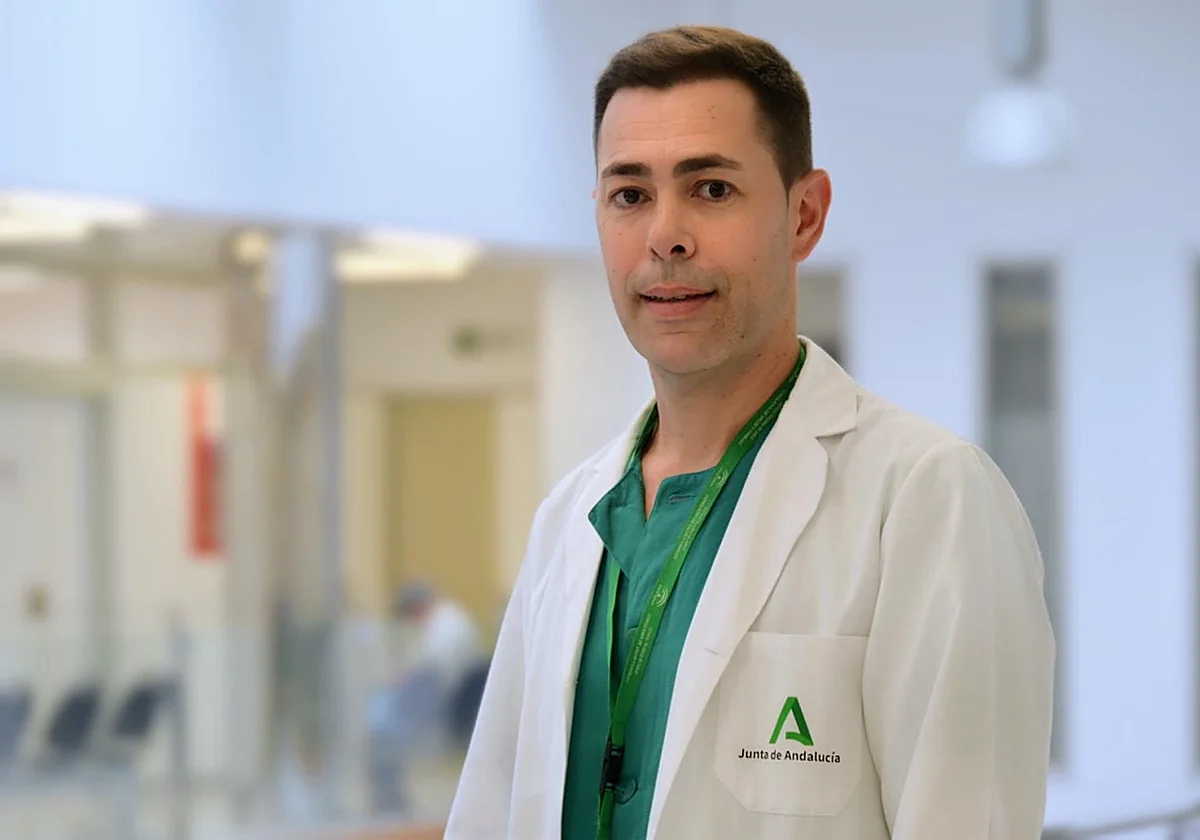
Bernardo Herrera, head of the Urology Department at the Hospital Clínico
“Prostate cancer is asymptomatic; in Malaga we detect 1,200 cases a year”“It is essential to monitor the tumour and avoid ‘overtreatment’ in order to protect the patient’s quality of life,” says the urologist and researcher
Añádenos en Google Bernardo Herrera, head of Urology at the Clínico. (SUR) 01/07/2026 a las 14:53h.Bernardo Herrera Imbroda is head of the Urology Department at the Hospital Clínico Universitario Virgen de la Victoria and principal investigator of the Translational Research ... in Genitourinary Oncology group at IBIMA. In this interview, he reviews the current situation regarding prostate cancer, innovations in its treatment and diagnosis, and warns of the risk of overtreatment of the disease.
Every year, 1,200 new cases are diagnosed in Malaga, 600 of them at the Hospital Clínico. Furthermore, 850 biopsies are carried out at the hospital complex each year. Eight out of ten cases referred for this tumour are usually positive, which indicates its widespread presence in the province.
—What is the current situation regarding prostate cancer in Malaga?
—Prostate cancer in Malaga is one of the most common and prevalent cancers in our society, alongside breast cancer. There are around 1,200 to 1,500 new cases a year and, consequently, it is clearly the most common cancer among men. In Spain, what can we expect? We are likely to see 35,000 new cases of this cancer this year, and an exponential increase is expected over the next five years, probably reaching 45,000 or 50,000 new cases. The numbers will continue to rise.
—What symptoms should we look out for?
—Interestingly, prostate cancer is an asymptomatic tumour; in other words, we do not have any specific symptoms that would lead us to suspect this type of tumour, because the symptoms patients typically report, such as urinary difficulties including difficulty passing urine, urgency and a feeling of incomplete emptying, are usually attributable to an enlargement of the prostate gland, or benign prostatic hyperplasia. Prostate cancer does not usually present with specific symptoms, which is why early detection through a blood test for a biomarker, in this case, PSA, is so important.
“We will be introducing three-dimensional planning platforms in the operating theatre, using artificial intelligence and immersive reality.”
—What innovations have there been in recent years in the treatment of this disease?
—Well, that depends on how we diagnose the disease. If we diagnose the disease at what is known as a localised stage, where there is no widespread, advanced or metastatic disease, the main treatments and recent developments are essentially surveillance; in other words, we are increasingly using surveillance to avoid ‘overtreating’ patients, particularly in the case of low-risk tumours, and new approaches to both surgery and radiotherapy for patients requiring radical treatment. From a surgical perspective, of course, robotic surgery is playing an increasingly prominent role in the treatment of localised prostate cancer, and new radiotherapy techniques such as SBRT, which have also made it possible to reduce treatment time and toxicity, are very important for these patients. As for systemic treatment in more advanced stages, the main developments come from targeted therapies, that is, treatments that target specific molecular alterations and which, therefore, allow us to personalise treatment.
—Could you go into more detail about the surgical innovations?
—The main developments in the field of surgery will come about through the introduction of new virtual reality techniques and new artificial intelligence techniques; in other words, we are going to introduce technological platforms into the operating theatre that enable us to carry out three-dimensional surgical planning using artificial intelligence systems, which will allow us to treat patients more effectively and safely; we will also incorporate immersive reality techniques into robotic surgery. What does this mean? It means that, through telesurgery systems, a person, be it a patient, a colleague or a trainee, will be able to connect to the surgeon’s console and participate interactively in the surgical procedure.
Related story