Inland
Removal of tanker service is forcing Valle de Abdalajís to speed up its water supply solutionThe town hall has confirmed that the supply to the inland Malaga village will end on 30 June and is confident that it will be able to meet demand using its own resources from July onwards
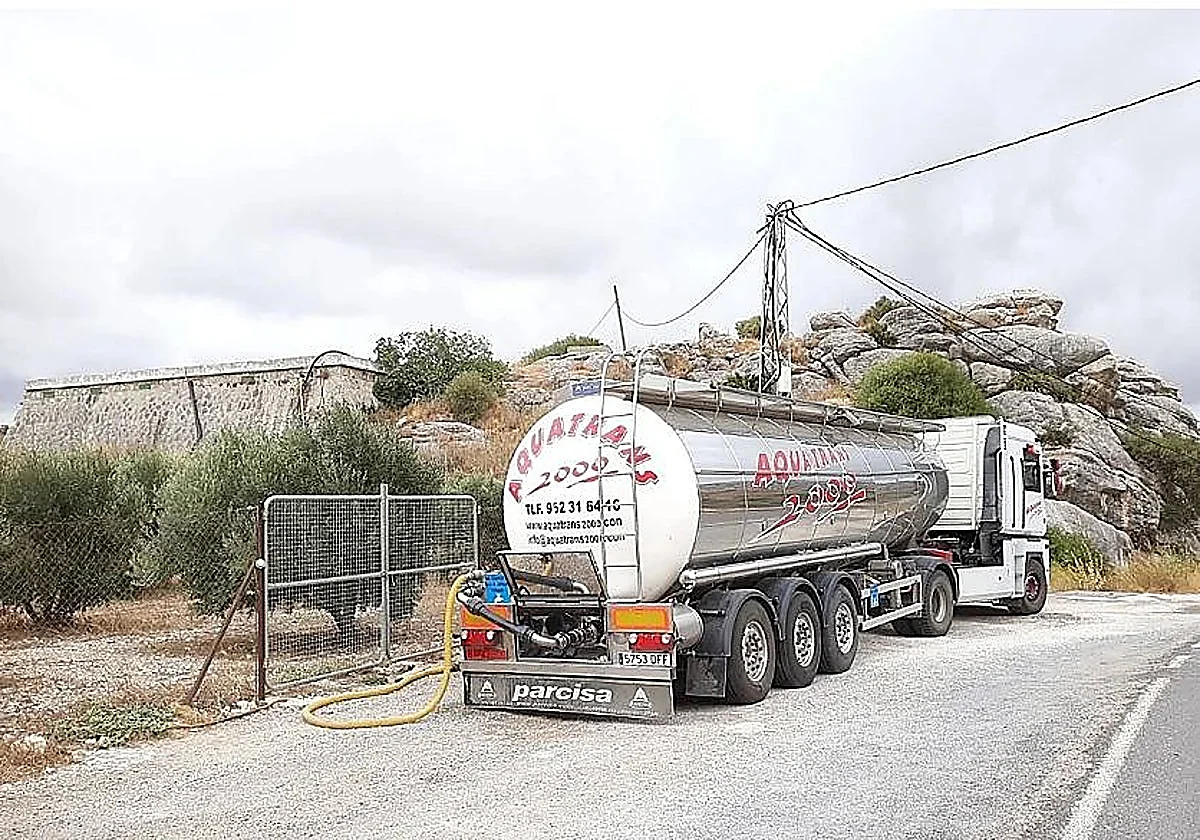
Añádenos en Google A tanker unloading water into one of the reservoirs in Valle de Abdalajís. (SUR) 29/06/2026 a las 11:38h.Valle de Abdalajís is facing the final days of a water supply system that has been in place for almost two decades. The town hall ... said that rail infrastructure company Adif will stop supplying water by tanker on 30 June, a decision that forces the municipality to speed up work to prepare for a phase in which it will have to maintain the supply using its own resources.
According to the council, the date was announced on 1 June. Since then, the local government has reassured residents that there will be water until a permanent solution is found, provided that consumption remains at responsible levels. This assurance comes while the concessions, authorisations and projects necessary to ensure a stable water supply are still being finalised.
When contacted by SUR, Adif did not explicitly confirm that the water tanks would be removed on 30 June. The state-owned company merely stated that it would comply with “both the law and the provisions of any court rulings” and declined to comment on the ongoing legal proceedings. The council, for its part, stated that the water supply will cease at the end of June.
The aquifer
It is worth remembering that the origins of the problem date back to the tunnelling works for the Cordoba–Malaga high-speed rail line. Between 2006 and 2007, the drilling work affected the aquifer that supplied the town centre and numerous farms. Since then, water has largely been supplied by tankers paid for by the railway operator - a temporary solution that has become the village’s main daily lifeline.
In fact, between 2021 and 2025, the contract awarded to Tragsa amounted to 15.7 million euros. When combined with previous financial years, the cost stands at around 30 million euros. Adif supplied as much as 450,000 litres a day, valued at over 9,000 euros, according to figures provided by the company itself in 2025.
Added to this expenditure is a further 26.6 million euros earmarked for attempts to create a stable alternative. The measures include recovering water that has seeped into the tunnels, pumping it to a reservoir and a treatment plant, and various water supply and irrigation works. None of these measures have succeeded in permanently resolving a problem that has affected the municipality for almost 20 years.
Ruling
The legal landscape changed last year. A ruling by the national high court found in Adif’s favour and exempted it from continuing to pay for the water tanks, on the grounds that it had fulfilled its obligations and that the council should assume responsibility for the maintenance and management of the service. The railway authority then temporarily maintained the supply in anticipation of further appeals.
The local authority now claims that the latest rulings relate to procedural and administrative matters, but do not resolve the substance of the dispute nor determine liability for the damage caused to the aquifer. Adif does not address this assessment either, stating that its actions are guided by compliance with the law and the decisions of the courts.
Updating of bylaws
The immediate solution lies in bringing municipal resources into order. The regional government explained to SUR that it is currently working on processing the concession applied for by the council in 2025 and said that it is acting diligently to normalise the water supply and provide legal certainty. It is also advising the municipality on updating the by-laws governing domestic water distribution.
The three authorities are considering various options for how to respond should that resource prove insufficient or runs out
The Malaga provincial council has joined these efforts. The Diputación confirmed that it is holding meetings with the Andalusian regional government and the town hall to analyse the situation that will arise if the water tankers stop arriving. For the time being, the municipality has reserves in its own well, which will be the main source of support for maintaining the water supply from July onwards.
The three authorities are considering various options in case this supply proves insufficient or runs out. The provincial authority pointed out, however, that no final decision has yet been reached and it is not yet clear what action will be taken. The options remain on the table while the well’s capacity is being assessed and the procedures to regularise the supply are being finalised.
Alongside the concession, authorisations, technical reports and plans are being drawn up to utilise the council’s own infrastructure. The council has not specified what capacity these resources will have or when they will be fully operational, but insists that they will enable the service to be maintained if the population moderates its demand.